

What is happening?
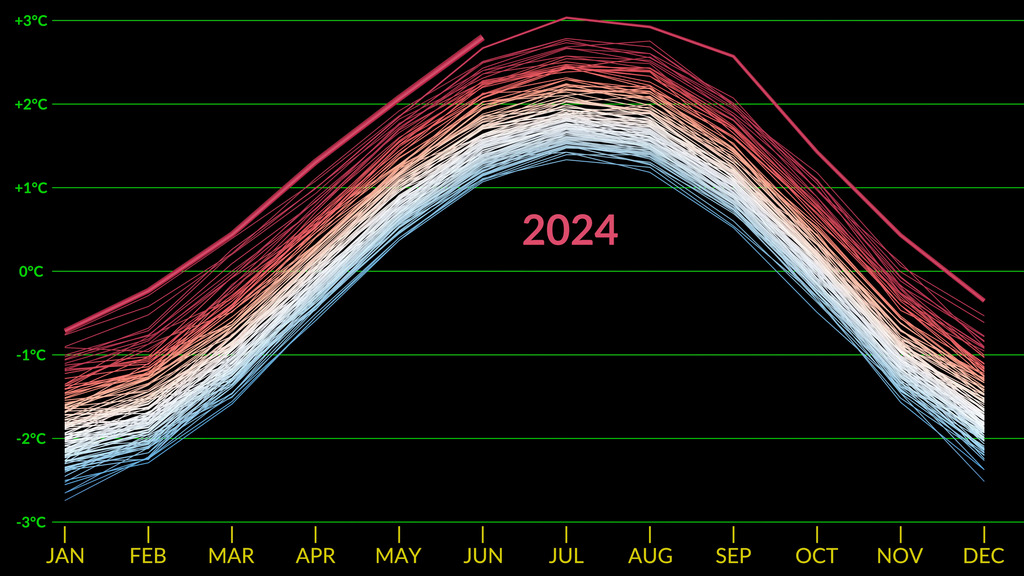
Long-term records show a warming planet. Ice sheets are shrinking and sea levels are rising.
describes long-term patterns, so one cold day cannot overturn a trend measured over decades. NASA lists several independent signs of warming: rising average temperatures, warmer oceans, retreating glaciers, shrinking ice and rising sea levels. The evidence comes from different instruments and parts of the world. Agreement among independent measurements makes the conclusion much stronger.
How and why?
Greenhouse gases trap some of the heat Earth emits. Human activities have increased their concentration.
Sunlight warms Earth, and the planet releases some energy back towards space as infrared radiation. Greenhouse gases absorb part of that radiation and slow cooling. This natural effect supports life as we know it, but extra carbon dioxide from burning fossil fuels strengthens it. Scientists can measure both the increase in these gases and their effect on energy moving through the atmosphere.
How do we know?
The evidence does not depend on one thermometer: satellites, ocean buoys, weather stations and ice offer independent measurements.
Records include thermometers, satellites, ocean measurements and observations of ice. For the more distant past, scientists use ice cores, tree rings and sediments. Each method has limitations, but together they form a consistent picture. Researchers also account for natural influences such as changes in sunlight and volcanic eruptions. These natural factors alone cannot explain the present warming.
Why does it matter?
Reliable measurements help communities plan for the future.
A change in average temperature affects oceans, ice, water and ecosystems. Impacts differ from place to place, making local measurements important for planning around heat, floods or water shortages. A scientific conclusion does not mean knowing the weather on every future day. It means understanding the long-term direction of change and its main causes.
Independent measurements tell the same story
is not inferred from one hot day. Weather stations, ships, ocean buoys and satellites measure different parts of Earth’s system, and long records make comparisons possible. Average surface temperature is rising, the ocean is gaining heat, glaciers are losing mass and sea level is increasing. Every data set has uncertainties and adjustments, but independent indicators point in the same long-term direction.
Why do researchers connect the warming to human activities? Burning fossil fuels raises carbon dioxide levels, and this gas absorbs some of the infrared radiation Earth emits. Laboratory measurements demonstrate the effect, satellites track changes in radiation, and the chemical composition of carbon helps identify the source of extra CO₂. Natural influences, including changes in the Sun and volcanoes, affect but do not explain the full pattern of modern warming.
It is important to distinguish a trend from a short-term deviation. El Niño, volcanic eruptions and ordinary variability may make one year warmer or cooler than the next. Scientists therefore compare decades rather than two days. research also gives uncertainty ranges for future effects, partly because those effects depend on future emissions. Uncertainty about the exact size of a future change is not uncertainty about whether the planet is warming now.
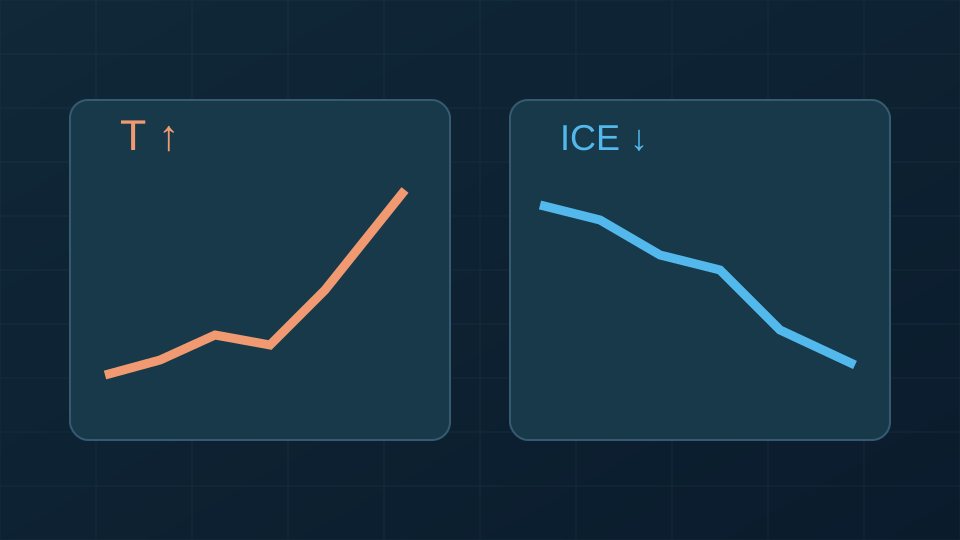
Original NZM illustration · Sources: NASA
A further detail
A further independent clue comes from the pattern of warming at different atmospheric heights. If a stronger Sun were the main cause, we would expect a different pattern from the one produced when greenhouse gases retain more heat near the surface. Observations and physical models can be compared with both predictions. scientists do not ignore errors: stations move, instruments change and satellites need calibration. Each record needs processing and documentation. Agreement among different teams using different instruments and methods is particularly persuasive. Confidence comes from checks that converge, not from a claim that one graph is infallible.
Global mean temperature is not a reading from one thermometer. It is calculated from many local observations processed consistently. Different calculation methods may produce slightly different numbers, yet they agree on the long-term rise.
Key terms
— the long-term pattern of weather in a place.