
A voyage that changed the questions
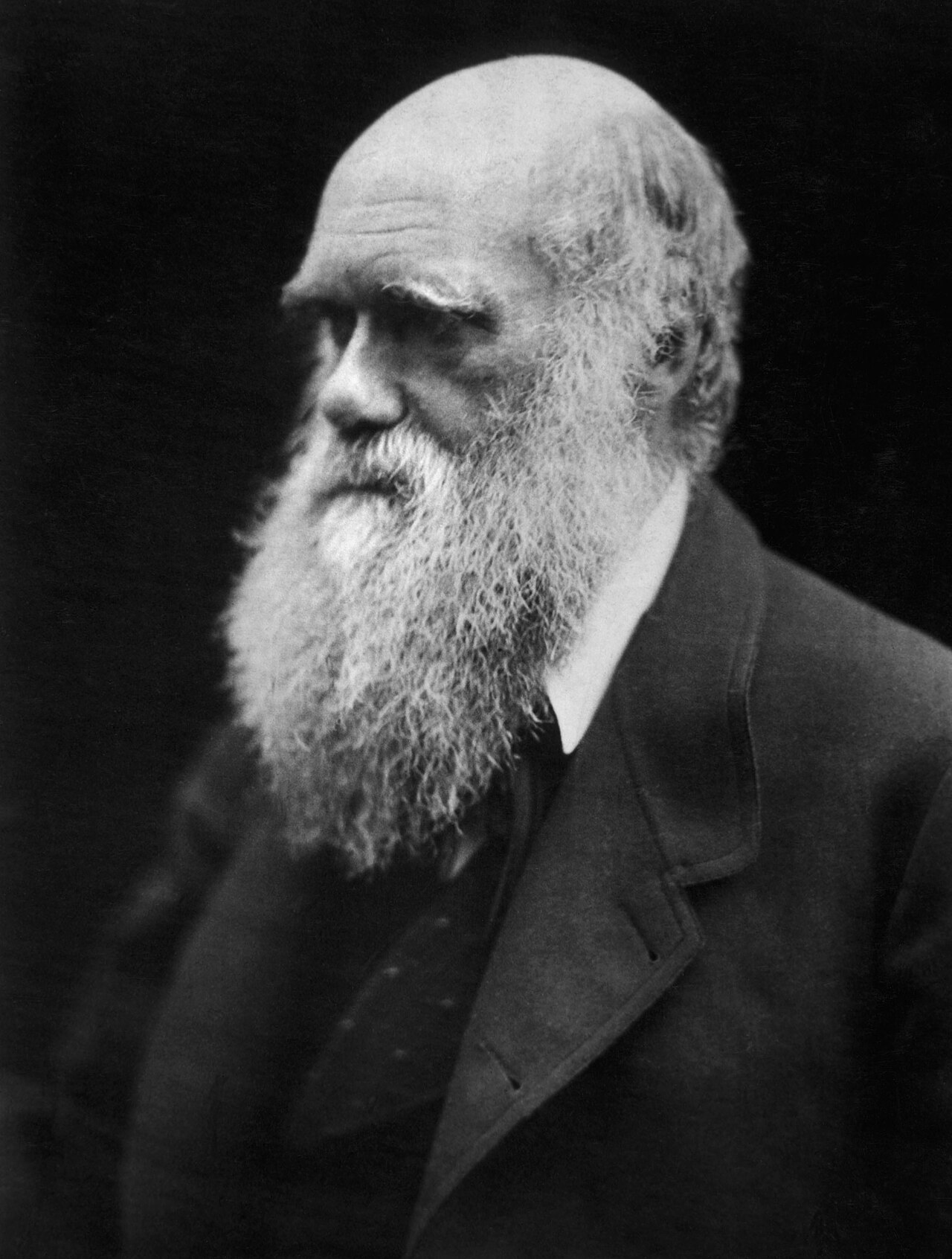
Charles Darwin was born in England in 1809. As a young naturalist he joined the survey ship HMS Beagle, whose voyage lasted from 1831 to 1836. He did not set out to “prove evolution”; he did not yet have that theory. He collected specimens, described rocks, fossils, animals and plants, and compared the places he visited. His letters and notebooks later let him reconsider exactly what he had seen. The discovery was not one dramatic moment on deck but years of connecting observations that had at first seemed separate.
South America and the possibility of change
In South America Darwin examined fossils of extinct animals that resembled living species from the same region. He also considered how earthquakes and uplift reshape coastlines. If Earth changes gradually over immense periods, perhaps organisms too have long histories of change. Those observations did not by themselves prove a mechanism for evolution, but they made permanent, unchanging species harder to assume. Distinguishing a clue from an explanation matters: a fossil is evidence of the past; a theory must explain why related forms occur in different layers and places.
NZM — originalna edukativna ilustracija · Sources ↗
The Galápagos were not a magic moment
On the Galápagos islands he observed related but different forms of birds and other animals. A familiar story says he instantly recognized the importance of finches, but the records are more complicated: differences among mockingbirds particularly raised questions about the origin of species, while specialists helped him appreciate some of the finches later. He had not always labelled specimens precisely by island. This is a useful reminder that researchers can collect imperfect data and still make progress by rechecking specimens and notes.
What is inherited within a population?
Members of one species are not identical. They differ in colour, beak shape, speed, resistance and behaviour, and some of these differences are inherited. In every generation more offspring are produced than can survive and reproduce. The environment therefore affects which inherited traits help their bearers leave descendants. Selection does not pick the “best” animal in any absolute sense; a trait’s value depends on conditions. A thick beak can help with hard seeds and be less useful when the food changes.
Natural selection step by step
Imagine birds whose beak size is partly inherited. If mainly hard seeds are available for several years, birds able to open them efficiently may, on average, leave more young. Offspring often inherit part of their parents’ traits, so the frequency of beak shapes changes across generations. No individual grows a larger beak because it “wants” one. The process has no plan and does not necessarily lead to greater complexity. When conditions change, the direction of selection may change. Modern genetics explains sources of inherited variation that Darwin could not have known.
Common ancestry and branching life
Darwin argued that distinct species can share ancestors. This does not mean one living species simply turns into another living species. A branching tree is a better image: populations split, change and sometimes die out. Humans and living chimpanzees share a distant ancestor; humans did not descend from chimpanzees alive today. Branching explains why related species share some anatomical and genetic features while differing in others. Fossils, geographical distribution, comparative anatomy and now provide independent tests of common ancestry.

NZM — originalna edukativna ilustracija · Sources ↗
Why Alfred Russel Wallace matters
While Darwin developed and checked his idea over many years, naturalist Alfred Russel Wallace independently arrived at a similar account of . Their writings were presented together in London in 1858. Darwin published On the Origin of Species the following year, assembling a wide range of examples and arguments. No one person created all of modern biology alone or without discussion with contemporaries. The history includes collaboration, disagreement, earlier ideas and new evidence. Crediting Wallace makes the account more accurate without reducing the importance of Darwin’s book.
How Darwin built a case
He did not rely only on remote islands. He spoke with breeders and examined how people change domestic animals by choosing which parents reproduce. Artificial selection demonstrated that small inherited differences can have large effects over many generations. He then asked whether natural conditions could do something similar without a breeder. Comparing the idea with species distributions, fossils and anatomy made the case stronger than any single striking example. A scientific theory here means a broad, testable explanation, not an arbitrary guess.
What Darwin did not know
Darwin did not know about , genes or the mechanism of mutation. Some of his guesses about inheritance were wrong, while modern evolutionary biology also includes genetic drift, migration, sexual selection and other processes. That does not undo ; it shows how an explanation expands with new data. Selection does not “want” a species to survive: individuals leave offspring in particular conditions. A population may fit one environment well and still go extinct when conditions change rapidly.
How we test the theory today
Geneticists track changes in gene frequencies, and field biologists measure which individuals leave more offspring. In laboratories, changes in microorganisms can be followed through many generations. Fossils and genomes help reconstruct common ancestry, with predictions from different methods checked against each other. When a result does not fit, researchers revise a model or look for a missing process. Darwin’s lasting contribution is not a finished list of every answer but a framework for asking why life is diverse and how it changes.
How do new species form?
changes trait frequencies within a population, but new species usually require prolonged separation as well. If a mountain, sea or behavioural change limits breeding between two groups, each accumulates its own inherited changes. Eventually the differences may become large enough that members no longer interbreed successfully even if they meet again. There is no universal timetable: it depends on the organisms, environment and reproduction. Biologists use several species concepts, especially for bacteria and fossils where interbreeding cannot be watched directly. Darwin’s branching tree supplied the broad picture; genetics now lets us trace branches in much greater detail.
Selection is not the only force
A trait can become common by chance, particularly in a small population; that is genetic drift. Migration brings in variants, mutations create new inherited changes, and sexual selection favours traits that help attract mates even when they cost survival. remains central to adaptation, but it does not explain every change in . When comparing genomes, researchers ask whether a pattern fits selection, random change or migration history better. These questions do not weaken evolutionary theory. They make it measurable and able to explain more phenomena than a model that invokes one cause for everything.
What does common ancestry predict?
If two species share a recent ancestor, we expect more similarities in anatomy and than between distant groups. But ancestry is not tested simply by counting matching letters: changes arise at different rates, and separate species may independently evolve similar features in similar environments. Researchers compare many genes, fossil order and geographical distributions. Independent data often support the same branching tree. Disagreements can reveal mixing between populations or a limitation in a method. Common ancestry is powerful precisely because it predicts patterns that can be checked when new fossils or genomes are found.
What evolution does not prescribe
A biological theory does not prescribe how society should be organised. Competition in nature does not justify inequality, discrimination or violence among people. Moving from a description of nature to a moral command is a logical error. Darwin’s ideas were sometimes misused in social and political arguments, but those claims are not evidence for . Learning evolution includes separating biological measurements from value judgements. Modern genetics also reveals deep connections among human populations and gives no support to simplistic claims that some groups are inherently “better” than others.
Questions Darwin could not have imagined
Today we can read genomes from ancient bones, follow microbes changing in laboratories and study how embryonic development shapes bodies. Researchers still debate the relative roles of chance, competition, cooperation and environmental change in different periods. No single answer fits every organism. Darwin would recognise the fundamental questions about ancestry and adaptation, but the tools would astonish him. That is healthy for a theory: it did not remain sealed inside an 1859 book. It became a research programme whose specific claims are continually tested, refined and sometimes corrected.
Key terms
— a process in which inherited traits that improve reproductive success in particular conditions can become more common in a population.