
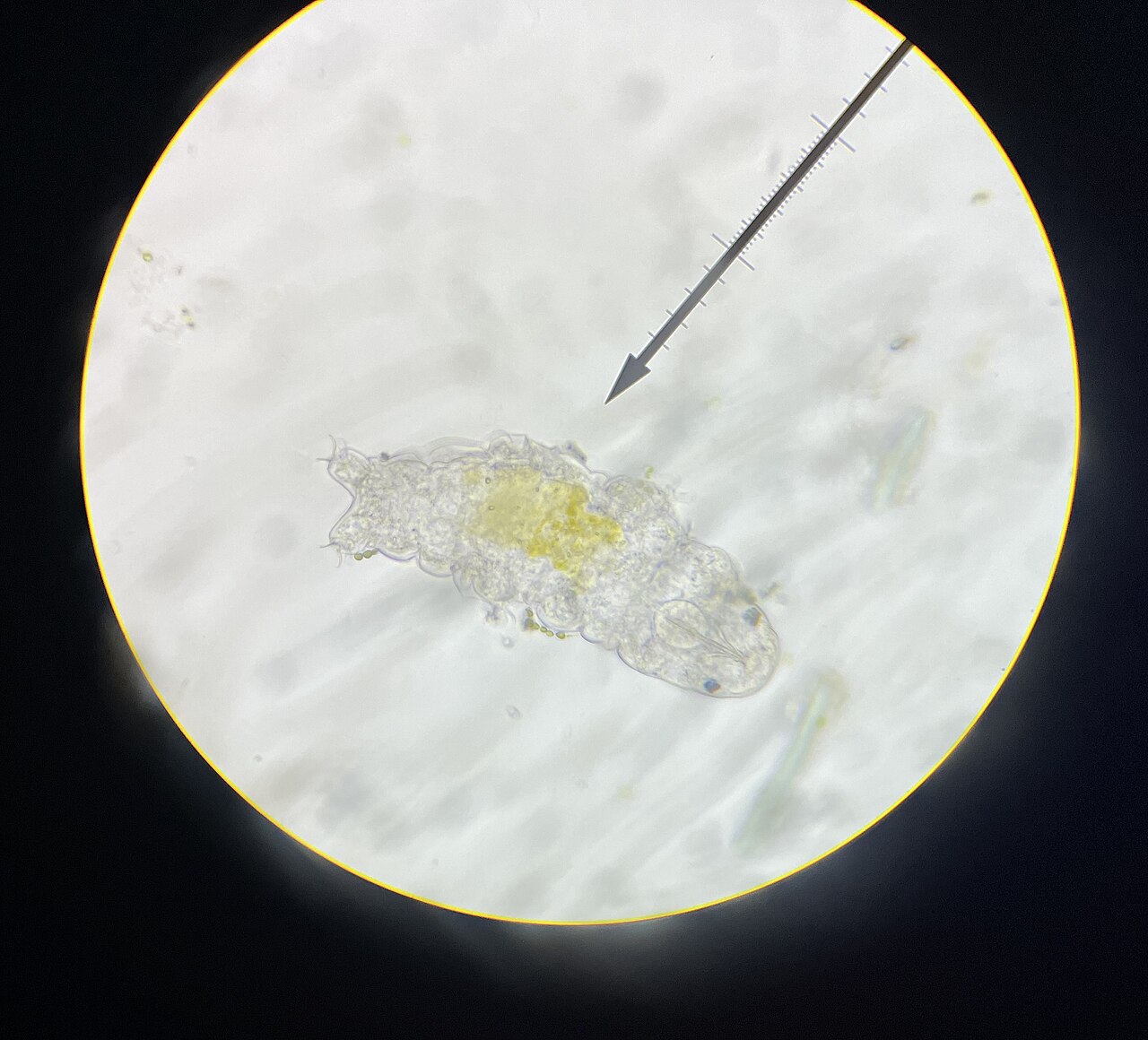
A very small animal
Tardigrades have eight stubby legs and live in thin films of water around moss, lichens and soil or in aquatic habitats. Most are shorter than a millimetre. Some species dry into a compact “tun” state with extremely slow metabolism. An active tardigrade is not resistant to everything. Protective proteins and repair mechanisms differ between species, so a result for one cannot automatically be extended to all.
Twelve days in orbit
In 2007 Swedish and German researchers sent roughly 3,000 tardigrades on the Foton-M3 mission. Some samples faced the conditions outside the capsule for about twelve days. Researchers separated the effects of vacuum from vacuum plus sunlight and rehydrated the animals after return. Some survived, but far from all. Strong ultraviolet exposure substantially reduced survival.
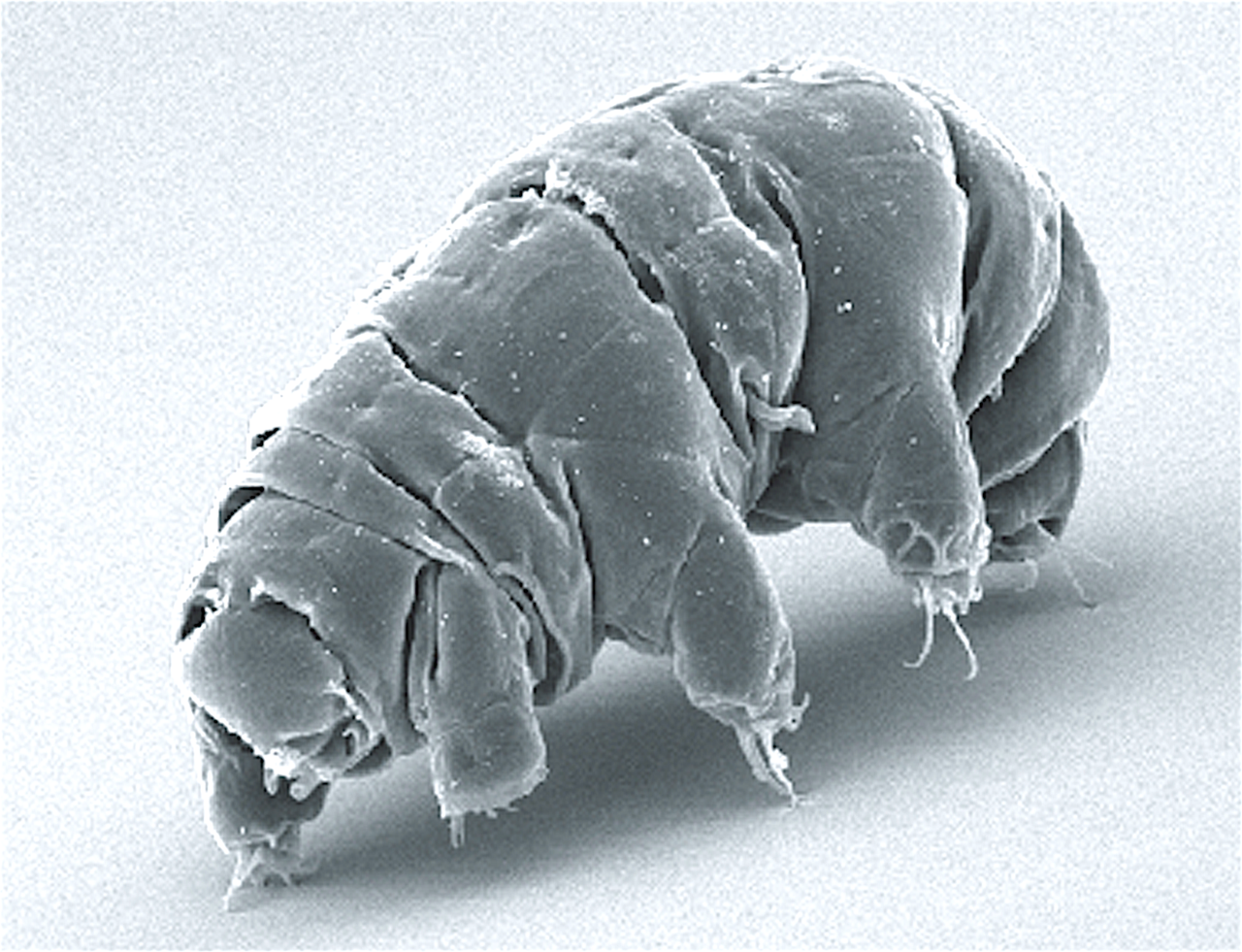
Schokraie E, Warnken U, Hotz-Wagenblatt A, Grohme MA, Hengherr S, et al. (2012) / Wikimedia Commons · Sources ↗ · Image terms ↗
Different hazards
Vacuum threatens the water in animal tissues. An already dried animal starts from a different state from an active, hydrated one. Space also brings ultraviolet and ionising radiation as well as temperature extremes. Separate groups and controls help identify which hazard caused which effect. Surviving a short orbital experiment is not the same as living on Mars for generations.
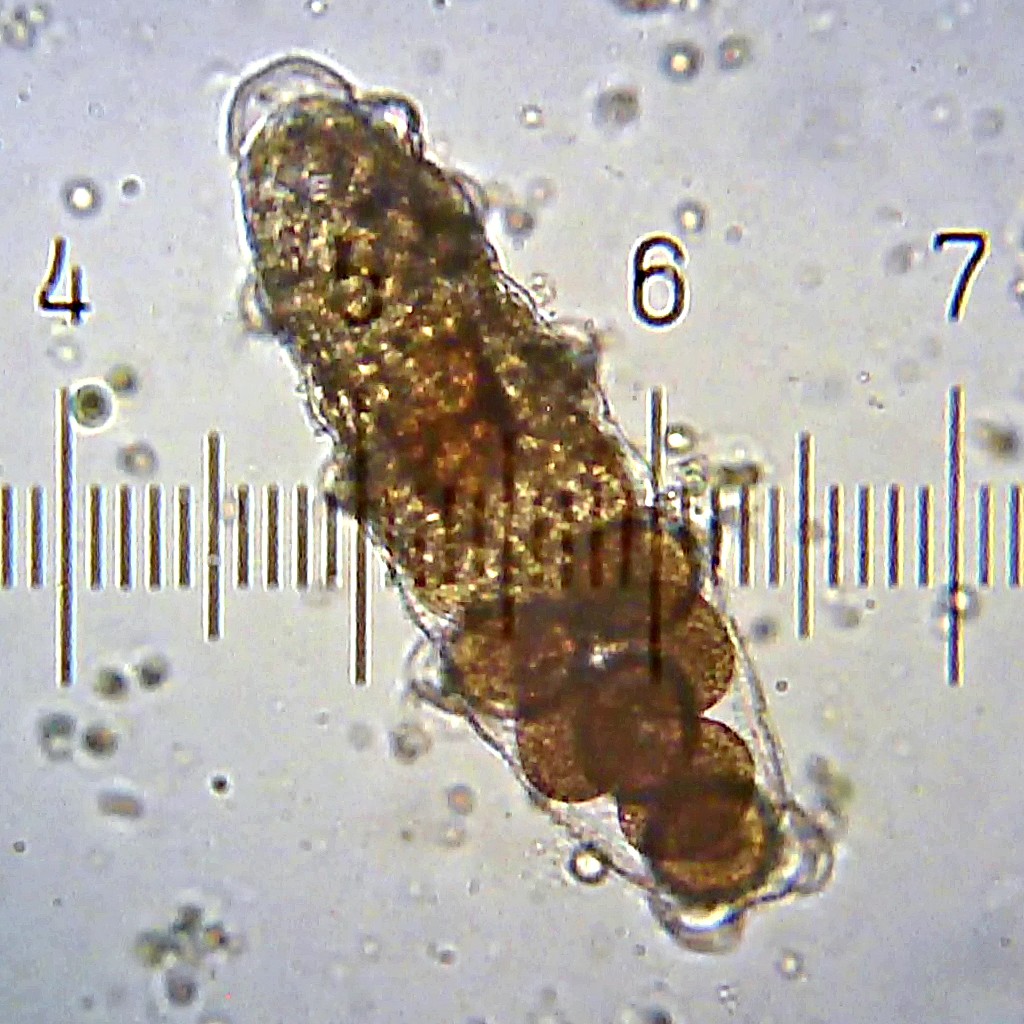
Bob Blaylock / Wikimedia Commons · Sources ↗ · Image terms ↗
Why it matters
Understanding cell drying and repair helps scientists investigate life’s limits. The result is relevant to astrobiology, but it does not prove life travels between planets. Such a journey would require launch, a long trip, arrival, recovery and reproduction. Demonstrating one step does not establish them all.
The next questions
Future studies can compare species, exposure times, radiation and the long-term health of survivors. Reproduction and Earth-based control groups matter as much as short-term movement after rehydration. Resilience is a measurable ability with limits, not indestructibility. The real biology is more interesting than the myth.
Key terms
— a state in which an organism’s life processes slow to levels difficult to measure.