
An amphibian that keeps juvenile traits
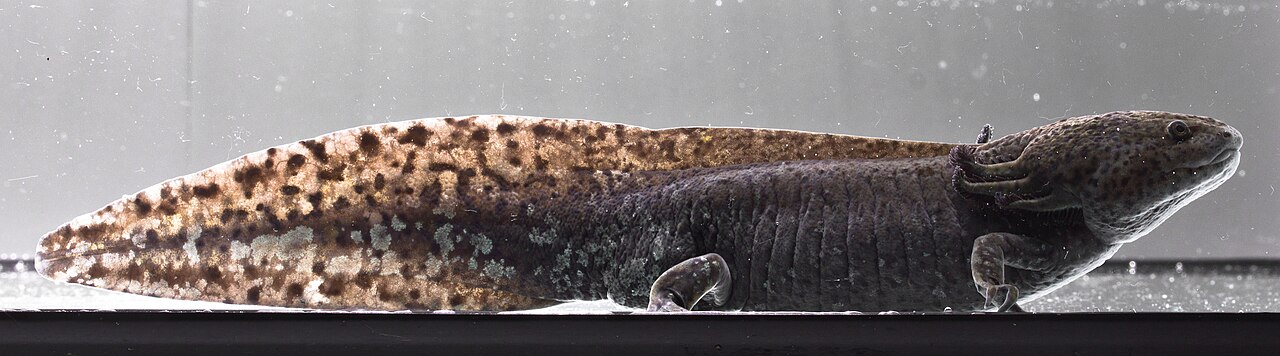
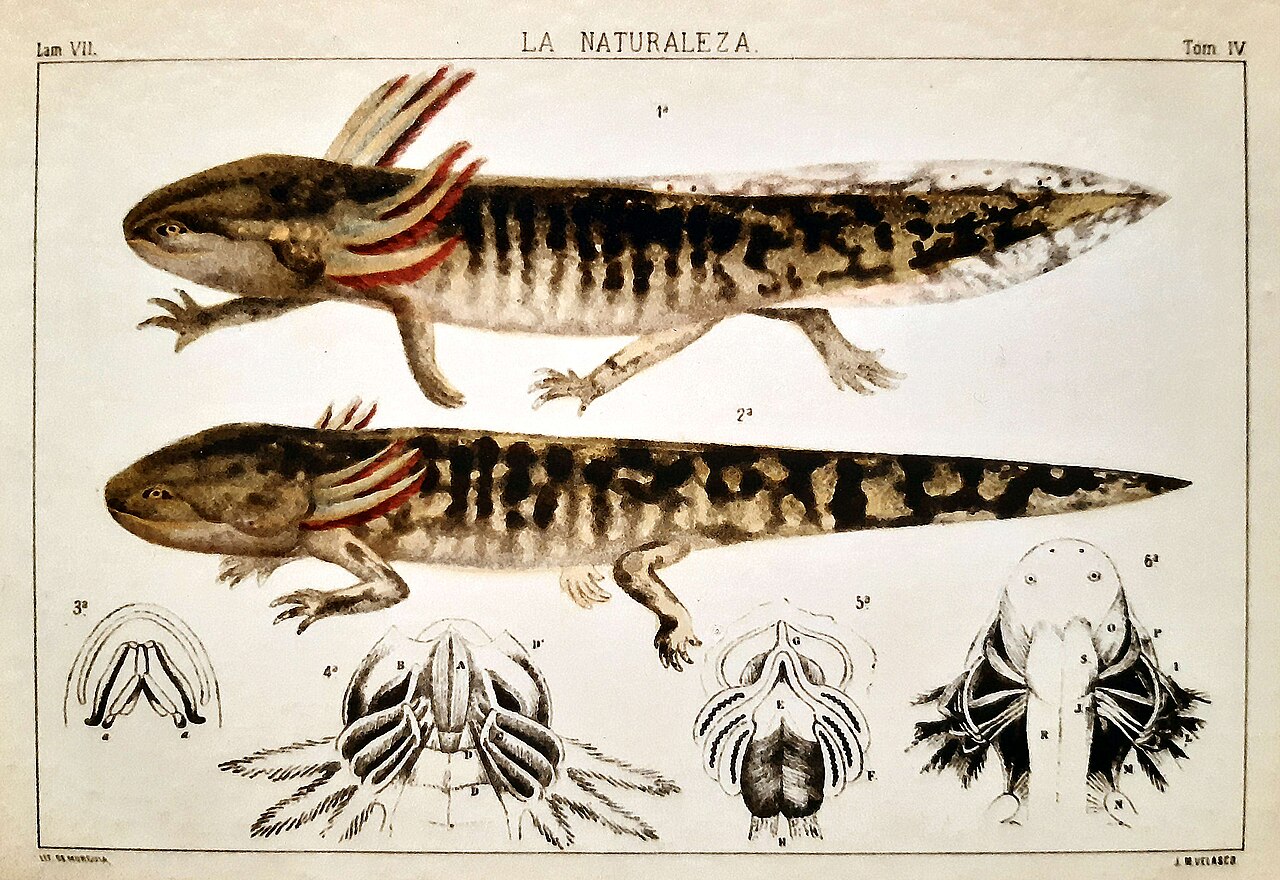
The axolotl lives in aquatic habitats around Mexico City. Even as a breeding adult it usually retains external gills and other larval features, a condition called neoteny. That is not immortality. Wild axolotls are critically endangered by habitat loss, pollution and introduced species. Animals in laboratories and homes do not make the wild population secure.
The wound closes first
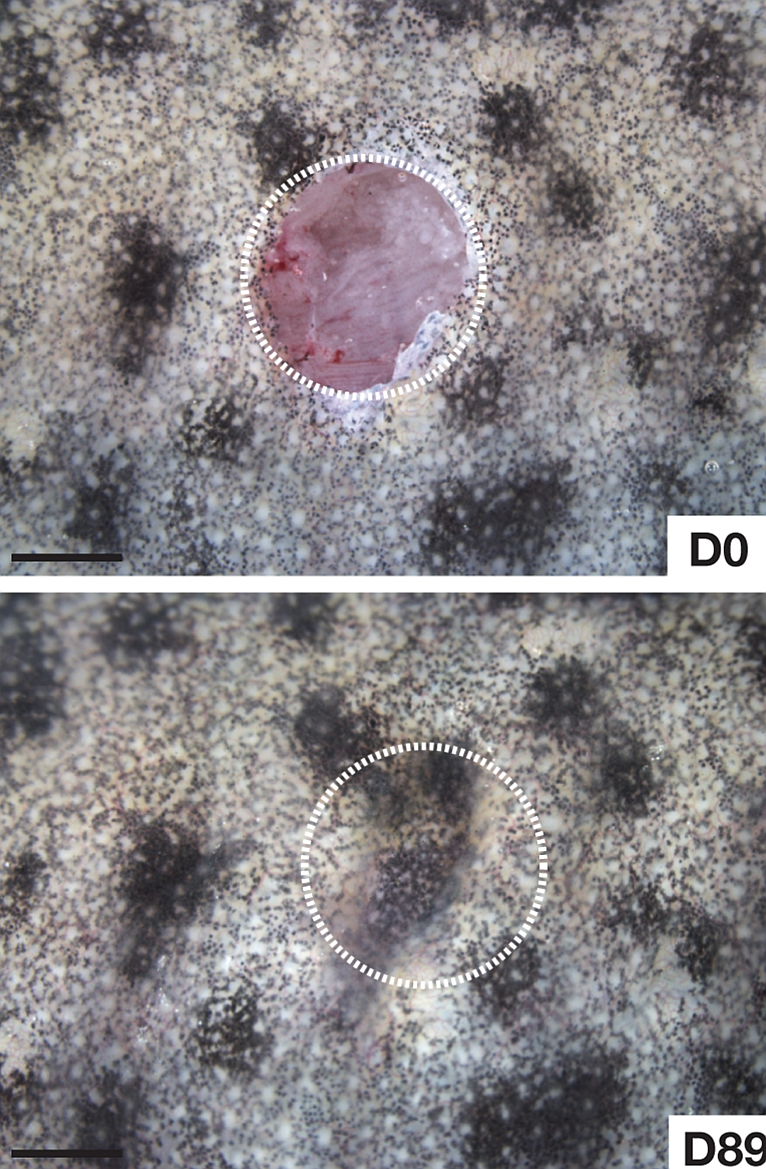
After limb loss, skin cells rapidly cover the injury and form a specialised wound layer. It sends signals to underlying tissue. Some cells re-enter the division cycle; others produce descendants for reconstruction. Nerves are important early on: removing their influence can prevent normal regrowth. There is no single magic cell that creates everything by itself.
Seifert AW, Monaghan JR, Voss SR, Maden M. / Wikimedia Commons · Sources ↗ · Image terms ↗
The blastema is a building site
A forms beneath the wound covering. Its cells proliferate but must also respond to positional information so the correct structures appear in the correct places. Signals coordinate bone, muscle, skin, vessels and nerves. Different tissues may contribute different progenitors; not every cell simply resets to an embryonic state. Cell tracing allows researchers to test where new tissue comes from.
Shape is not enough
A new limb must reconnect with nerves and blood supply and actually function. The speed and completeness of regeneration depend on age, environment and injury type. Some large joint injuries do not repair perfectly even in axolotls. A photograph of a new limb is therefore only part of the evidence. Scientists also test anatomy and use.
Chiswick Chap / Wikimedia Commons · Sources ↗ · Image terms ↗
Why humans differ
Humans heal many wounds, but after losing a large limb we usually form a scar instead of a whole-limb . Immune responses and cell signals differ. There is no single regeneration switch to turn on. Stimulating growth would need careful control and safety checks. Current regenerative medicine can help some tissues, but recreating an entire arm is a far harder goal.
The next experiments
Researchers compare intact and injured tissue, track gene expression and test what happens when signals are blocked. Independent laboratories need to reproduce promising results. Learning from axolotls is valuable, but moving from understanding to treatment is a long process. Protecting the wild species also preserves a remarkable source of knowledge.
Key terms
— a mass of active cells at an injury site from which regenerating tissues develop.