
1. An historical beginning: Purple vapour and the goiter belt
1.1. The accidental discovery of element 53
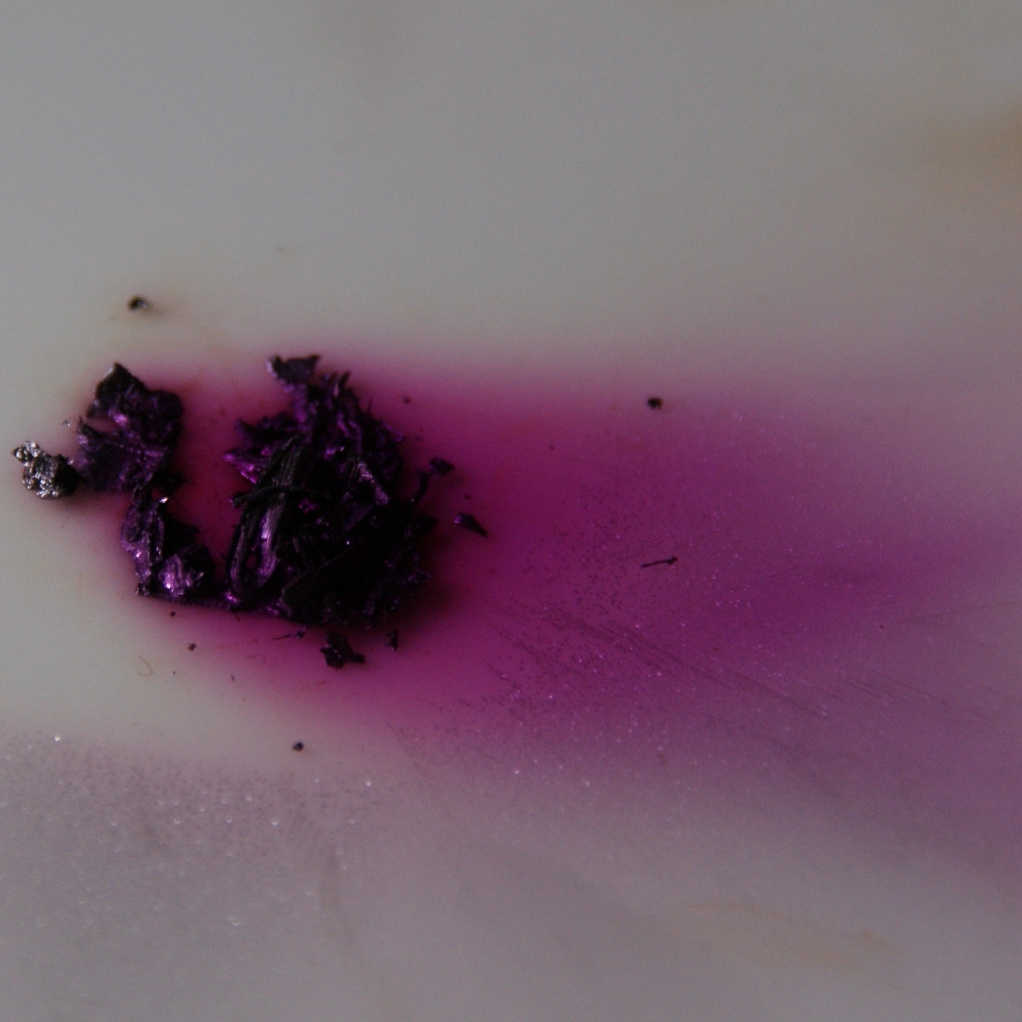
The story begins in 1811 in the laboratory of the French chemist Bernard Courtois. During the Napoleonic wars he was extracting materials for saltpeter, an ingredient of gunpowder, from the ash of seaweed. When acid reached a vessel containing the ash, striking violet vapour rose from it. On a cold surface the vapour formed dark, shiny crystals. Courtois recognized that he was looking at an unfamiliar substance rather than an ordinary impurity.
The new element was named from a Greek word meaning violet-like. Its colour makes the discovery easy to imagine: a chemical process briefly turned an invisible question about matter into a cloud that could be seen. The historical detail is fascinating, but discovering was only the beginning of understanding why the body needs it.
is element 53 of the periodic table. Pure can appear as dark crystals and violet vapour; in the diet the body obtains mainly as . Adding an solution to starch produces a distinctive deep-blue colour, a useful classroom test. A demonstration in a laboratory must not be confused with nutritional advice: concentrated or excessive intake can be harmful.
1.2. Goiter in Switzerland and North America
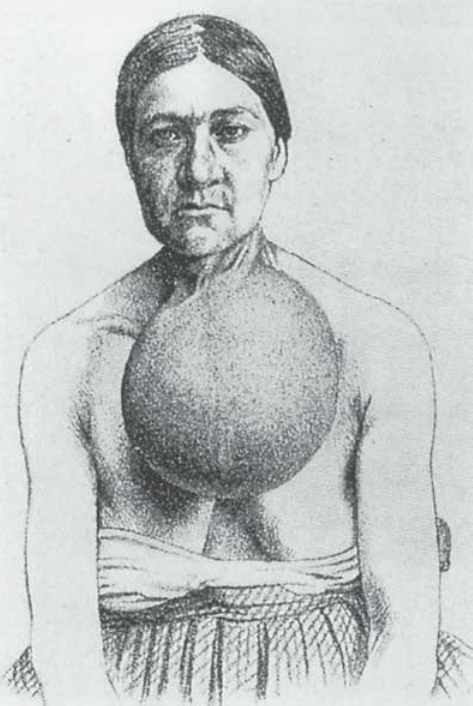
Long before the role of was understood, enlarged glands were common in many mountain and inland regions. This enlargement, called , has several possible causes, but deficiency is one of the major preventable ones. In severely affected communities, a long-standing lack of during pregnancy could also disrupt the growth of a child's nervous system. An old medical label for the gravest outcomes is now avoided because it is stigmatizing; the conditions are described more precisely today.
Parts of the northern United States, especially the area around the Great Lakes, came to be called the “ belt.” Examinations of recruits and schoolchildren early in the twentieth century made clear that this was more than a collection of isolated cases. Regional differences offered an important clue. Researchers began asking what the soil, water and local food supply lacked—and why people living elsewhere were much less affected.
Theodor Kocher · javno vlasništvo · Sources ↗
1.3. From treatment to a population-wide solution
Several observations gradually connected the disease with and then suggested a practical way to prevent it. Each step mattered: identifying a useful substance for an individual patient is different from delivering an appropriately small dose to an entire population.
• Around 1820, Jean-François Coindet investigated as a treatment for . It was a scientific advance, though a safe and reliable prevention programme for whole communities had not yet been established.
• In 1918–1920, Otto Bayard tried adding to salt in a small Swiss community. A well-known historical account says that he mixed the ingredients with a snow shovel.
• In the 1920s, David Cowie and his colleagues helped introduce in Michigan. From 1924 onward, ordinary households could buy salt containing the nutrient.
A population programme required a food used by most households and one that could carry a carefully controlled quantity of . Salt met these conditions: it was inexpensive, distributed on a large scale and easy to fortify during processing. That does not mean people should eat more of it. Recommendations to limit sodium still apply; the aim is to make the salt already used supply an appropriate amount of .
Iodization did not remove every existing overnight. Its greatest benefit lay in preventing new cases and protecting children as they developed, especially when an expectant mother had enough before and during pregnancy. This less visible effect is a major reason why salt iodization is regarded as a public-health achievement.
Ethantrott · CC BY-SA 4.0 · Sources ↗ · Image terms ↗
2. Biology: How iodine contributes to brain development
2.1. The thyroid gland, T3, T4 and the control loop
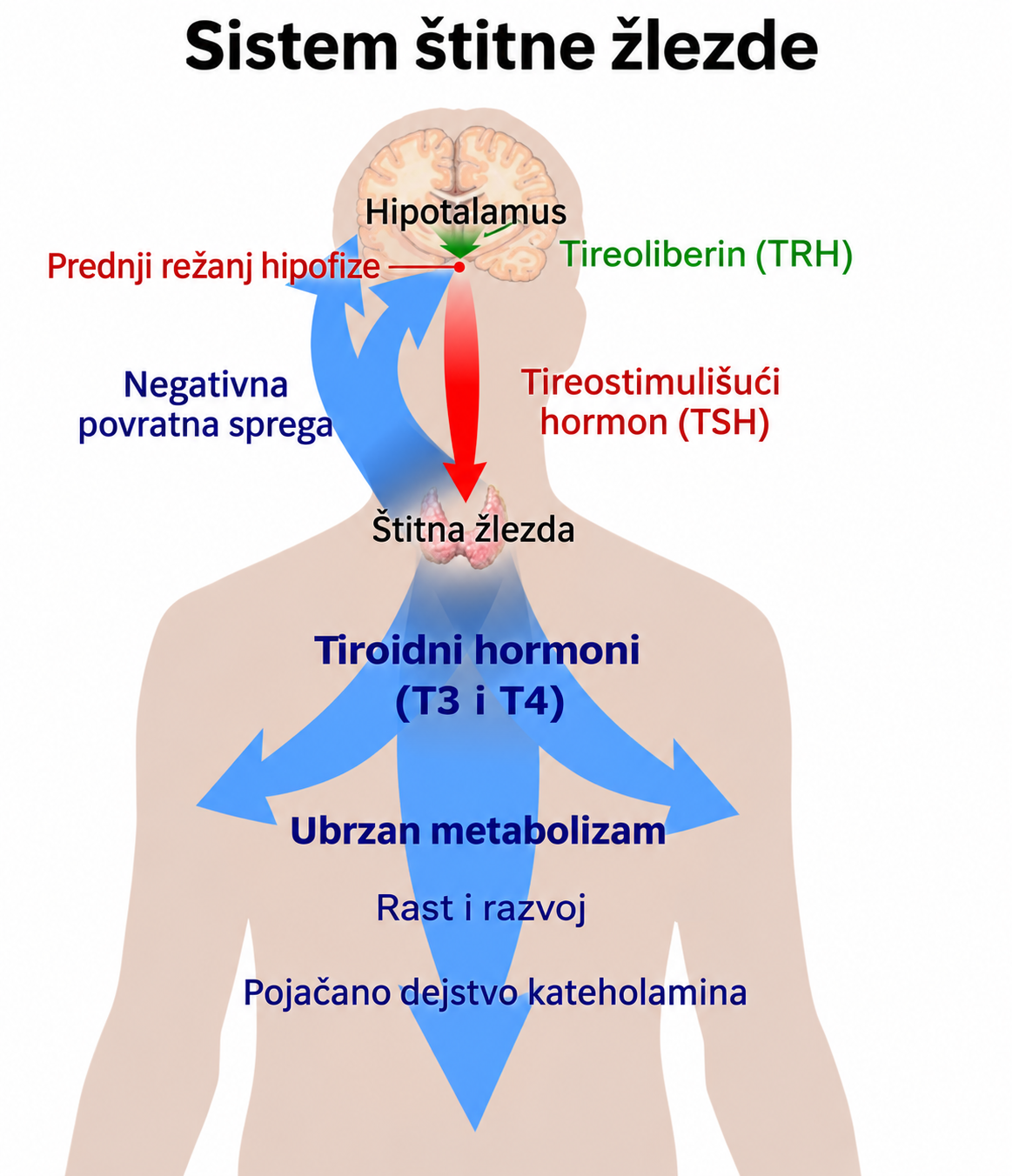
The sits in the front of the neck and plays a central part in regulating metabolism. It makes two important hormones: triiodothyronine, usually called , and , or . Once released into the blood, these hormones influence how tissues use energy and how the body grows, renews itself and functions. Their effects reach far beyond the neck.
The numbers in and refer to the three or four atoms in each hormone molecule. is therefore not simply an optional additive or a catalyst. It is a physical component of the hormones. Without enough of it, the cannot keep making them at a normal rate.
The hypothalamus and help regulate this system. The hypothalamus releases , or . The then releases , , which prompts the to work. When circulating hormones are adequate, feedback reduces the stimulus; when intake remains too low, the balance can shift.
Prevod i obrada prema šemi Mikaela Häggströma · CC0 · Sources ↗ · Image terms ↗
• With insufficient , the gland may be unable to produce enough and .
• The often responds by raising , the signal that encourages activity.
• Prolonged stimulation can contribute to enlargement of the gland, or . also has other causes, so it cannot be diagnosed from appearance alone.
2.2. The developing brain during pregnancy
hormones matter throughout life, but their role in pregnancy is especially important. Early in gestation the developing baby depends on hormones supplied by the mother. The gradually develops and begins producing hormones during pregnancy; maternal hormones remain important during this transition. It is inaccurate to treat development as one sudden switch at the midpoint of pregnancy.
If deficiency is severe and sustained, the mother may make too little hormone for normal development of the child's nervous system. In the most serious circumstances the effects can be lasting, including hearing problems, impaired growth and intellectual disability. The outcome depends on the severity and duration of the deficiency and on other medical factors. Prevention, attention to diet and appropriate clinical advice are therefore central, especially before and during pregnancy.
2.3. What can studies tell us about intelligence?
An historical study compared test results from American military recruits born before and after became widespread. In regions with the deepest earlier deficiency, the authors estimated a particularly large improvement—roughly one standard deviation, equivalent to about 15 points on an IQ scale. When regions with milder deficiency were included, the estimated average improvement across the country was about 3.5 points. These are estimates from a natural experiment, not controlled measurements of every individual in the population.
That distinction matters. The estimate does not mean that every child gained the same number of points, or that IQ can be summed into a single reliable national score. The pattern suggests that prevention brought the largest benefit where deficiency had been most serious. Historical evidence is now read alongside what medicine has learned about hormones and the developing brain.
UNICEF estimates that about 89% of people worldwide used salt containing in 2020. Coverage is not uniform within or between countries, and the presence of some in salt does not guarantee that every household receives an optimal amount. Programmes must therefore keep checking the supply and pay particular attention to pregnant people and young children.
2.4. What is actually added to the salt?
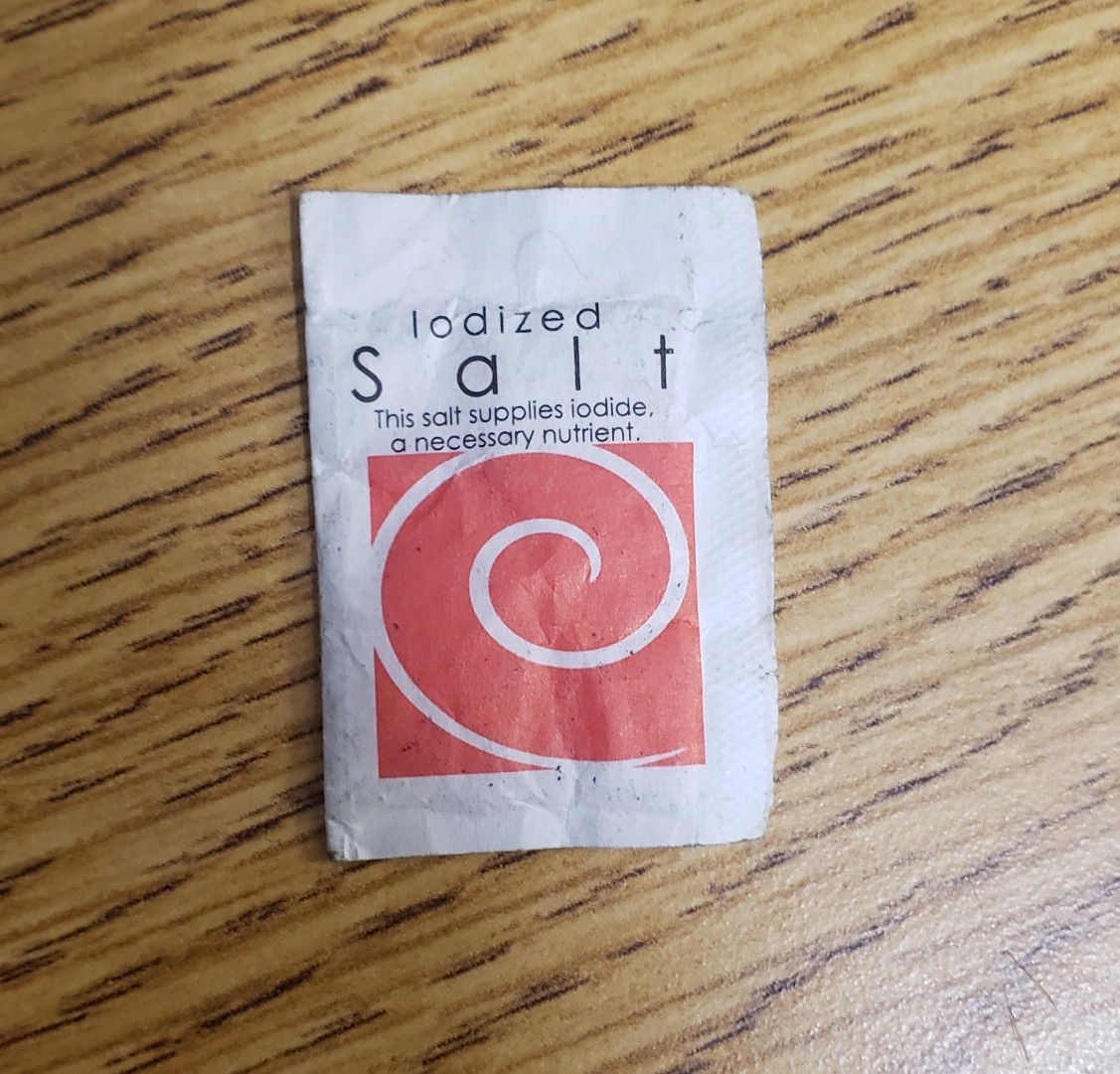
begins as ordinary sodium chloride. During processing, a measured amount of an -containing compound—usually or potassium iodate—is mixed into it or sprayed onto it in a solution. Producers then need to test whether the is evenly distributed and remains present during storage. The target concentration varies with national rules, salt type and expected losses before the food is eaten. UNICEF describes a common household target of 15–40 milligrams of per kilogram of salt, equivalent to 0.0015–0.004%.

BigBrotherMouse · CC BY-SA 4.0 · Sources ↗ · Image terms ↗
Potassium iodate is more stable in many hot or humid conditions. is also used when manufacturing and packaging conditions are suitable. The mass of itself must be distinguished from the mass of the entire compound that carries it; the two figures are not interchangeable.
Some producers also add an anticaking ingredient to keep salt free-flowing in damp air. A package labelled “” is therefore not one single recipe. The essential requirement is quality control: the amount of in the package must be appropriate and must survive until use.
This modest technological change brought a substantial public-health benefit. Changing patterns of food production and consumption, however, mean that the programmes cannot simply be introduced once and then forgotten.
3. Iodine in today's food supply
3.1. Seafood, seaweed and the uneven geography of iodine
The content of food depends partly on the environment in which it was produced. Marine fish and other seafood can be good sources. Certain seaweeds may contain very large quantities, but those quantities vary enormously by species and product. Not every kind of sea salt has added: “sea salt” describes where the salt came from, not the content shown on its label.

Omelele Ngxameleni · CC0 · Sources ↗ · Image terms ↗
On land, in soil and water also varies widely. Plants and animals from different regions therefore do not necessarily provide the same amount. Fish, eggs, dairy products and can all contribute to intake, but a fixed value per 100 grams of a food cannot be assumed for every product. For most adults the recommended daily intake is about 150 micrograms; pregnancy and breastfeeding increase the need.
3.2. Dairy foods are useful but variable
Dairy products contribute substantially to intake in some countries. Their content depends on animal feed, supplements, farming practice and the use of disinfectants in dairying. -based antiseptics can affect the amount in milk, but they are not necessarily its leading source everywhere or at all times.
When food-production methods or diets change, intake can change too. Replacing cow's milk with plant-based drinks illustrates this issue: some are fortified with , while many are not. Reading the nutrient label is more reliable than assuming that every replacement supplies the same nutrients.
3.3. Modern intake and pregnancy
In the United States, concentrations measured in population urine samples fell considerably between the 1970s and the 1990s and then largely stabilized. Pregnancy remains an area of concern: in a survey covering 2007–2014, the median for pregnant participants was about 144 micrograms per litre. This is a group-level indicator. A single spot urine sample cannot, by itself, reliably diagnose deficiency in one person.
The American Association recommends a daily supplement containing 150 micrograms of to women planning pregnancy, pregnant women and those breastfeeding. That recommendation is best discussed with a clinician or pharmacist in the light of diet, other supplements and disease. Too much can also be harmful, so supplement doses should not be multiplied without medical advice.
Less use of in some homes, non- in processed foods and a shift to plant-based milk substitutes may make adequate intake harder for certain groups. None of these changes should automatically be declared the cause of deficiency in every person or country. Diets and public-health policies differ, and monitoring must be local.
4. Does iodized salt change the taste of food?
4.1. The question behind a kitchen claim
Cooks often choose salt for its crystal size and the way it falls onto food. Those differences are easy to notice while seasoning a dish. Whether a small quantity of added changes taste is a separate scientific question that depends on concentration, the food and how the comparison is made. The content of ordinary is small compared with the amount of sodium chloride.
4.2. What a fair taste test would require
A comparison should use identical foods, control the actual mass of salt, account for differences in crystal size and hide the identity of the samples from tasters. Published research provides firmer ground than anecdotes or a test for which methods and results cannot be checked. It does not prove that all salts behave identically in every recipe; it helps answer the narrower question of whether ordinary iodization generally harms food quality.
4.3. A review of 34 studies
A systematic review gathered 34 studies covering 38 categories of processed food prepared with . For most products the researchers found no changes in taste, smell or other sensory properties important enough to reduce consumer acceptability. Some products showed small differences, so the result is not an absolute rule for every formulation. Overall, the evidence does not support a general claim that “ruins” food.
The practical conclusion is simple: if salt is already being used, an appropriately iodized variety can supply . At the same time, sodium intake should stay within recommended limits. A benefit from fortification is not an invitation to make food saltier.
It is helpful to separate two questions in the kitchen: how much the salt contains and how its crystals affect measurement. Neither problem can be settled by the colour of a packet or the word “sea” on a label.
5. A practical guide to seasoning
5.1. Crystal size, volume and recipes
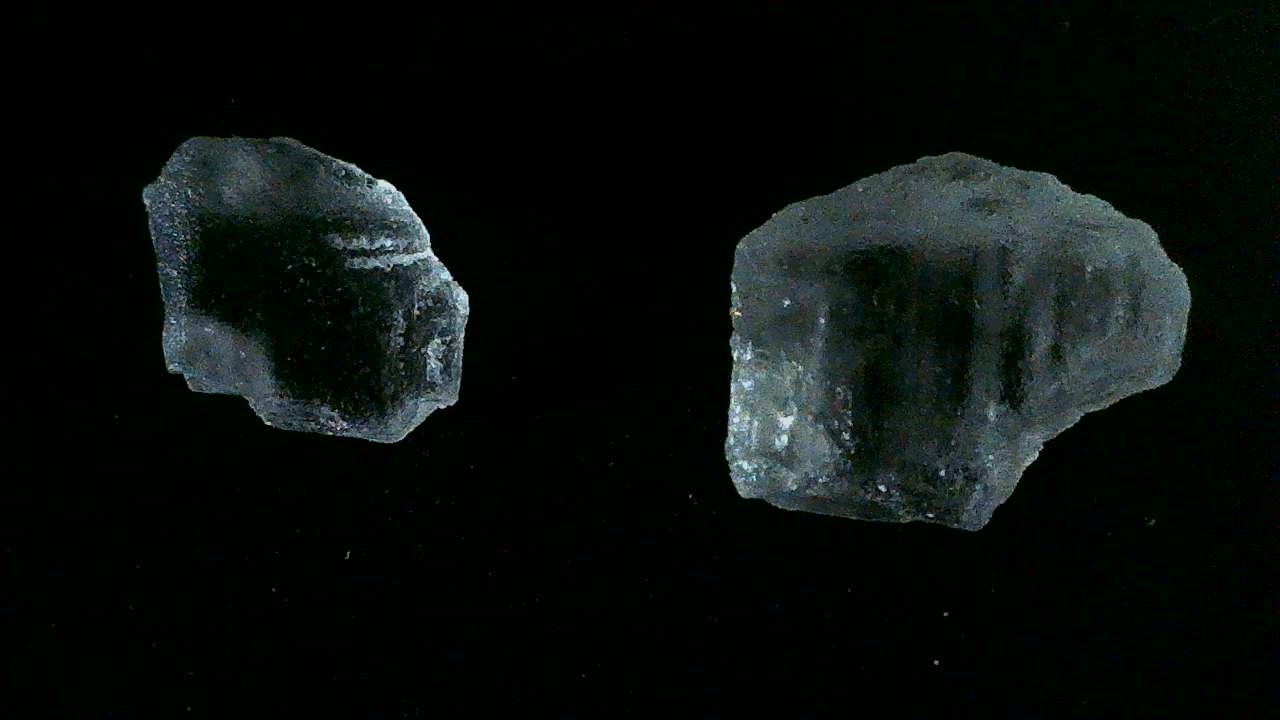
Table salt, sea salt and so-called kosher salt consist mainly of sodium chloride, but they may differ in trace minerals, added and the shape of their crystals. The latter matters particularly when salt is measured by volume. A teaspoon of fine, tightly packed grains can weigh more than a teaspoon of large, airy flakes. A scale is therefore more reliable than a spoon when a recipe needs precision.
Давид Андронов · CC BY 4.0 · Sources ↗ · Image terms ↗
For the same reason, switching brands while keeping the same number of teaspoons can make a dish noticeably saltier or less salty. The following common comparisons are only approximate; their accuracy depends on the manufacturer and the exact product:
1. Fine iodized table salt has small, closely packed crystals. A teaspoon usually contains more sodium chloride by mass than a teaspoon of coarse flake salt.
2. Morton kosher salt has larger, less densely packed crystals. Approximately one and a half teaspoons may be needed to match one teaspoon of fine table salt by mass.
3. Diamond Crystal kosher salt is particularly airy and flaky. Roughly two teaspoons may match the mass in one teaspoon of fine table salt.
Large flakes are convenient for seasoning food by hand because a cook can feel and see where they land. Fine salt can also be used effectively when it is spread carefully and the total amount is measured. The relevant difference here is crystal geometry, not a special medical virtue of one brand.
5.2. Two simple habits
When using fine in everyday cooking, two simple habits can make the amount easier to control:
• Hold the hand a little above the food while scattering salt so that the grains cover a wider area instead of piling up in one spot.
• Use dry fingers or a clean dry spoon. Damp grains cling to the skin and make a measured pinch less predictable. Taste and adjust sparingly rather than adding salt to reach an target.
5.3. Preserving a quiet success
Fortifying salt with is among the simplest and least expensive public-health interventions of the past century. It helped prevent consequences of serious deficiency without requiring every household to change its routine completely. The achievement is not proof that all countries have solved the problem permanently: access, manufacturing standards and diets keep changing.
The sensible response is neither to eat more salt nor to dismiss iodization as an inferior culinary choice. Check the label, use salt moderately and pay attention to particular nutritional needs, especially in pregnancy. The small amount of in an everyday product can protect a biological process that is anything but small.