
1. A Nobel Prize in Antarctic ice
At the South Pole there is no conventional observatory dome, giant mirror or lens pointed at the sky. The most important part of the instrument lies deep beneath the researchers’ feet: thousands of sensors embedded in ice wait for rare, faint flashes. That is how works. The observatory has shown that from some of the most energetic events in the distant universe reach Earth.

infn.it · Sources ↗ · Image terms ↗
The Royal Swedish Academy of Sciences awarded the prize to Francis Halzen of the University of Wisconsin–Madison for decisive contributions to and the discovery of high-energy of astrophysical origin. Halzen received the prize alone, but in his first response he stressed the international collaboration without which the detector could not have been built. Hundreds of scientists and engineers from many countries have contributed over the years. The award therefore recognizes both an idea and the long collective effort that tested it.
Halzen’s key insight was that particles which almost never interact with matter could be studied using a natural detector medium that is enormously large and clear at depth: Antarctic ice. The proposal sounded audacious when it was presented in the late 1980s. Today gathers data year after year as researchers try to separate cosmic signals from the far more numerous particles produced in Earth’s atmosphere.
2. What is a neutrino, and why is it so hard to catch?
A is an elementary particle in the lepton family. It carries no electric charge, so electric and magnetic fields do not bend its path as they do a proton’s or an electron’s. Its ordinary interactions with matter occur through the ; although it has mass, an individual ’s gravitational effect is negligible for detection. Consequently, the overwhelming majority pass through Earth and our bodies without a measurable collision.
Their mass is tiny, but it is not zero. In 2025 the KATRIN experiment set a laboratory upper limit of 0.45 eV/c² on the effective electron- mass inferred from beta decay. That is not a measurement of the exact mass of each of the three mass states. Other experiments infer differences between squared masses from , while cosmological estimates of their combined mass depend on the model and data used.
About 65 billion solar pass each second through an area roughly the size of a little fingernail. Most leave no noticeable trace. The figure conveys how abundant are, but also why a detector needs a vast number of atoms to record even an occasional interaction.
People sometimes say that a can pass through “light-years of lead.” This is a vivid image, not a universal measure of penetrability: the chance of a collision depends on the ’s energy and the material. The high-energy sought by interact more readily than solar , but they are far rarer. That is why it takes a volume of ice comparable to an entire mountain.
3. Three “flavours” and an identity that changes in flight
Experiments identify three kinds of , which physicists call flavours: electron, muon and tau . Their names come from the charged leptons with which they are associated. An electron may form in the Sun’s core, for instance, yet arrive at a detector on Earth as a muon or tau . This process is called .
The change does not mean the particle somehow “decides” to become something else on the way. A created in a particular flavour state is a quantum mixture of mass states. Their phases diverge as they travel, changing the probability that a detector will register one flavour or another. show that mass states differ and required an extension of the original Standard Model of particle physics.
The phenomenon helped resolve the decades-old solar- problem. Early detectors were mainly sensitive to the electron flavour and therefore recorded fewer particles than solar models predicted. Some had changed flavour on the journey and escaped those detectors. Takaaki Kajita and Arthur B. McDonald received the 2015 Nobel Prize in Physics for demonstrating .
4. From Pauli’s hypothesis to the first detected antineutrino
While studying beta decay, scientists were puzzled that the emitted electrons did not always carry away the same amount of energy. In 1930 Wolfgang Pauli proposed that another, unseen neutral particle was produced and took away some energy and momentum. His hypothesis preserved fundamental physical laws, but it posed a difficult experimental challenge: how could one prove the existence of a particle that hardly interacts?
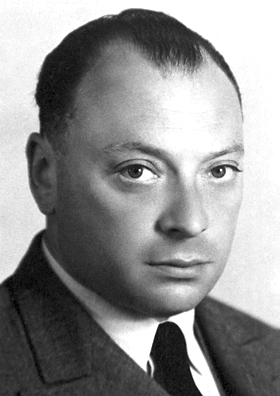
Nobel foundation · Sources ↗ · Image terms ↗
Pauli originally called his proposed particle a neutron. After the discovery of the heavier neutron in 1932, the name came into use, popularized by Enrico Fermi. In 1956 Clyde Cowan and Frederick Reines published convincing evidence of from a nuclear reactor. An interacting with a proton produced a positron and a neutron, and the characteristic sequence of signals identified the event. Reines shared the 1995 Nobel Prize for this achievement; Cowan had died in 1984.
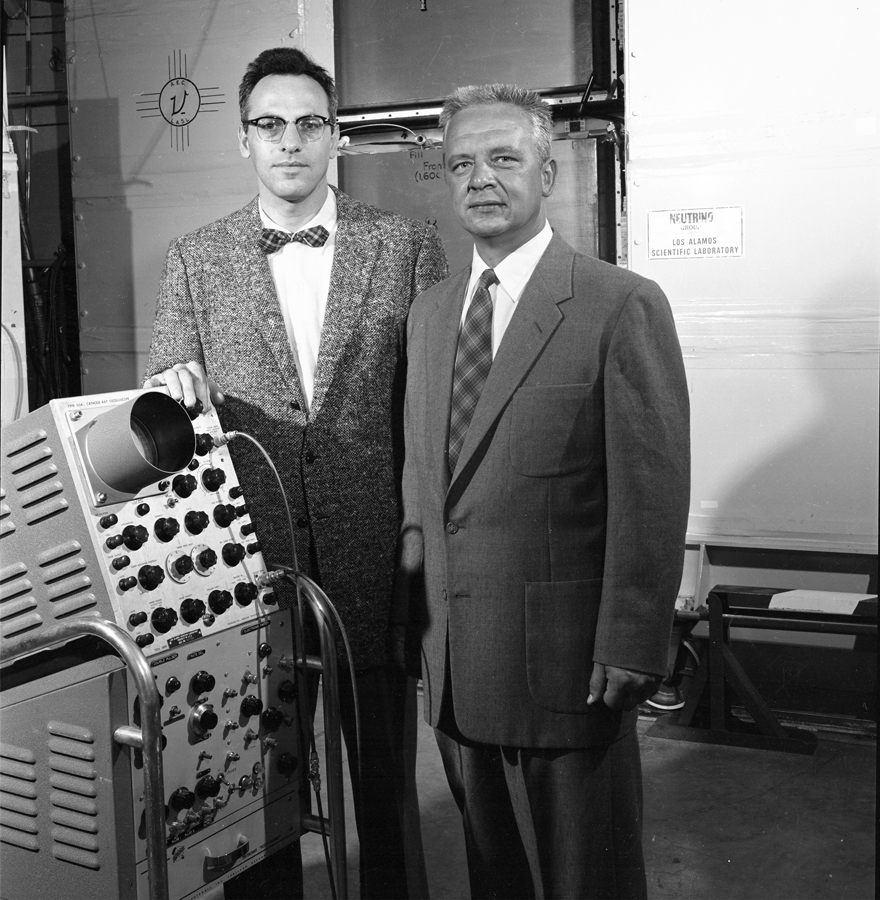
Savannah River Site · Sources ↗ · Image terms ↗
Astronomy with did not begin with . Earlier experiments detected solar , and in 1987 detectors recorded from the supernova SN 1987A in a nearby galaxy. opened a different, high-energy chapter: searching for particles that may arise near black holes, active galactic nuclei and other cosmic accelerators.
5. How do you build a telescope from a cubic kilometre of ice?
In 1988 Halzen and John G. Learned presented the idea of a observatory in the South Pole ice. Before , the detector showed that sensors could be lowered into deep ice and that the ice could act as an optical medium. Bubbles and light scattering in shallower layers complicated the early attempts. Ice below roughly 1,400 metres proved much more suitable, although its transparency is not perfect and must be measured carefully.
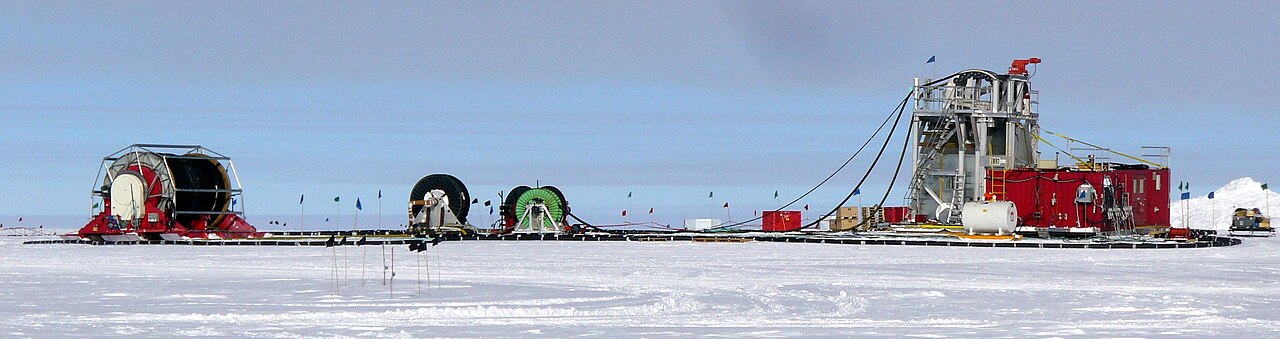
Amble · Sources ↗ · Image terms ↗
For each string of sensors, engineers melted a deep vertical hole with a powerful jet of hot water. They then lowered a cable carrying optical modules, and the water refroze. This work was possible mainly during the short Antarctic summer. Completed with the final string lowered in December 2010 and operating at full capacity from 2011, has 86 strings and 5,160 at depths of about 1,450 to 2,450 metres.
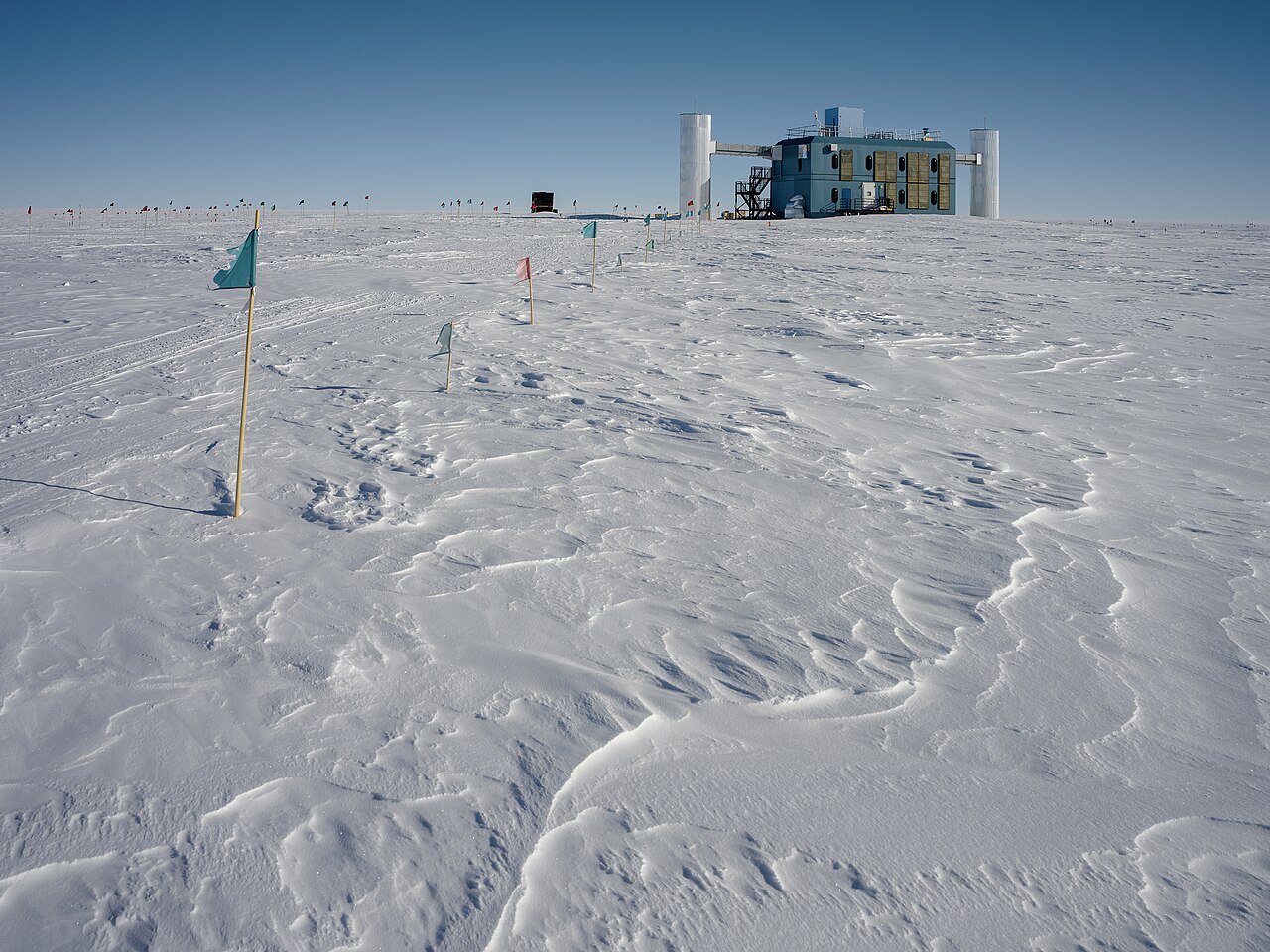
Christopher Michel · Sources ↗ · Image terms ↗
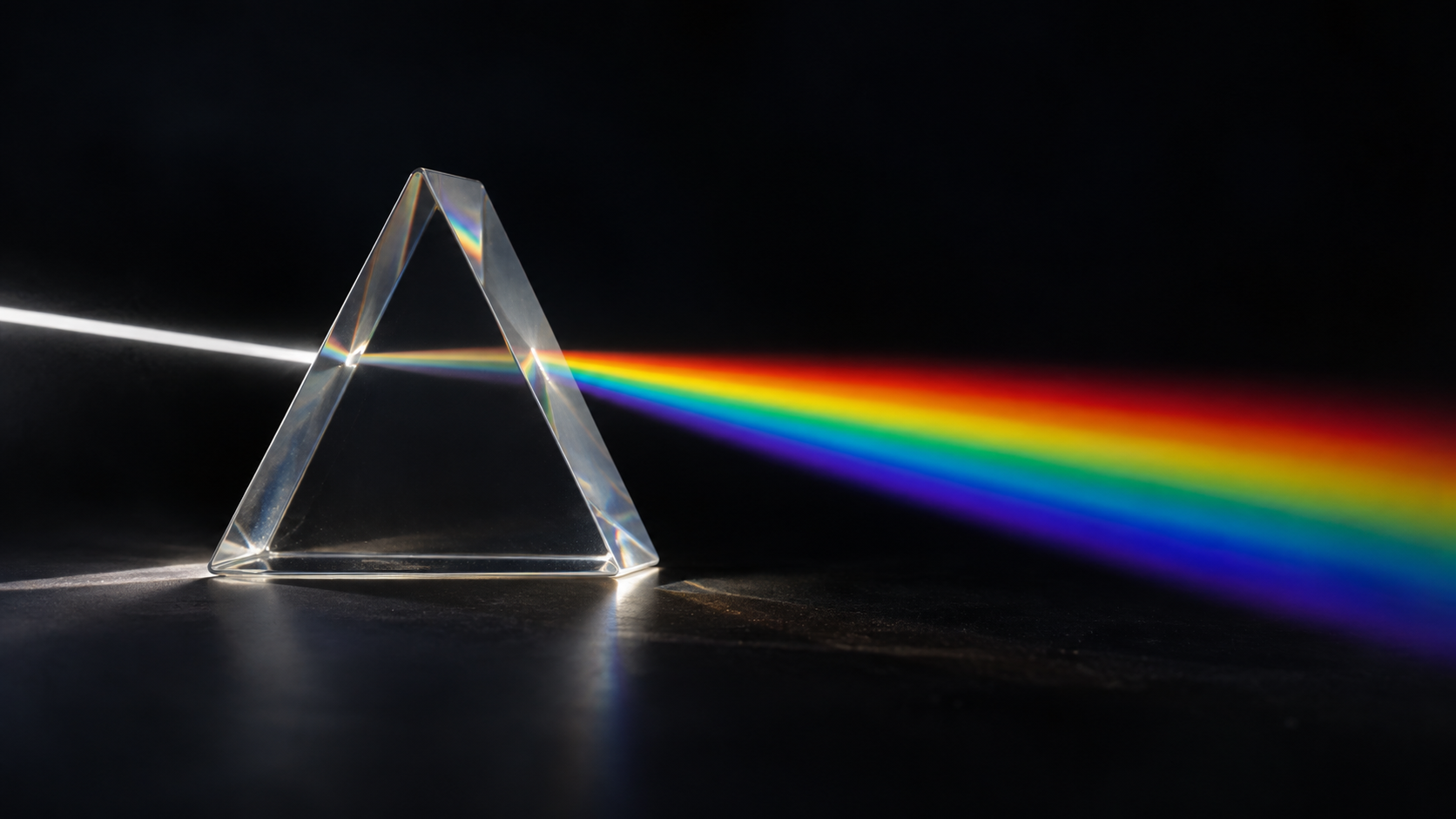
When a finally strikes an atomic nucleus in or near the ice, it produces charged secondary particles. Some travel faster than light travels in ice, although still slower than light in a vacuum. This generates : faint bluish light spreading at a characteristic angle. Sensors record its timing and intensity, and researchers use the pattern to estimate the event’s direction and energy.
Not all light patterns look alike. A long muon track often provides a relatively good direction estimate, while a particle “cascade” makes a more compact flash and can give a better measure of deposited energy. A single event does not automatically supply the source’s precise address: researchers must account for reconstruction uncertainties and the enormous background of particles produced in the atmosphere.
6. When did cosmic particles become an astronomy story?
In 2013 the team reported the first strong evidence for a flux of high-energy of astrophysical origin. These were not the first from beyond Earth ever observed: the Sun and supernova SN 1987A had provided earlier examples. What was new was the particles’ energy and the evidence for a population of cosmic sources far beyond our solar system. Researchers could now begin looking for the individual accelerators producing them.
are mostly electrically charged particles. Galactic and intergalactic magnetic fields bend their paths, so their arrival directions do not usually point straight back to their sources. carry no electric charge and can therefore preserve information about the approximate direction of the region in which they formed. Still, linking a single to an object on the sky requires other evidence and a careful estimate of the probability of a chance coincidence.
On 22 September 2017, recorded a high-energy event and sent an alert to other observatories. In that direction lay the active TXS 0506+056, from which telescopes were also recording enhanced gamma-ray emission. Later analysis of earlier data indicated a preceding, months-long excess of from the same direction. Together, the findings provide strong evidence that this object emits high-energy ; they do not establish the origin of every .
This is an example of : researchers combine with electromagnetic radiation and, for other events, gravitational waves. The approach did not literally begin in 2017; earlier events, notably supernova 1987A, had already supplied different kinds of signal. But TXS 0506+056 demonstrated how rapid coordination between instruments can strengthen the interpretation of a high-energy cosmic source.
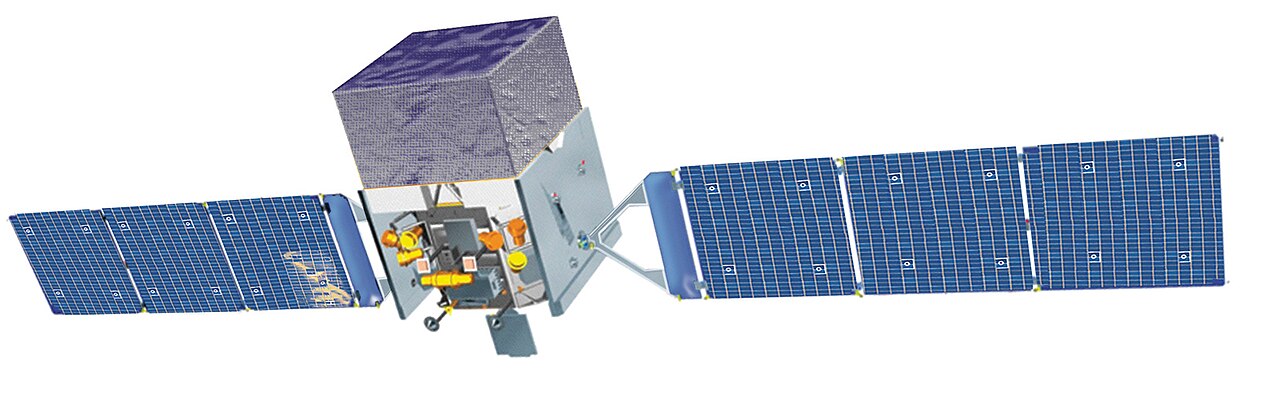
NASA/Sonoma State University/Aurore Simonnet · Sources ↗ · Image terms ↗
7. An active galaxy and a neutrino map of the Milky Way
Another important direction on the sky is , also known as Messier 77. Its centre contains an powered by material around a supermassive black hole. ’s analysis found an excess of dozens of high-energy arriving from its direction. This is significant evidence for emission from the galaxy, subject to statistical limitations that should be stated clearly. Further measurements are needed to locate the production region more precisely.
In 2023 also released the first image of the Milky Way plane made using . It is not a photograph in the ordinary sense, but a statistical map of arrival directions from our galaxy. They probably arise when collide with gas between the stars. The map shows that the “ sky” has a galactic component, while the Milky Way’s individual accelerators remain a subject of research.
The next stage involves improving the current observatory and the possible -Gen2. An upgrade installed in 2025–2026 should improve calibration of the ice and work at lower energies. Gen2 is a proposed larger instrument with an optical volume about eight times that of the present detector. More sensors and a greater volume would improve the chances of finding fainter and more distant sources.
8. What did the Nobel Prize actually recognize?
Halzen’s prize recognizes more than a detector on an extraordinary scale: it acknowledges a change in the questions scientists can ask. A conventional telescope detects light emitted or reflected by an object. A telescope can probe environments from which light struggles to escape and may offer clues to processes that accelerate particles to extreme energies. The two views complement each other; neither gives the complete story alone.
At the South Pole, the daily work of maintaining the observatory, processing data and testing hypotheses continues. Thousands of optical modules wait for extremely rare flashes. When a new signal arrives, it is not yet a finished account of what happened in space: it is the first clue to be combined with other observations. That combination of a bold instrument, careful statistics and international cooperation has opened a new window on the cosmos.