What is happening?
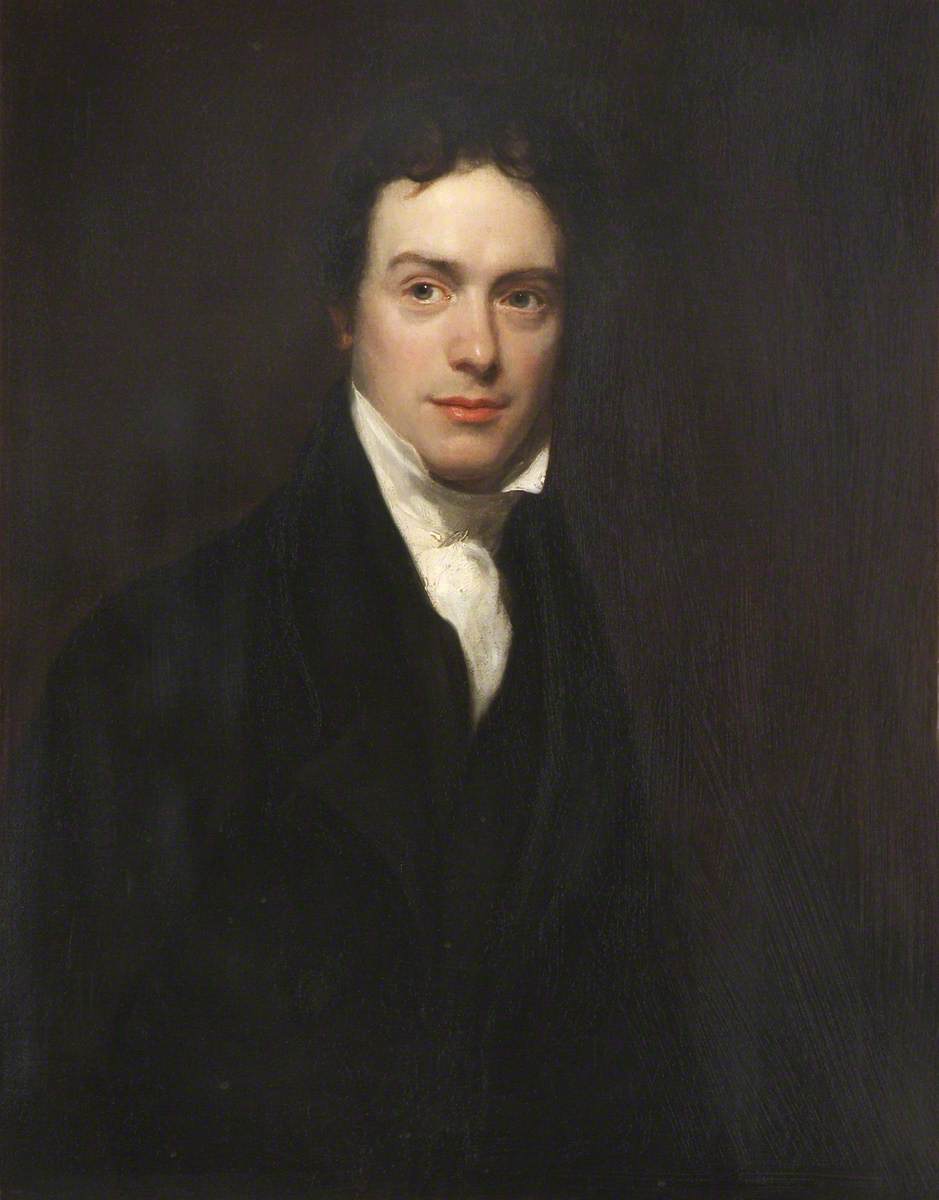
Michael Faraday studied the link between electricity and magnetism. His experiments paved the way for generators.
Faraday did not begin as a university professor. As a young man he trained as a bookbinder before joining the laboratory of the Royal Institution in London. There he spent years carrying out experiments and recording results carefully. His discoveries included electromagnetic rotation, and laws of electrolysis. His story shows the value of curiosity, practice and patient experimental work.
How and why?
A changing magnetic field through a conductor can create an electric voltage in it.
Imagine a coil of wire connected to an instrument that measures electric current. Move a magnet relative to the coil and the instrument can show a brief current. If nothing changes, there is no such signal. The crucial feature is a changing magnetic field through the conductor. A power station applies a related principle continuously: mechanical movement turns parts of a generator, which produces electrical energy.
How do we know?
Faraday documented his experiments; the Royal Institution preserves records of his work.
The Royal Institution records Faraday's discovery of electromagnetic in 1831 and preserves his laboratory notes, lectures and correspondence. His conclusions did not depend on one observation: he changed the conditions and watched when a signal appeared. Later researchers repeated and described the same laws mathematically. A good experiment should be repeatable and show what happens when one condition changes.
Why does it matter?
underpins much of today’s electricity generation.
Without , modern electricity generation and transmission would look very different. The basic link between magnetism and electricity appears in generators, transformers and many other devices. Faraday also made science accessible to wider audiences through public lectures. His work is a reminder that major discoveries often start with a simple question: what happens if I move or change this?
From experiment to power station
Faraday did not begin as a university researcher. He worked as a bookbinder’s apprentice, read the books he bound and attended public lectures. He later became Humphry Davy’s assistant at the Royal Institution. Curiosity and luck were not enough: he spent years developing careful measurement, record keeping and control of experimental conditions. He investigated the connection between electricity and magnetism step by step.
After Ørsted showed that an electric current affects a magnetic needle, a reverse question arose: can magnetism create a current? In 1831 Faraday wound two separate wires around an iron ring. Switching on current in one winding briefly deflected a galvanometer connected to the other; while the current stayed constant, the pointer rested. It moved again when the current was switched off. The crucial clue was not merely the magnetic field, but its change.
Moving a magnet near a coil produces a related effect. The faster the magnetic field through the coil changes, the greater the induced voltage can be. A generator therefore uses mechanical work to turn a magnet or windings. Energy does not appear from nowhere: the driving turbine may use water, steam or wind. Faraday’s discovery connected a laboratory result to infrastructure we use today, while James Clerk Maxwell’s later mathematics supplied a wider description of the electromagnetic field.
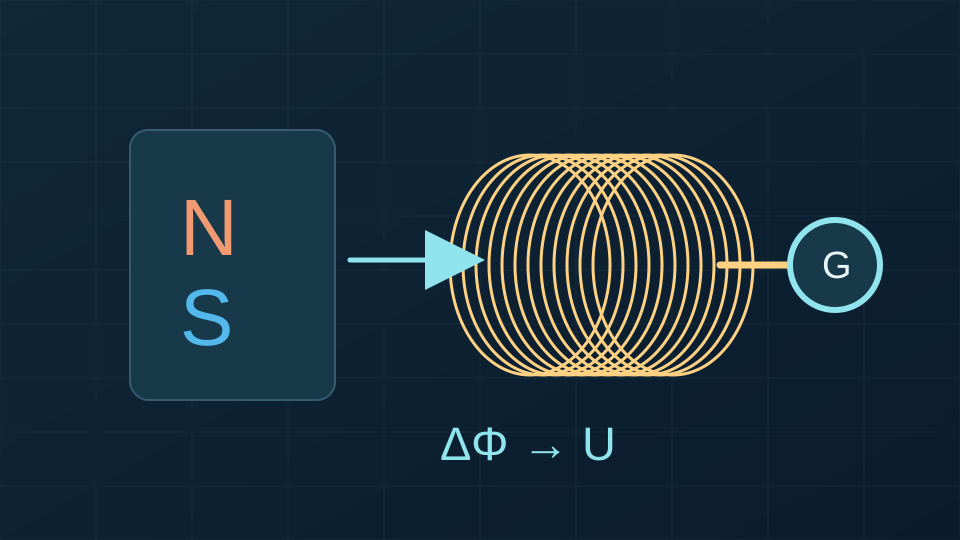
Original NZM illustration · Sources: Royal Institution
A further detail
Faraday also developed ways to think with magnetic field lines. They are not visible physical strings, but a representation of a field’s direction and strength in space. Today we say that induced voltage is related to the rate of change of magnetic flux through a loop. In a closed circuit, the resulting current creates a magnetic effect opposing the change that caused it: Lenz’s law describes this and is consistent with energy conservation. Without that opposition, a generator could deliver power without work being supplied. These relationships show why Faraday’s experiment became a foundation of a wider theory rather than a curious trick with a magnet.
Key terms
— the creation of voltage by a changing magnetic field.