

From one neuron to a network
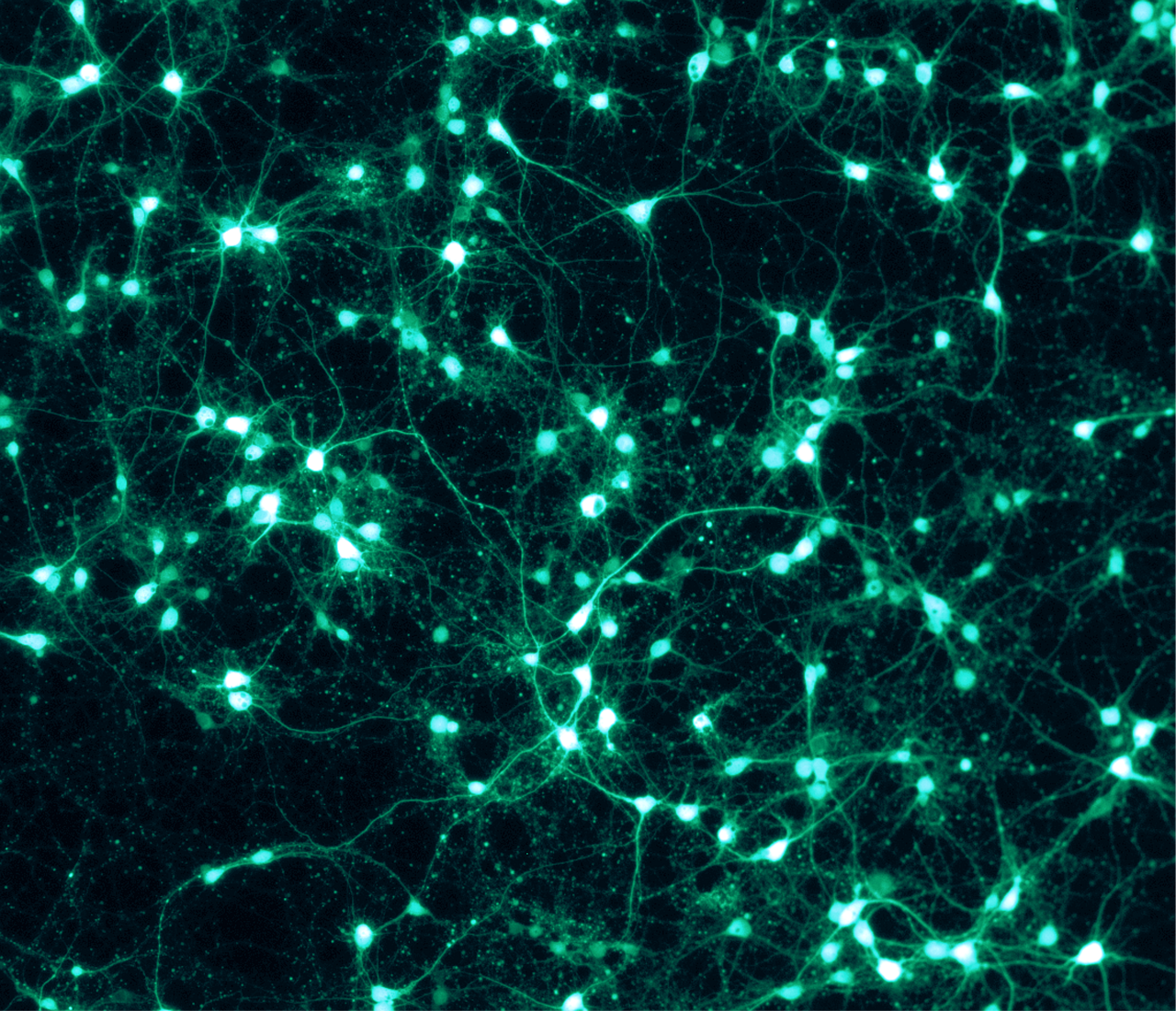
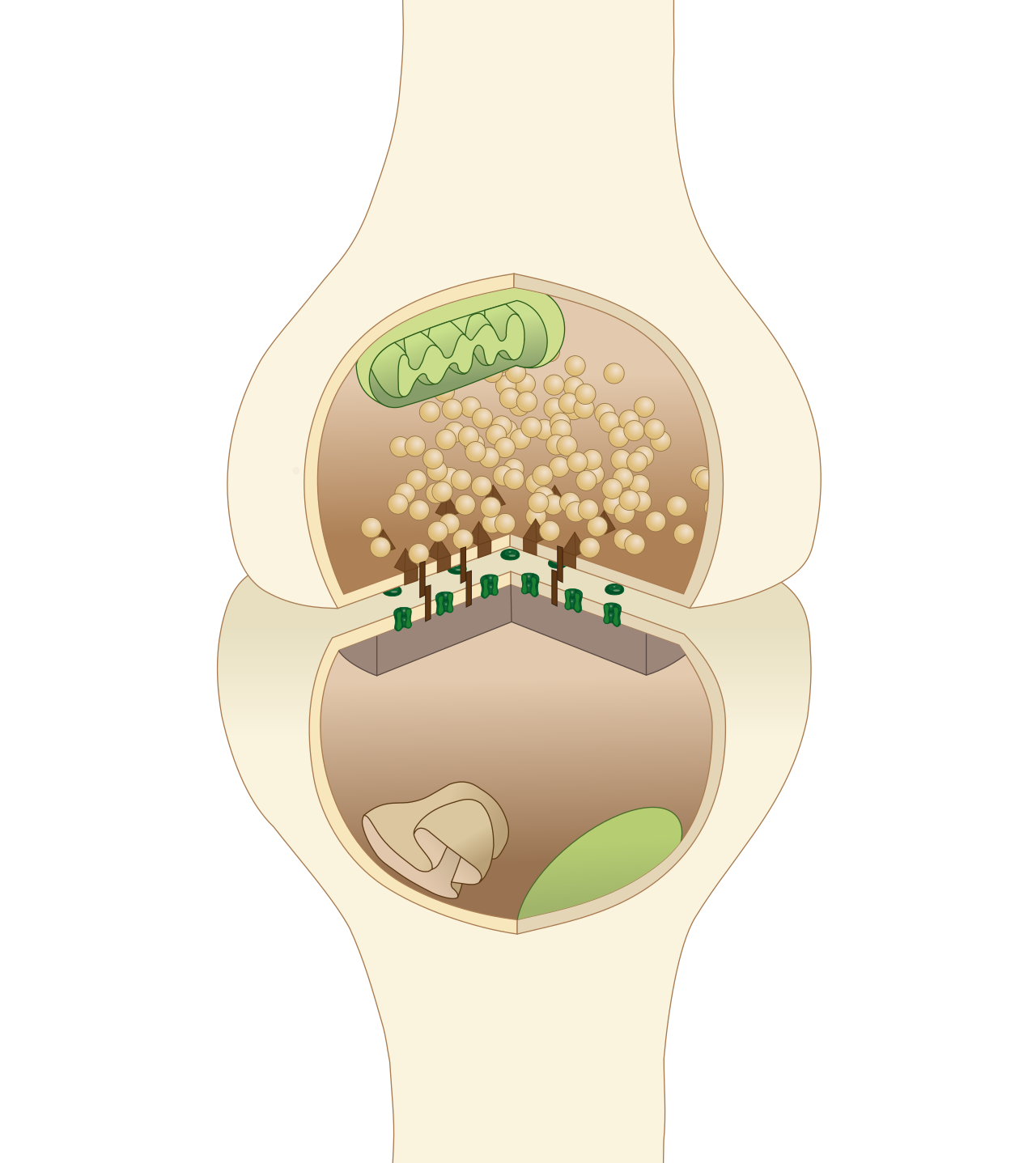
A neuron receives signals through branching processes, integrates them and sends a signal along its axon. In many places, the end of one axon does not directly touch the next cell. A tiny space, the synaptic cleft, separates them. Chemical messengers called neurotransmitters cross that gap and bind to receptors. Depending on the connection, they make another signal more or less likely. Learning therefore involves changes across many connections, rather than switching on a single wire.
Brain networks are not electrical circuits with a permanently fixed plan. Some become more effective and others weaker. The number or shape of small protrusions on dendrites can change, as can the arrangement of receptors. Distant regions may also cooperate differently. Playing an instrument, for example, brings together hearing, movement, attention and memory. No complex ability can honestly be reduced to one isolated spot in the brain.
Curtis Neveu / Pixelsquid / Wikimedia Commons · Sources ↗ · Image terms ↗
Why repetition helps, but rereading alone is not enough
Imagine a student trying to understand electromagnetic induction. Rereading a definition several times may make it feel familiar. But predicting the direction of current in a new example, drawing the changing magnetic flux and explaining why a voltage appears require the student to retrieve and connect ideas. That is harder, yet it tests understanding more clearly. Research on learning supports active recall, practice with varied examples and sessions spaced over time. The word “” by itself does not prove that any advertised study method works.
Practice can produce lasting changes, but there is no magic number of repetitions that guarantees the same result for everyone. Prior knowledge, useful feedback, task difficulty, attention, rest and opportunities to apply a skill all matter. Repeating a wrong method without checking it may strengthen the error. It helps to choose problems just beyond one's present ability, check the reasoning and return to the topic after a break.
Adolescence: a period of opportunity
The brain continues to reorganise during adolescence. Some connections that are used less often weaken or disappear, while frequently used pathways are refined. This is often called synaptic pruning. Myelination also continues: a fatty sheath around some nerve fibres helps signals travel efficiently. These changes do not happen at the same speed everywhere. Networks involved in planning, judging consequences and regulating behaviour develop gradually together with experience.
None of this means teenagers have an “unfinished” brain that cannot reason. They can learn advanced mathematics, conduct research and make careful decisions. It means that adolescence is a period of adaptation in which learning, sleep, relationships and surroundings matter. A claim that a particular behaviour can be read directly from the size of one brain area would go much further than the evidence allows.
Sleep, movement and stress are part of the picture
Learning does not stop when we close the book. During sleep the brain continues to process information, and too little sleep makes attention and later recall harder. Adolescents often become biologically inclined to fall asleep later, while school still requires early mornings. An all-night study session may seem to buy time but can reduce the quality of work the following day. Sleep is not a trick that solves an unfamiliar problem automatically; it helps the learning already done to function well.
Physical activity, varied experiences and social support are associated with brain health. Still, general advice must be separated from claims about individual cells: we cannot calculate how many a twenty-minute walk creates. Long-lasting severe stress can interfere with concentration and memory, but one stressful moment does not “destroy” the brain. Effects depend on duration, available support and opportunities to recover.
Plasticity is not the same as making new neurons
It is often said that each new lesson “creates new neurons”. That does not describe most established mechanisms of learning. Existing cells can alter the strength and organisation of their connections. has a narrower meaning: the birth of new nerve cells. In some animals it is well documented in particular regions of the adult brain. Its extent and role in adult humans have long been debated.
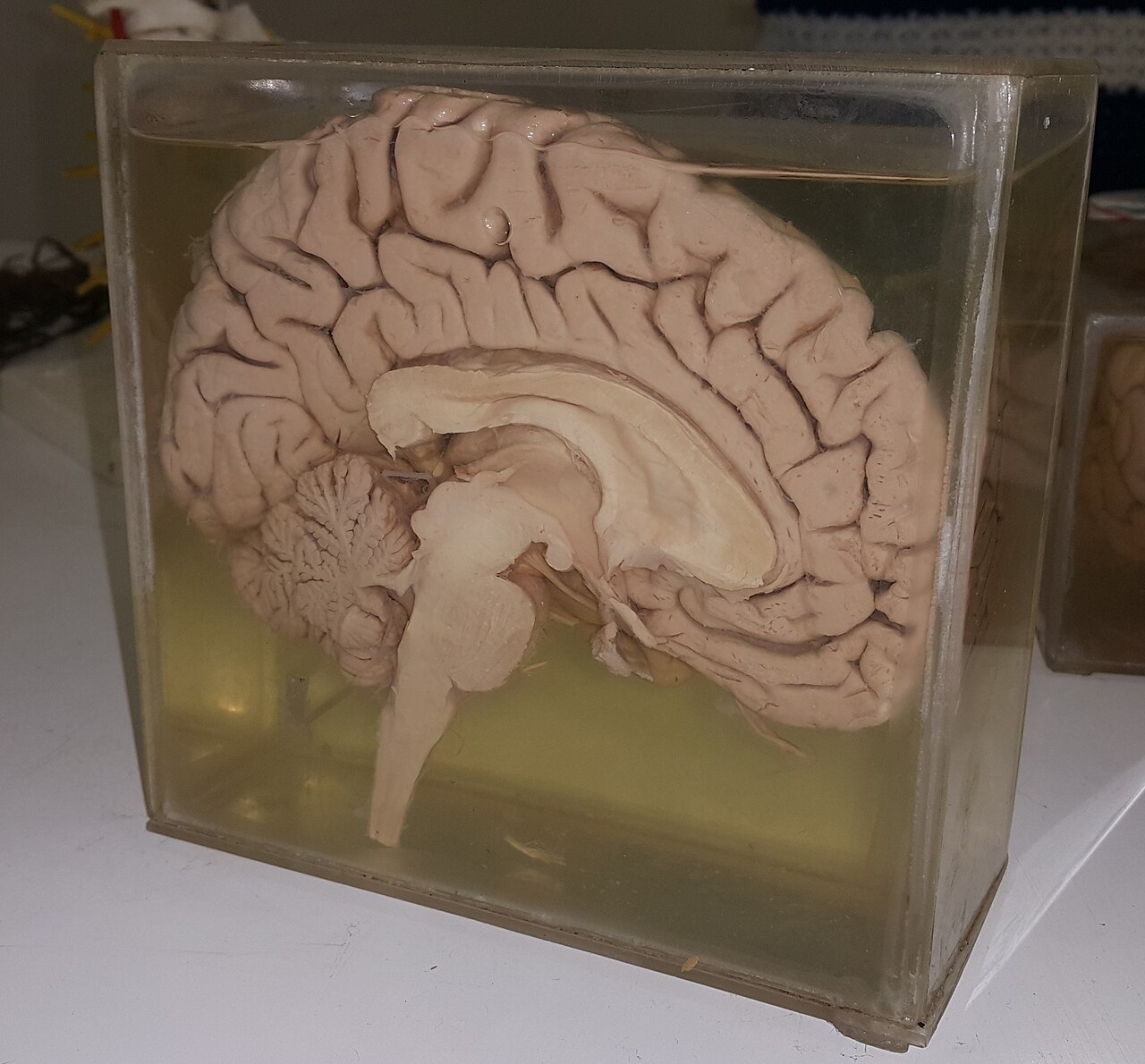
A study published in 2026 examined hundreds of thousands of cell nuclei from the human hippocampus and found molecular signs of stem, immature and young nerve cells. This adds evidence that some may occur in the adult human brain. It does not show that each learned lesson creates a neuron, nor how much those cells contribute to ordinary memory. The hippocampus helps form many memories, but memory is the work of a wider network.
Themium / Wikimedia Commons · Sources ↗ · Image terms ↗
Can an adult brain still change?
Yes. Adults learn languages, instruments, trades and new approaches to problems. After injury, surviving networks sometimes take over part of a function with rehabilitation and sustained effort. Plasticity is not unlimited, however, and does not guarantee that every lost ability will return fully. The outcome depends on the type and location of the injury, timing, health and support. Both “it is too late after childhood” and “the brain can do absolutely anything if we try hard enough” misrepresent the research.
There is a less comforting side too: the brain can learn unhelpful habits. If a situation repeatedly leads us to avoid a task, feel fear or scroll a phone automatically, that pattern can become easier to repeat. describes a system's capacity to change; it does not promise that every change is beneficial. Environment, feedback and the way we practise are therefore important.
What can you put into practice?
Choose something you want to understand and explain it in your own words without looking at your notes. Then check where the explanation fails. Return to the same topic on later days and use the idea in a different example. Ask questions before reaching for a finished answer. Work at a level that is challenging but manageable, and raise the difficulty as your understanding grows. Leave time for sleep and rest. These are not shortcuts: they provide repeated, meaningful experiences to which the brain can respond.
Key terms
— changes in the organisation and function of the nervous system; — a junction where signals pass between cells; — a sheath that supports signal transmission; — the formation of new neurons.