
What is happening?
Dreams can occur in all sleep stages, though they are often most vivid during sleep.
We pass through several sleep cycles each night. During sleep, brain activity and rapid eye movements often accompany especially vivid dreams, but dreaming also occurs outside . Wake someone in another sleep stage and they may still describe a dream. Memories of dreams can fade quickly, so remembering nothing in the morning does not mean we did not dream.
How and why?
The brain remains active while we sleep. Dreams may help process emotions, but that is not a settled explanation.
Scientists do not have one confirmed answer to what dreams are for. One idea is that dreaming helps process emotions and experiences; other studies investigate links with memory. These are possibilities, not proof that every dream has a hidden meaning. Dreams often include concerns or events from waking life, but they are not a reliable way to predict the future.
How do we know?
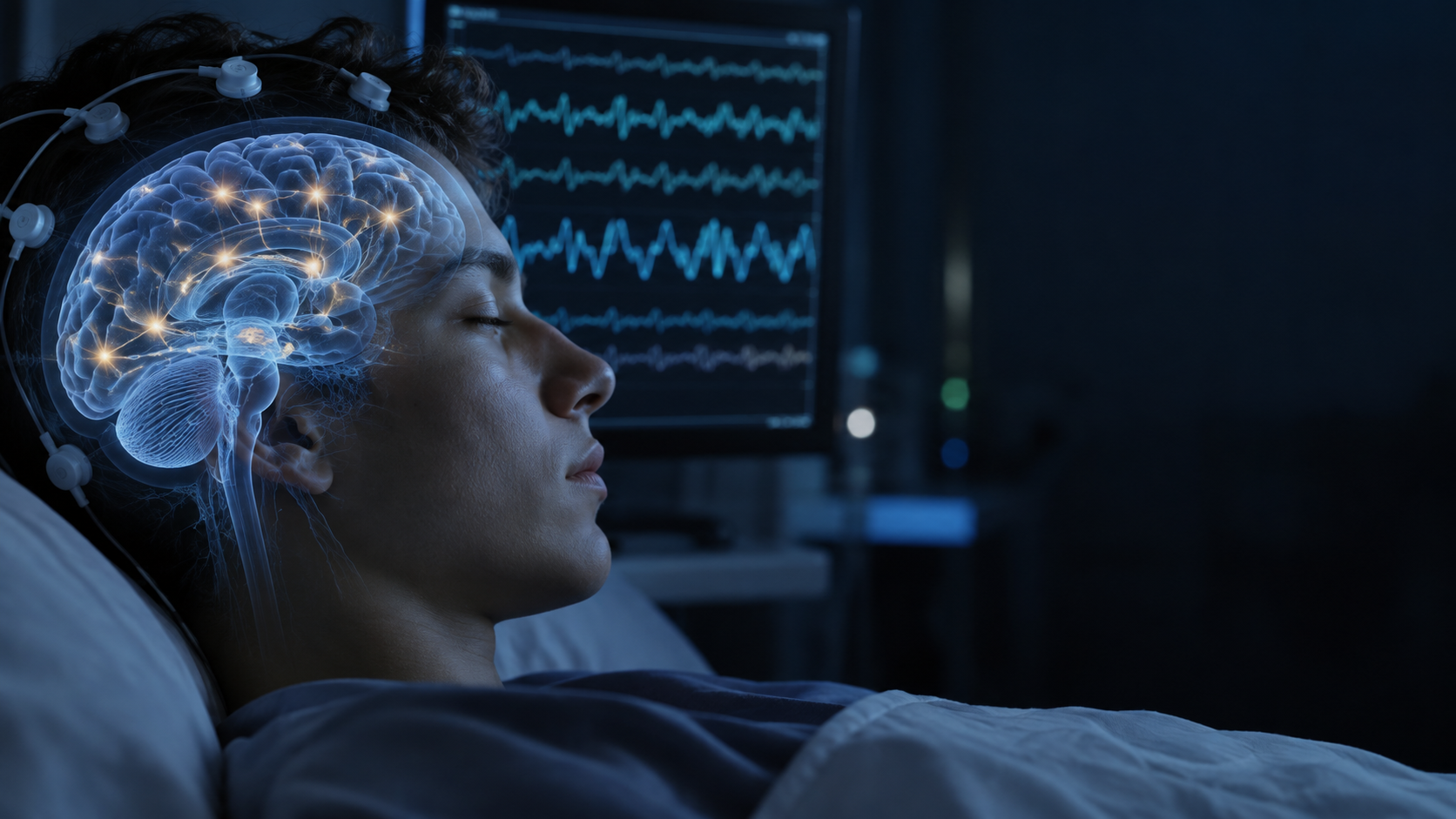
Researchers measure brain activity and wake participants at different sleep stages to compare their reports.
Researchers can monitor the brain's electrical activity, eye movements and breathing during sleep. They wake participants in different stages and compare their immediate accounts of what they experienced. This shows when and how often people report dreams. Demonstrating a purpose is much harder: we must separate the role of dreaming itself from other important processes taking place during sleep.
Why does it matter?
Understanding sleep helps us study memory, emotions and health.
Sleep matters for health, attention and learning whether or not we remember our dreams. Studying dreams helps us understand what the brain does while we are not awake and how it handles experiences. Frequent distressing nightmares or long-lasting sleep problems are reasons to speak with a health professional. A single unusual dream is not a diagnosis.
What does the brain do while we sleep?
Sleep is not a passive shutdown of the brain. Through the night we cycle between NREM stages, including deeper slow-wave sleep, and sleep, when rapid eye movements are common. A cycle lasts roughly an hour and a half, with considerable variation between people and nights. Vivid dreams are often reported after awakening from , but dreams occur in other stages too. “We only dream in ” is therefore incorrect.
One hypothesis links dreams to processing memories and emotions: during sleep the brain reactivates parts of recent experiences and connects them with older knowledge. Another emphasizes how the brain builds stories from internal signals. Both may explain some observations, but neither has definitively established why we dream at all. A dream is not a reliable coded report of hidden desires or a prediction of the future.
Researchers record electrical brain activity with an electroencephalogram, eye movements and muscle tone, then compare those measurements with reports from people awakened at different stages. There is a limitation: we know the dream’s contents from the person’s memory, and that memory may change quickly after waking. Good experiments therefore separate measurable brain changes from interpretations of what a particular dream means. Dreams are a scientific challenge precisely because subjective experience must be studied indirectly.
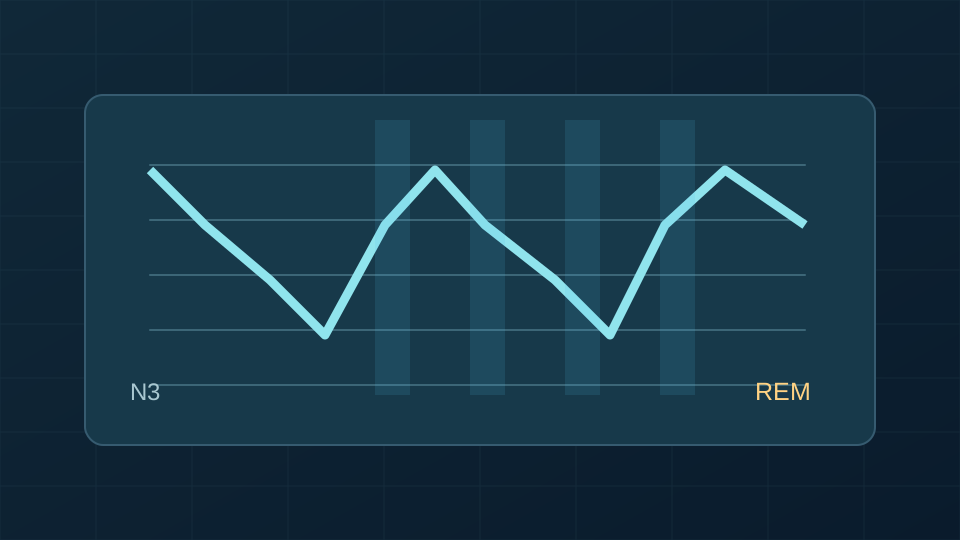
Original NZM illustration · Sources: NINDS
A further detail
Sleep loss can change attention, mood and learning, but that does not prove every individual dream story is necessary for health. People often do not remember dreams even when they probably dreamed. Medicines, stress and sleep schedules also influence when we wake and what we recall. To test a hypothesis about dreaming, researchers must separate the effect of too little sleep from the effect of interrupting a particular stage. Such studies are difficult because repeated awakening itself changes sleep. Researchers therefore avoid treating a connection between and emotion as immediate proof of a single cause.
Recurring or distressing dreams are real experiences worth taking seriously. Sleep science does not, however, offer a universal dictionary that assigns the same meaning to every dream symbol. A person’s circumstances and sleep quality matter more than a ready-made interpretation from a dream book.
Key terms
— a sleep stage with rapid eye movement and distinctive brain activity.