
1. Launch succeeded — the hardest work is still ahead
The Japan Aerospace Exploration Agency, , announced that the tenth rocket lifted off from Tanegashima on 20 October 2026 at 4:41 a.m. Japan time. It carried , short for Martian Moons eXploration. The spacecraft separated from the rocket roughly one hour and eleven minutes after liftoff, on its planned trajectory. That confirms a successful launch, but does not yet confirm arrival at or the return of a sample.
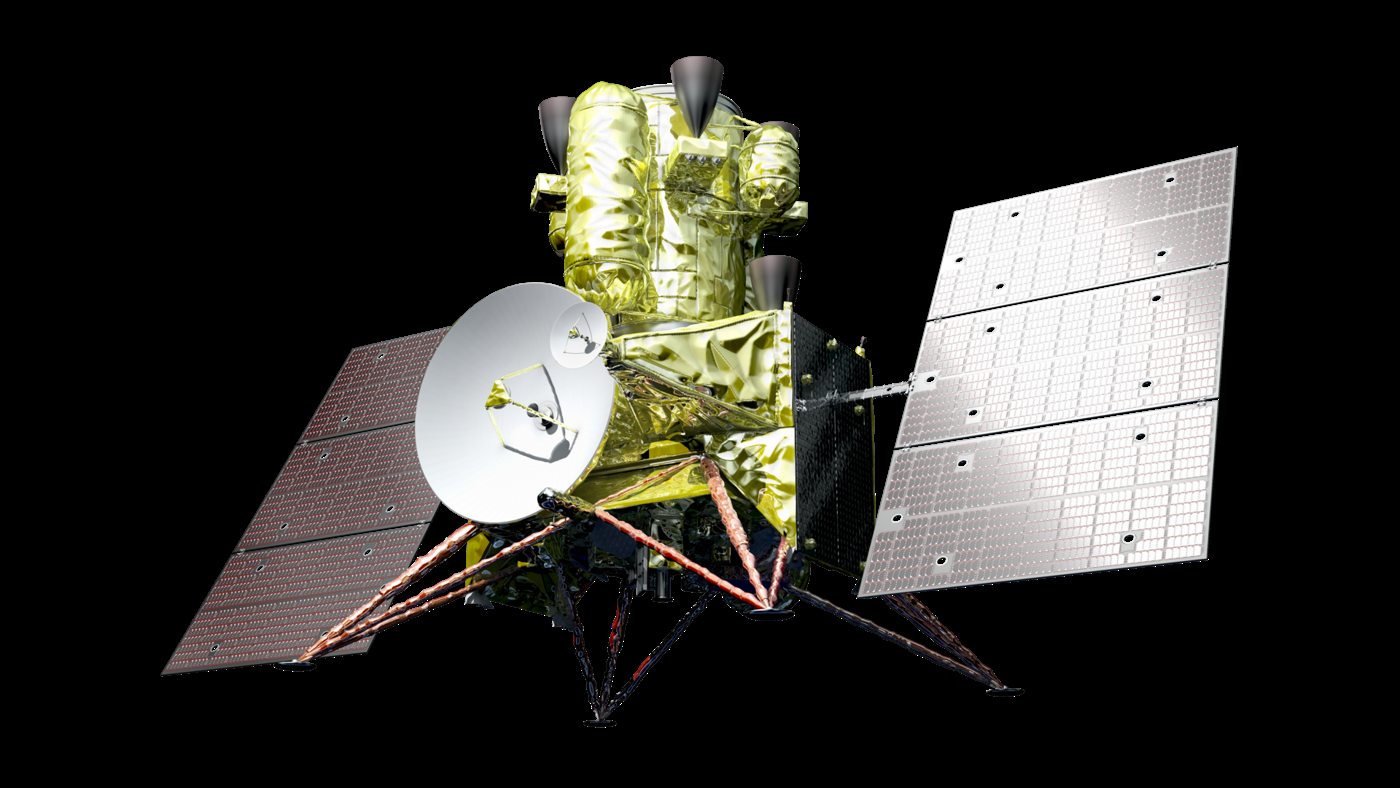
JAXA · Sources ↗ · Image terms ↗
The launch marks the beginning of a new stage in Japanese planetary exploration. The trip to Mars will take about a year. Years of observations, choosing a landing site, operating a small rover, collecting a sample, flying home and bringing a capsule through Earth’s atmosphere must then follow. Any step could change or delay the plan. The most ambitious aim is to bring at least ten grams of material to laboratories in 2031 — the first such sample from the vicinity of Mars.
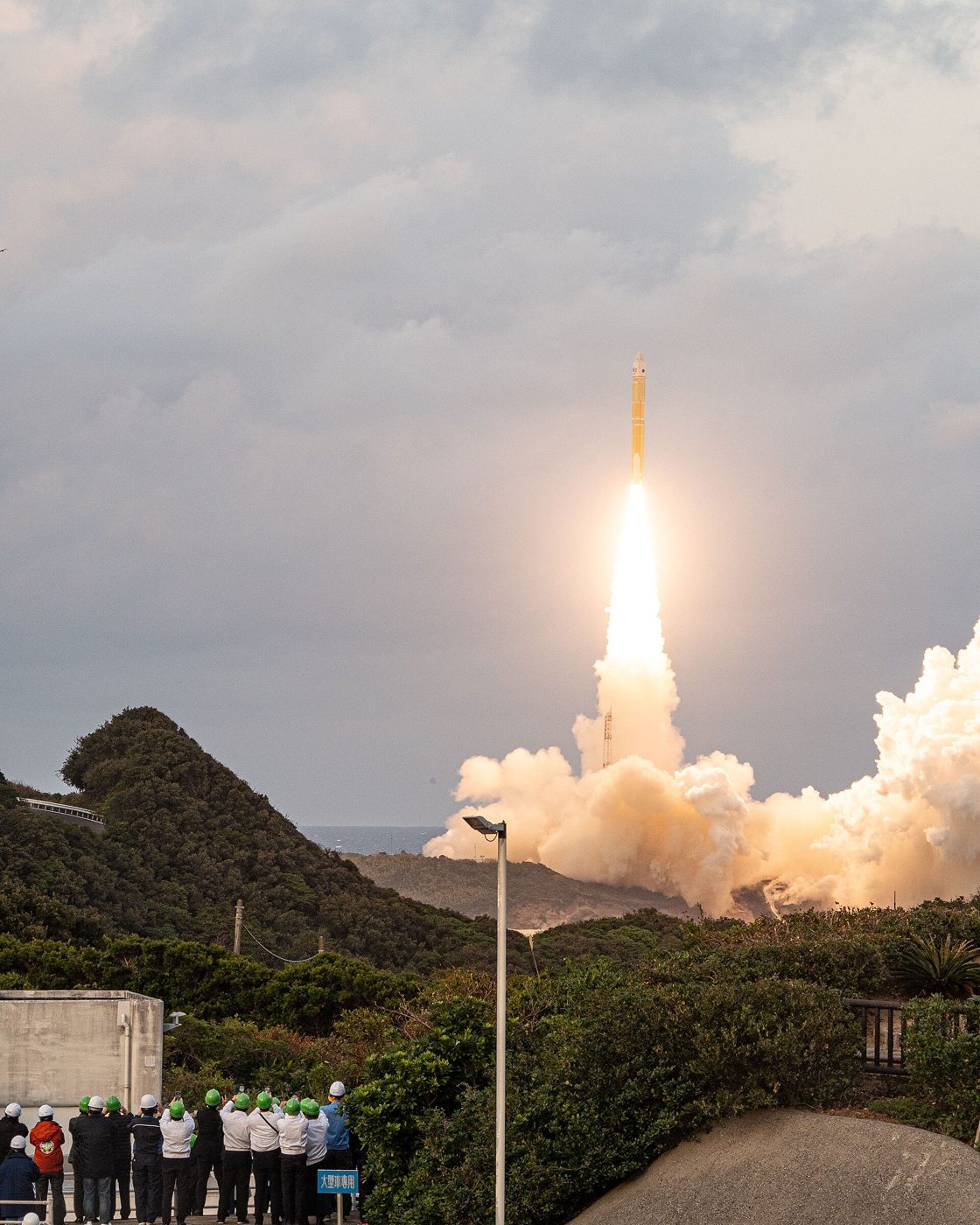
U.S. Air Force photo by Senior Airman Jacob Wood · Sources ↗ · Image terms ↗
Time zones can cause confusion: by the Japanese clock the rocket launched on Tuesday, 20 October, while in central Europe it was still the evening of Monday, 19 October. European reports can therefore say 19 October and Japanese reports 20 October. Both dates describe the same launch.
2. Two small moons, one large question about their origins
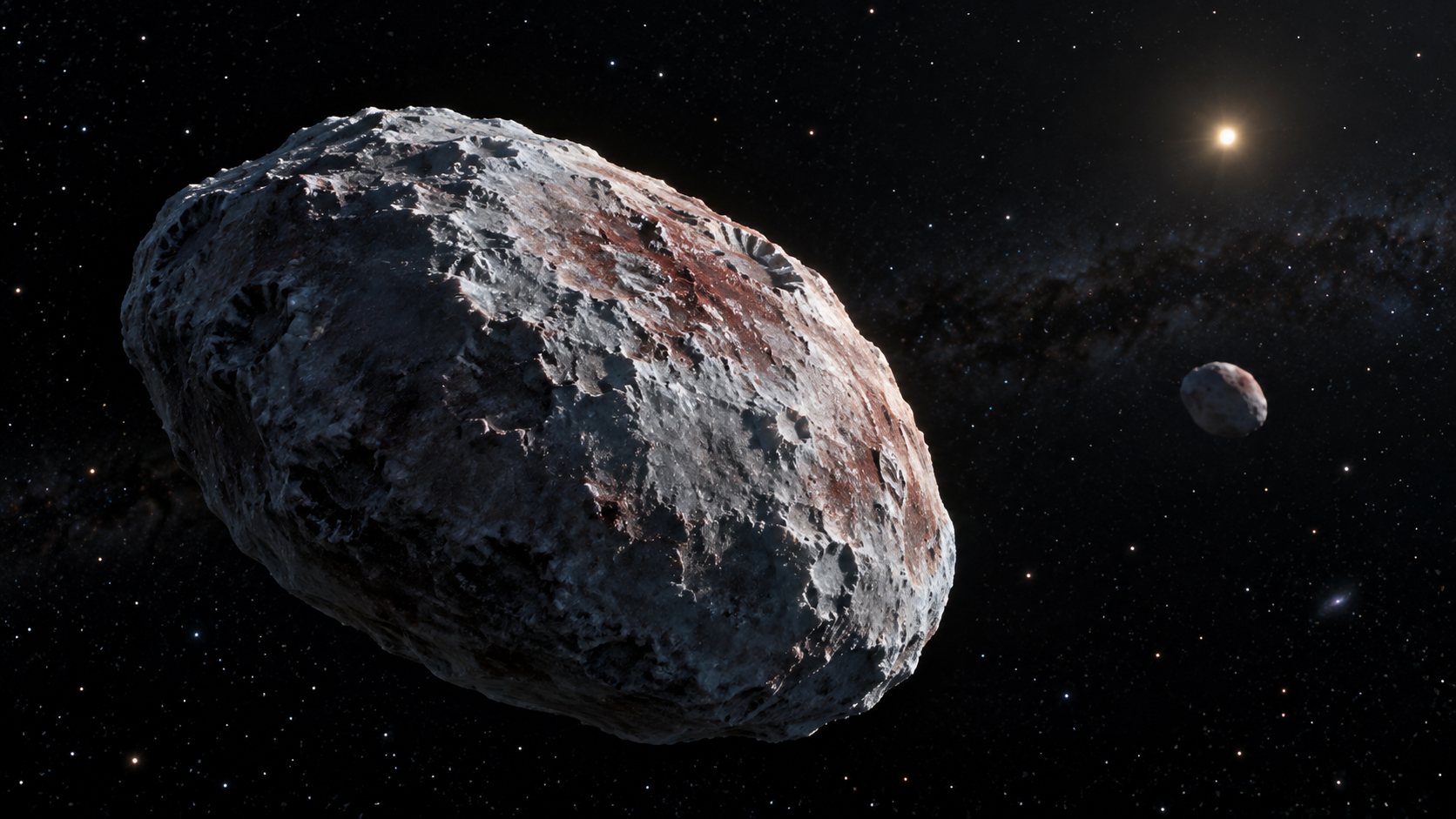
Mars has two known natural satellites, and . is larger, with approximate dimensions of 27 × 22 × 18 kilometres. It is not a smooth sphere: many craters mark its surface, including the striking Stickney crater. It completes one circuit of Mars in about seven hours and forty minutes, so it can cross the sky above a location on Mars more than once in a Martian day. is smaller and orbits farther from the planet.
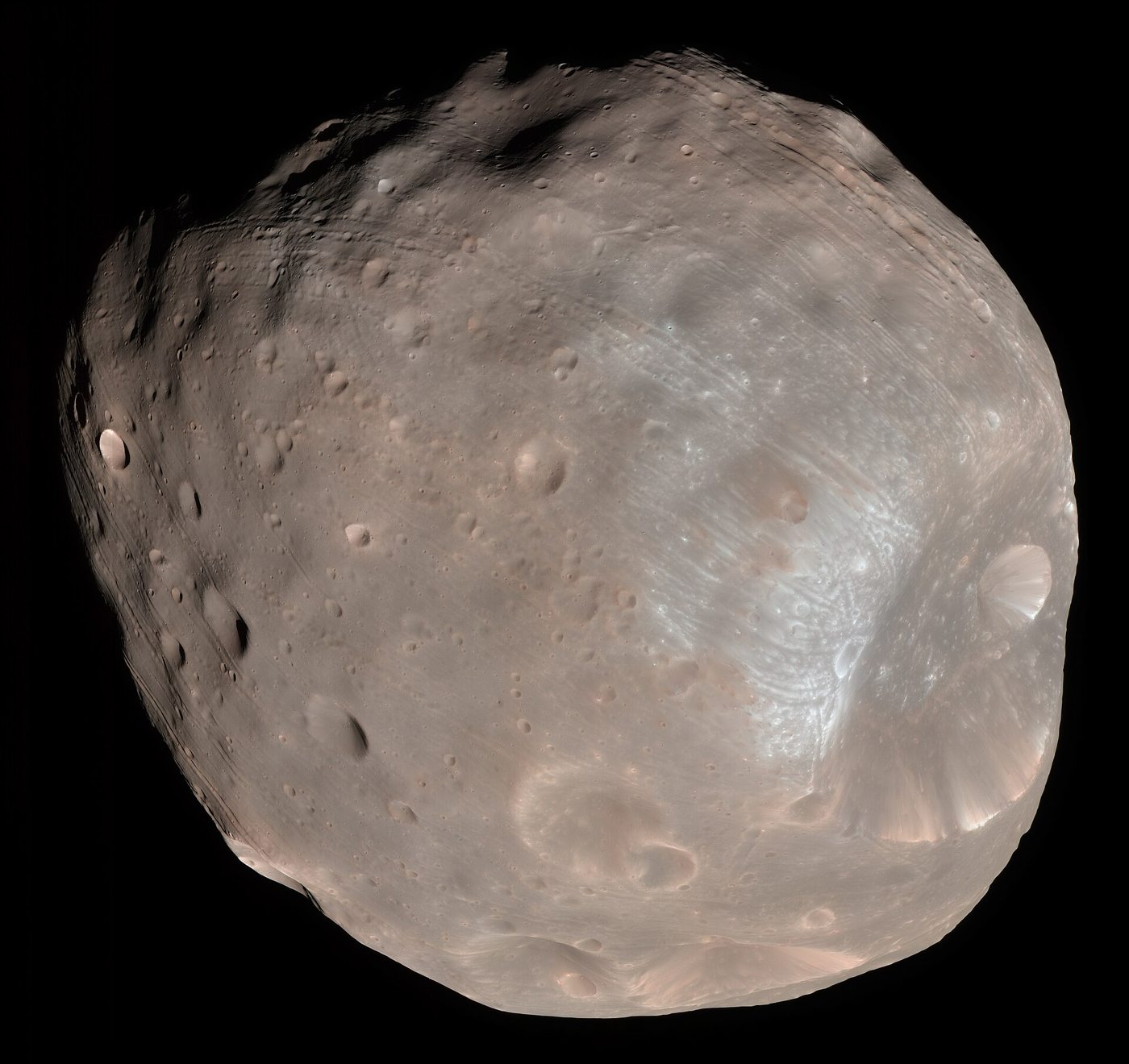
NASA / JPL-Caltech / University of Arizona · Sources ↗ · Image terms ↗
There are two main families of explanations for their origin. Under the , the moons formed elsewhere in the Solar System and Mars later held them with its gravity. Their dark surfaces resemble those of some asteroids at first sight. But simple capture struggles to explain their nearly circular orbits close to Mars’s equatorial plane: a passing body would also need to lose enough orbital energy.
Under the , a large body struck early Mars. Some debris remained in orbit and eventually formed the moons. This explanation has not been proved either. Different models require different conditions and make different predictions, and a single sample may not settle every detail. Nevertheless, the chemical and isotopic composition of grains, together with measurements of the orbits, shapes and interiors, could narrow the possibilities considerably.
An important distinction: finding a mineral formed in the presence of water, or an organic molecule, would not mean that life had been discovered on . Such material could come from its parent body, Martian soil ejected by an impact, or later meteorite strikes. Understanding its origin requires sample context, comparison with observations and careful laboratory checks for contamination.
3. How do you work on a body with almost no gravity?
After reaching the Mars system, the spacecraft will enter a near . To an observer it could seem to circle the moon, but its motion is largely governed by Mars’s gravity. From several altitudes it will map the terrain, look for large rocks and dangerous slopes, measure temperature and analyse the light reflected by the ground. Only then can the team choose a landing site.
gravity is less than one thousandth of Earth’s. That might sound as if landing would be easy, yet even a small thrust or bounce could lift a device away from the surface. Nobody knows precisely how firm or loose the ground will be at a particular site. therefore cannot simply sit down: it must measure speed, position and distance and collect quickly and reliably.
Ebottlaender · Sources ↗ · Image terms ↗
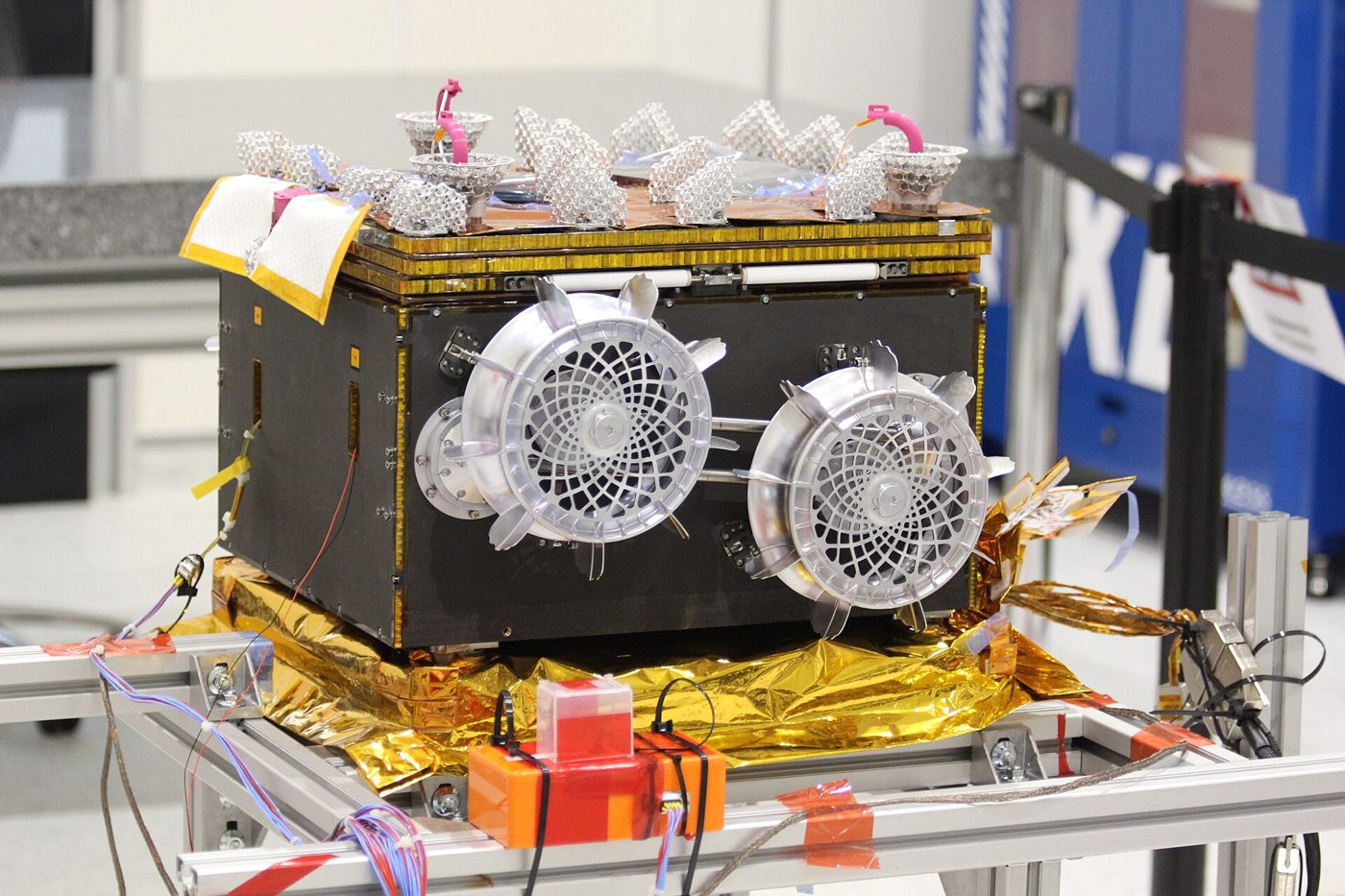
According to the current plan, the German-French rover , developed by DLR and CNES, will be first to reach the surface. Under a plan released after launch, it will be released from roughly 40 to 100 metres around the turn of 2028–29, right itself and investigate the ground for around 100 days. It will not return a sample to Earth. It will measure surface properties and help researchers understand where the main spacecraft can work more safely. Driving on four wheels in such weak gravity is itself a technology experiment.
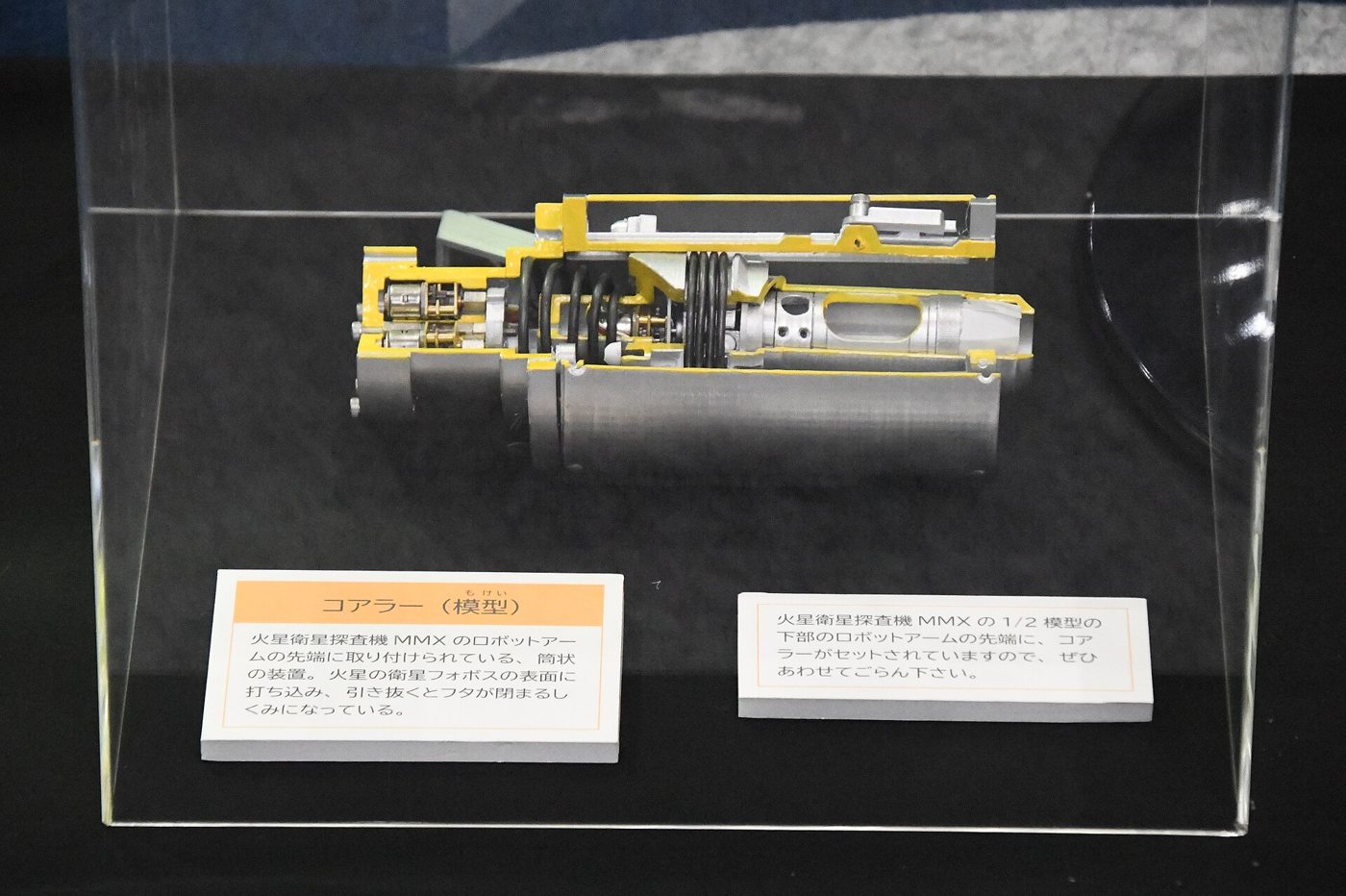
The main craft is intended to make a soft landing on and gather material during a planned stay of about two to three hours for each landing. One mechanism drills approximately two centimetres into the surface; another briefly blows nitrogen gas to lift grains into a collector. Using both raises the chances of a sample even if the soil differs from expectations. The material will be sealed in a planned to land in Australia in 2031; the rest of the spacecraft need not land on Earth.
Hunini · Sources ↗ · Image terms ↗
4. What will scientists measure before opening the capsule?
is far more than a scoop for dust. Its TENGOO camera records fine terrain details, OROCHI takes wider pictures in several colours, and the infrared instrument MIRS searches for mineral clues in the wavelengths that the ground absorbs. This does not recognise a rock by eye: it compares its light signature with laboratory measurements of known substances.
NASA provided , an instrument that measures gamma rays and neutrons leaving the surface to estimate the abundance of chemical elements. Its observations cover a broader area than the tiny amount of material in the capsule. Together, orbital maps, rover data and a laboratory sample could reveal whether a returned grain is typical of or unusual — perhaps material once blasted off Mars.
Apart from , the spacecraft is also expected to fly past without landing. Comparing the two moons matters: similar compositions and dynamics would tell one story about their history, large differences another. Researchers will be particularly interested in connections between material and what is already known about Mars from meteorites and orbiting spacecraft.
5. Why is Japan ready to attempt this?
The story begins long before today’s . In 1970 Japan placed Ohsumi, its first artificial satellite, in orbit on its own rocket. Fifteen years later Sakigake and Suisei set out for Halley’s comet. The former tested deep-space technology; the latter observed the comet with an ultraviolet camera and measured changes in water release. These were early steps from launching Earth satellites to planning and controlling spacecraft in interplanetary space.
builds on a long, uneven history of Japanese interplanetary missions. Hiten, launched in 1990, tested trajectories near the Moon and entered lunar orbit in 1992. It was a lesson in precise spacecraft navigation. , Japan’s first probe sent towards Mars in 1998, failed to enter Mars orbit in 2003 because of technical problems. Even so, the mission brought experience in operating a spacecraft far from Earth.
reached asteroid Itokawa in 2005, and its capsule returned to Earth in 2010 with tiny grains of material. Difficulties during the flight did not erase that achievement, but did show how demanding navigation, collection and return can be. Kaguya began detailed lunar mapping in 2007; Japan also sent the experimental solar sail into space in 2010. The same year left for Venus. Its first attempt at entering orbit failed, but a second succeeded in 2015.
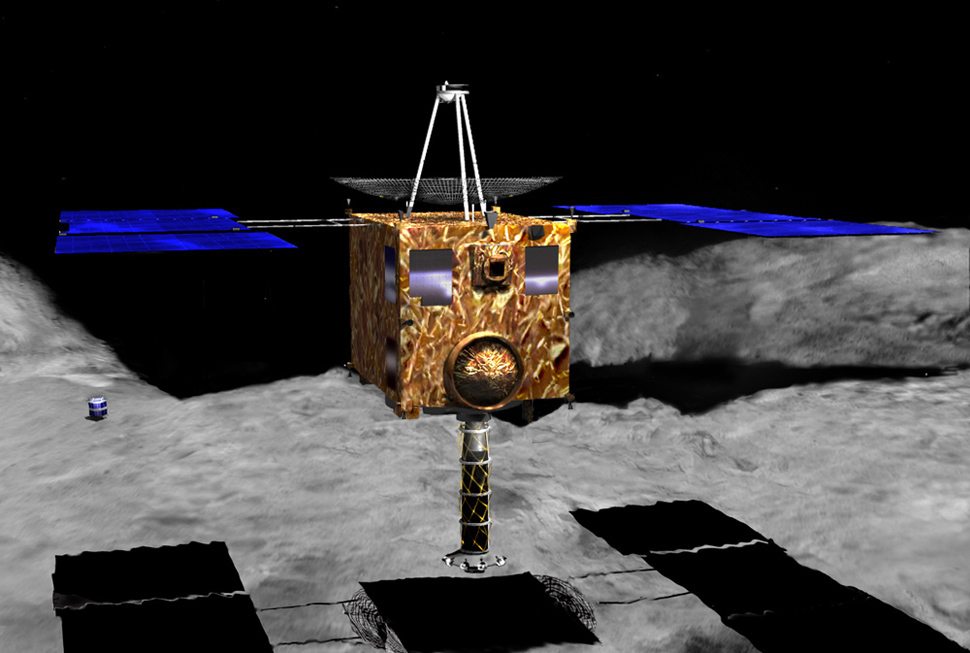
JGarry at English Wikipedia · Sources ↗ · Image terms ↗
Hayabusa2 made sample return more robust. Launched in 2014, it explored asteroid Ryugu, made touchdowns and returned a capsule with samples in 2020. Its equipment included the German-French MASCOT lander, a predecessor to today’s cooperation on . Japan’s MIO instrument launched in 2018 as part of the European-Japanese BepiColombo mission to Mercury. SLIM made Japan’s first soft landing on the Moon in 2024, showing the value of precise approaches to unfamiliar ground.
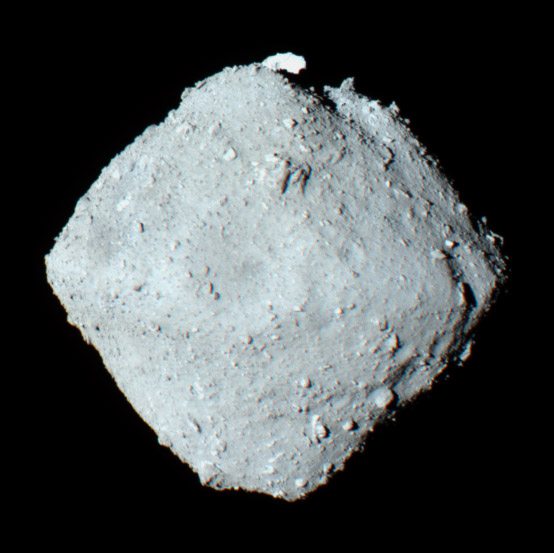
Meli thev · Sources ↗ · Image terms ↗
These missions were not a string of uninterrupted successes. failure and ’s first failed insertion drove changes in procedures. now combines deep-space navigation, planetary and moon mapping, work in extremely weak gravity and sample return. It continues a line of research especially important to Japan, but takes it far beyond asteroids near Earth’s orbit.
6. What happens between 2026 and 2031?
The current schedule starts with the launch in 2026, which has happened. Arrival and the start of mapping are planned for 2027. Deployment of and selection of a sampling site are planned around 2028–29. Departure from the Mars system is expected in 2030 and return of the capsule to Earth in 2031. Every future date remains a plan, not a completed result.
If the capsule arrives, researchers will examine its mineral grains much more precisely than the spacecraft instruments can. They will compare their chemistry and isotope ratios with meteorite samples and models of planet formation. They may also find particles once part of Mars that an impact threw onto . Even such a finding would not by itself prove the origin of the whole moon: every grain has a geological history and must be linked to its collection site and the broader picture of the surface.
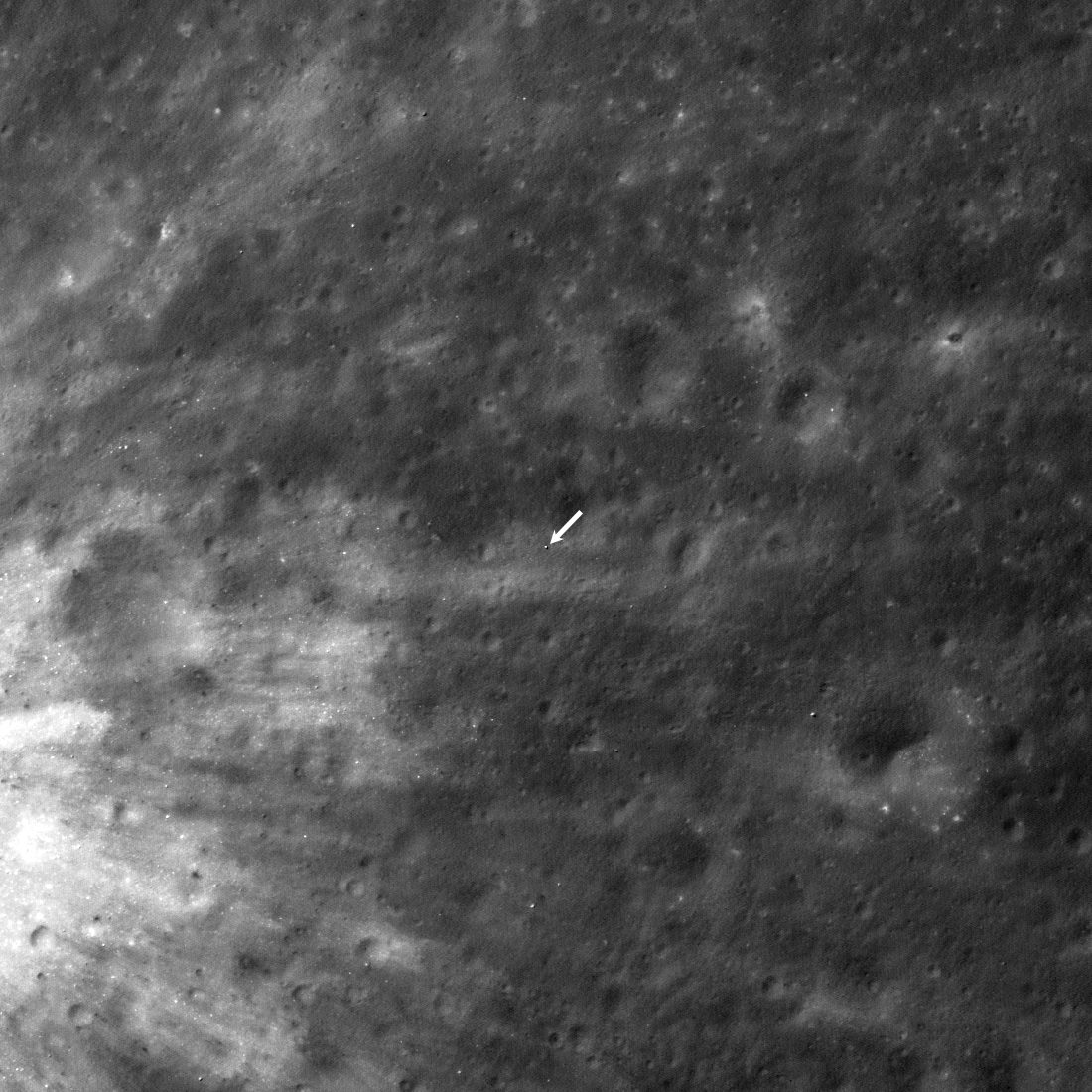
NASA/GSFC/Arizona State University · Sources ↗ · Image terms ↗
The coming months will show how the craft behaves en route. Close-up observations can then improve the choice of landing site. Each step depends on those before it. The news today is therefore important but precise: Japan has successfully sent the spacecraft on its way; the answer to where the Martian moons came from still has to be earned.