
A recent story about an older study
The October 2026 news story discusses a scientific paper published in May 2025. The later date of the popular article is not the date of a fresh planetary discovery. Researchers found a possible lead in archival sky surveys. It deserves follow-up, but there is still no confirmed ninth major planet in the Solar System. [1–3]
What did IRAS and AKARI show?
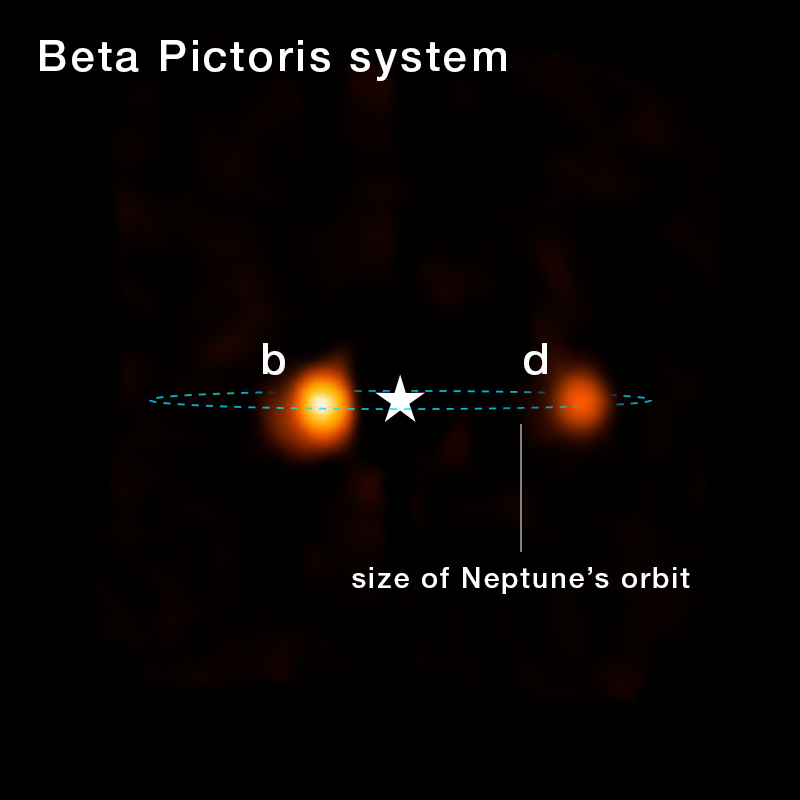
The team compared observations from 1983 with data from 2006. One promising pair of catalogue sources might represent the same distant body. Their positions are separated by about 47.5 arcminutes, but two positions cannot yet establish a reliable orbit or even prove the two detections are one object. The suggested range of 7 to 17 Earth masses and 500 to 700 astronomical units was part of the search model. These are not independent measurements of a newly found planet. [3]
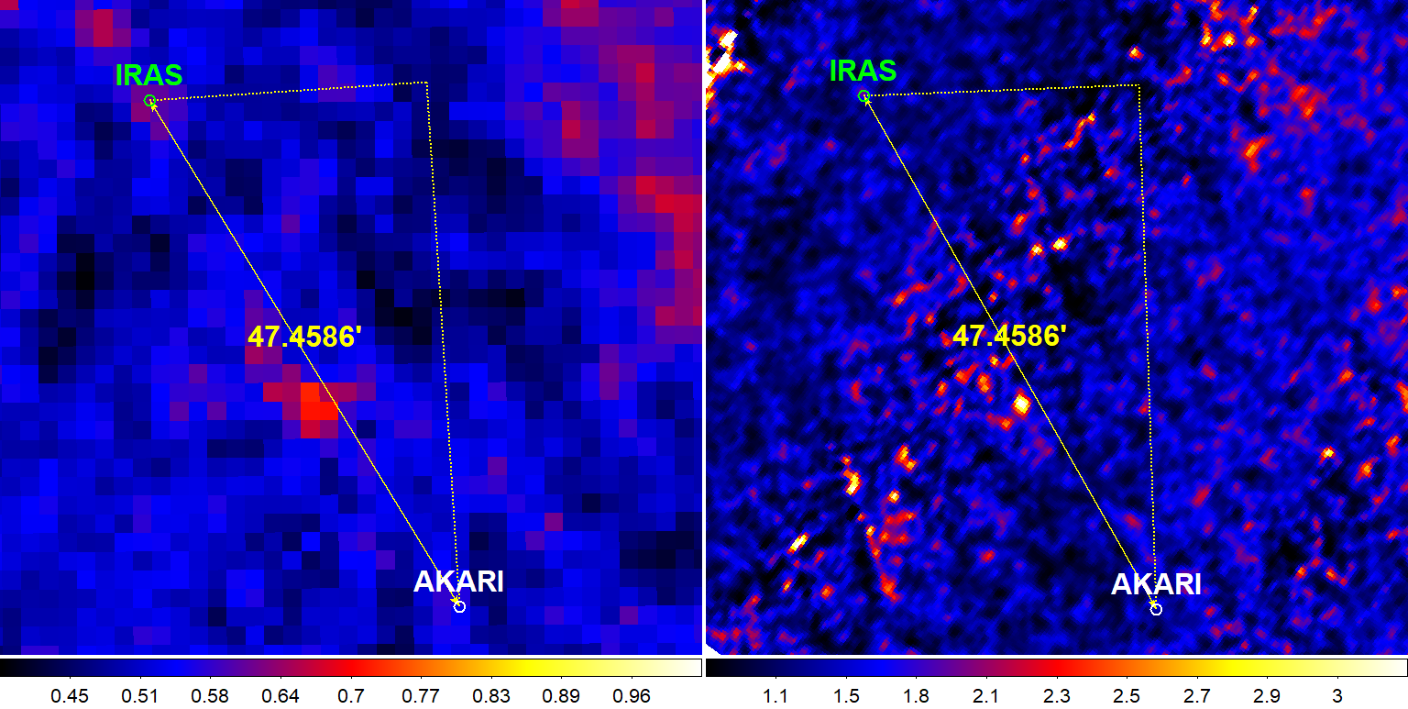
Terry Long Phan i saradnici (2025), slika 5; CC BY 4.0 · Sources ↗ · Image terms ↗
Why is the search difficult?
A very distant object is extremely faint in reflected sunlight. Its internal heat might help it stand out in light, but the signal depends on its size, temperature and composition. Earth’s movement also causes : an apparent shift that must be distinguished from the body’s own orbital motion. The authors proposed further observations, including with the optical DECam instrument. Their paper does not report that such observations have already confirmed the candidate. [3–5]
History and the test ahead
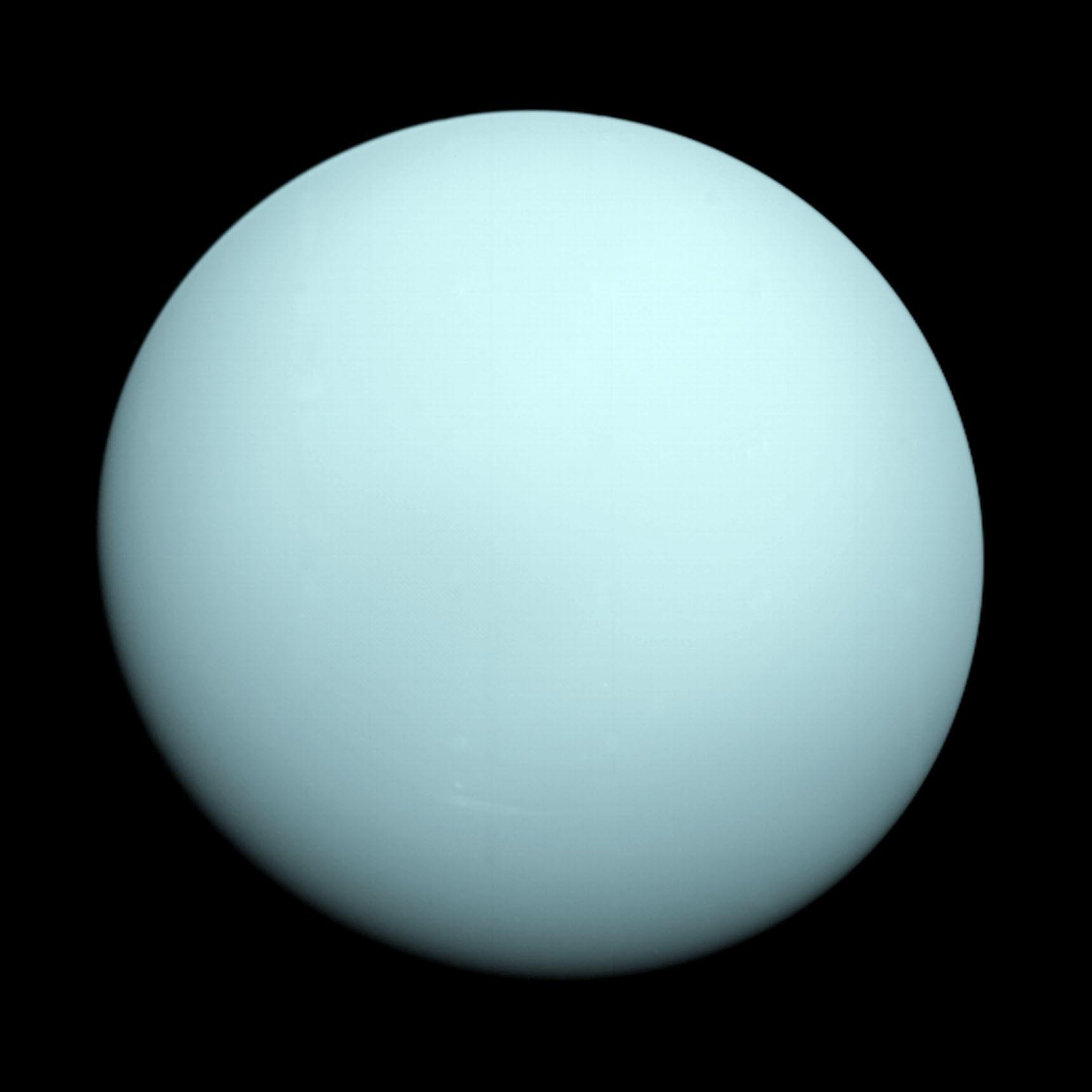
Uranus was spotted in 1781 and at first mistaken for a comet. Neptune was found in 1846 near a position predicted from irregularities in Uranus’s motion. Pluto was identified in 1930 by comparing photographic plates. In 2006 it was classified as a dwarf planet because it does not dominate its orbital neighbourhood. [6–12] The 2016 Planet Nine hypothesis aims to explain the paths of some distant bodies beyond Neptune. Survey biases, new discoveries and competing analyses still matter. Convincing confirmation would require repeat sightings and an orbit that predicts where the body will be found next. [13–20]
Read the complete article in Serbian: https://naukazamlade.com/sr/svemir/potraga-za-devetom-planetom/
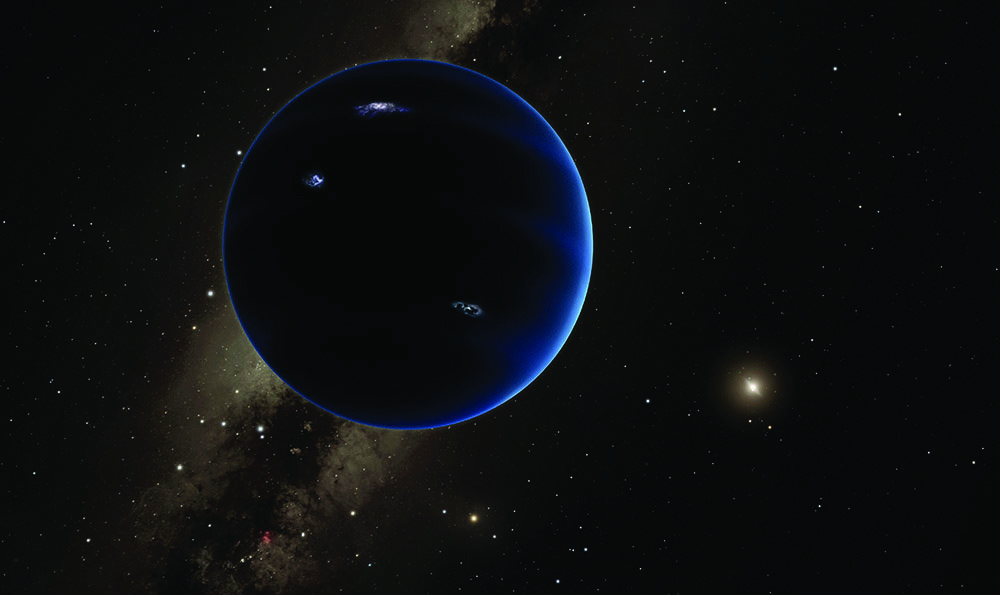
NASA/JPL-Caltech · Sources ↗ · Image terms ↗
Sources
- [1] Astronomski magazin — Da li smo konačno pronašli Planetu 9? (7. 10. 2026.)
- [2] BBC Sky at Night — We may have found the first direct evidence of a ninth major planet (5. 10. 2026.)
- [3] Phan i saradnici — A search for Planet Nine with IRAS and AKARI data (PASA, 2025.)
- [4] Terry Long Phan i saradnici — Searching for triple-detection Planet Nine candidates using far-infrared all-sky survey data (ASROC, maj 2026.)
- [5] Linder i Mordasini — Evolution and Magnitudes of Candidate Planet Nine (2016.)
- [6] NASA — 240 Years Ago: William Herschel Identifies Uranus as the Seventh Planet (2021.)
- [7] NASA — 175 Years Ago: Astronomers Discover Neptune, the Eighth Planet (2021.)
- [8] Lowell Observatory Collections — The Discovery of Pluto (arhivska građa.)
- [9] David Jewitt, UCLA — Planets IX and X (istorijski pregled.)
- [10] NASA — Eris Facts (pregled.)
- [11] Međunarodna astronomska unija — IAU 2006 General Assembly: Result of the IAU Resolution votes (24. 8. 2006.)
- [12] Jean-Luc Margot — A Quantitative Criterion for Defining Planets (2015.)
- [13] Trujillo i Sheppard — A Sedna-like body with a perihelion of 80 astronomical units (Nature, 2014.)
- [14] Batygin i Brown — Evidence for a Distant Giant Planet in the Solar System (Astronomical Journal, 2016.)
- [15] Napier i saradnici — No Evidence for Orbital Clustering in the Extreme Trans-Neptunian Objects (2021.)
- [16] Brown, Holman i Batygin — A Pan-STARRS1 Search for Planet Nine (Astronomical Journal, 2024.)
- [17] Batygin i saradnici — Generation of Low-Inclination, Neptune-Crossing Trans-Neptunian Objects by Planet Nine (Astrophysical Journal Letters, 2024.)
- [18] Chen i saradnici — Discovery and dynamics of a Sedna-like object with a perihelion of 66 au (Nature Astronomy, 2025.)
- [19] Socas-Navarro i Trujillo — A targeted, parallax-based search for Planet Nine (Open Journal of Astrophysics, 2026.)
- [20] Vera C. Rubin Observatory — NSF–DOE Vera C. Rubin Observatory Launches Real-Time Discovery Machine (25. 2. 2026.)