
A red mark in a white valley
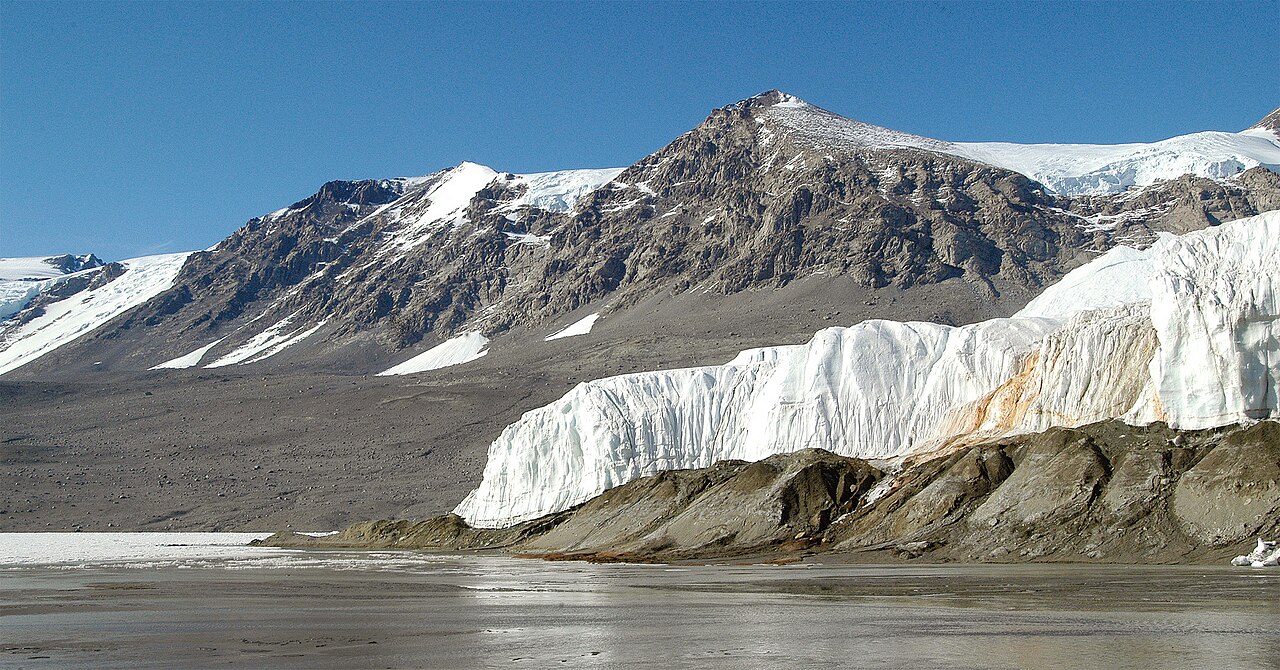
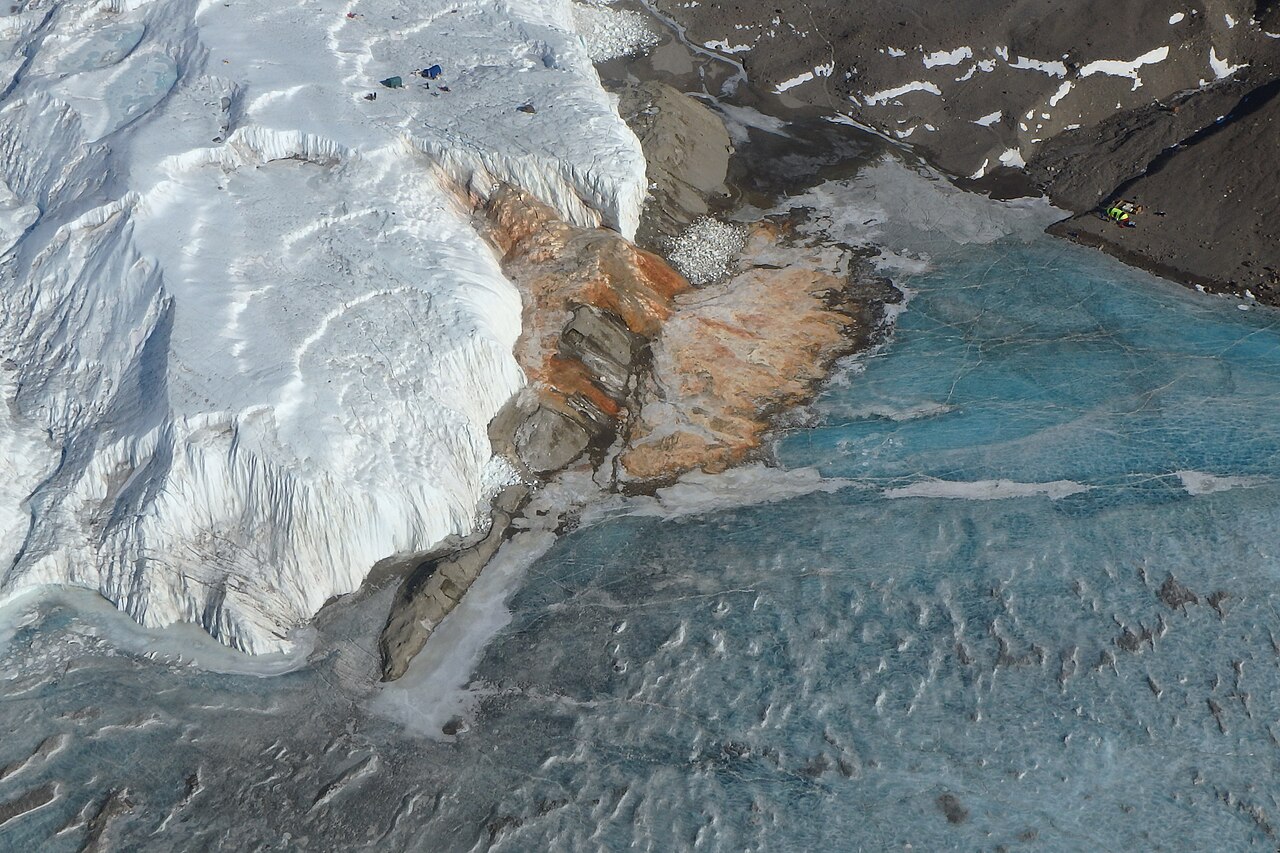
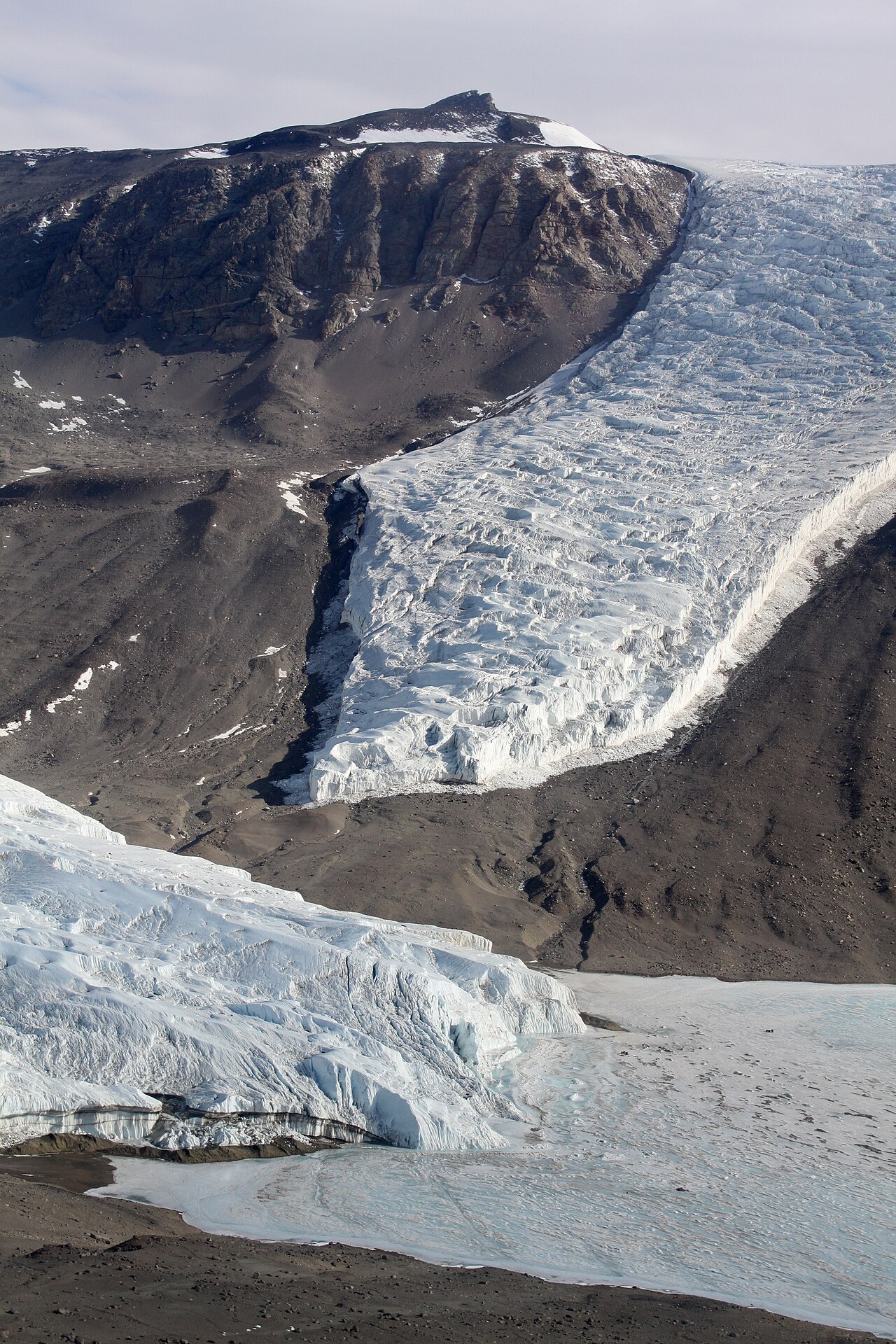
A reddish liquid sometimes emerges at the end of Taylor Glacier in Antarctica’s Dry Valleys. From a distance the ice seems to bleed. It is neither blood nor a continuously roaring waterfall, but salty water escaping through ice. A picture alone cannot distinguish algae, minerals and other possible colour sources. Scientists sample the water and measure its chemistry to find out.
How can water remain liquid?
Dissolved salts lower the freezing point. can therefore stay liquid in conditions where pure water would freeze. Pressure and glacier movement affect the routes it takes through cracks. Geophysical measurements point to a source further inside the Taylor Glacier system. The salts preserve signs of an older marine environment; they do not mean seawater simply flows in from today’s coast. What triggers each release is still studied.
US Embassy New Zealand / Wikimedia Commons · Sources ↗ · Image terms ↗
Iron makes the colour
The carries dissolved iron. When it reaches air, iron-rich particles and minerals produce a red-brown stain. The chemistry resembles rusting, although the deposit is not necessarily identical to rust on a bicycle. Analyses of ions and mineral particles complement field photographs. “Blood” is a metaphor, not a chemical description.
Life without sunlight
Microorganisms inhabit the cold, dark, salty system. They rely on chemical energy and materials in water and rock rather than direct sunlight. Their activity can affect cycles of iron and sulphur, and they grow slowly. Researchers study their diversity and how their community has changed through isolation. A small red stain becomes a natural laboratory for life in darkness.
eliduke / Wikimedia Commons · Sources ↗ · Image terms ↗
Why astrobiologists care
Mars and icy moons may contain cold, salty environments beneath their surfaces. Blood Falls helps scientists plan which chemical signals to measure and which misleading signals to exclude. It does not prove that life exists elsewhere. Clean sampling matters: contamination could be mistaken for a local sign of life.
What remains unknown
The exact network of channels and the triggers for individual flows are still under investigation. Radar, chemistry, microbiology and studies of moving ice offer different pieces of the answer. New findings can revise details without changing the basic iron-rich- explanation. The real story is more intriguing than the dramatic name.
Key terms
— water with a high concentration of dissolved salts.