
The problem of change
Seventeenth-century mathematicians wanted the slope of a curve at one point, speed at one instant and the area beneath an irregular line. Earlier geometry solved many cases but not with one versatile set of rules. Galileo, Descartes, Fermat, Barrow and others supplied pieces of the puzzle. Newton and Leibniz connected earlier ideas into more powerful methods. Slopes require bringing two points together; areas suggest summing ever narrower strips.
Newton’s fluxions
During the 1660s Newton studied quantities varying with time and named their rates of change fluxions. He wrote about them in manuscripts and correspondence, but did not promptly publish a full systematic account. Even in the Principia of 1687 he mostly chose geometric arguments. This later made the distinction between a private discovery and a publicly usable method crucial. A date in a notebook is not the same as a date at which others could learn the procedure.
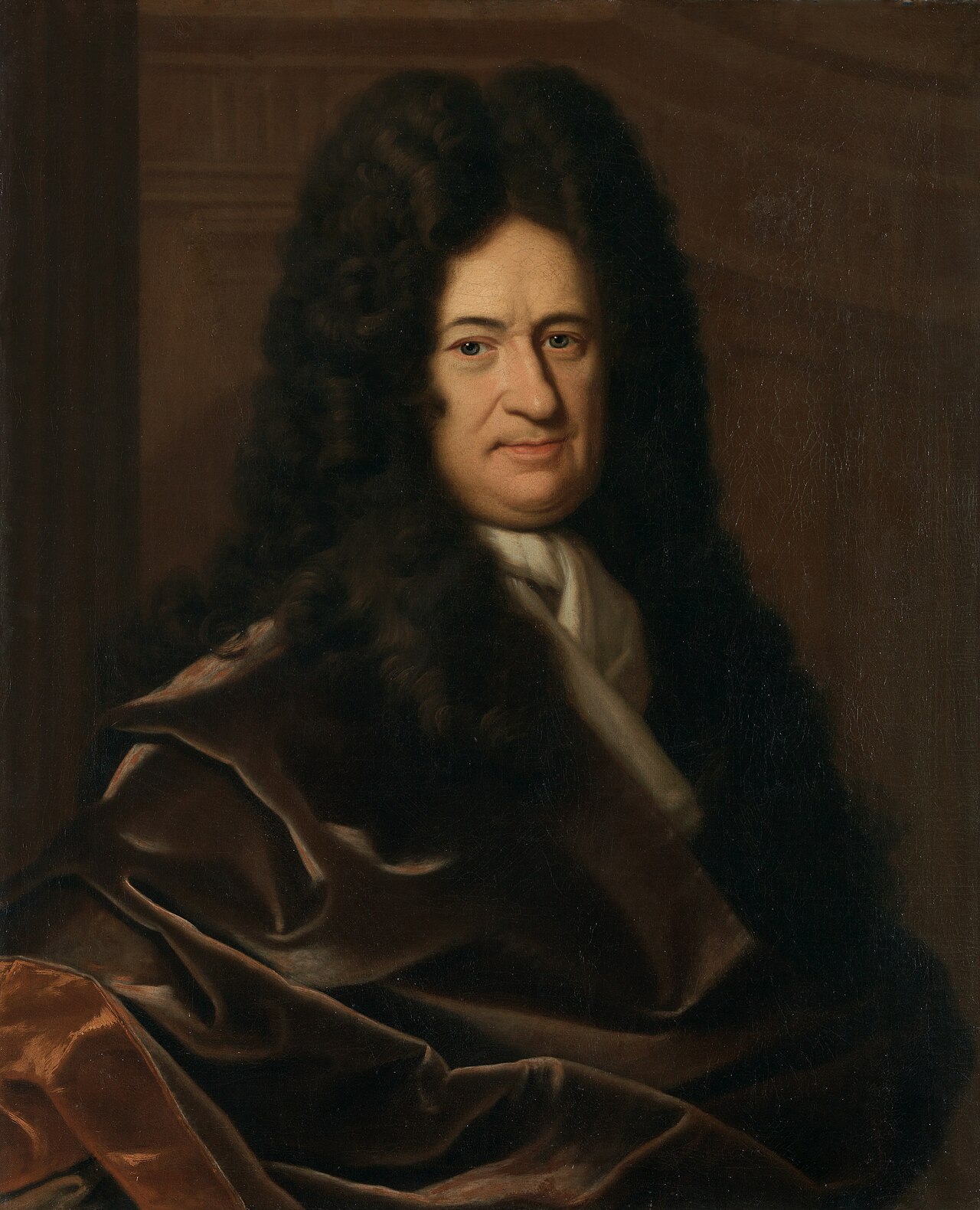
Christoph Bernhard Francke / Wikimedia Commons · Sources ↗ · Image terms ↗
Leibniz’s notation
Leibniz developed his mathematics in Paris, learning from Christiaan Huygens. He used small differences, the symbols dx and dy, and an elongated S, ∫, for summation. He published differential methods in 1684 and integral work in 1686. His notation made the method easier to communicate and extend, particularly for the Bernoulli brothers. The symbols dy/dx and ∫ remain widespread; Newton’s dot notation survives for time derivatives in mechanics.
What could letters prove?
Newton and Leibniz exchanged information through letters and intermediaries. Some letters hinted that Newton possessed a general method, but they did not provide an instruction manual from which Leibniz could simply copy his system. Newton developed basic ideas earlier; Leibniz publicly explained a working system earlier. These are different forms of priority. Their starting pictures and symbols were different as well.
A dispute among supporters
Around 1700 some of Newton’s supporters increasingly implied plagiarism; Leibniz defended his independent work. Other mathematicians, institutions and national loyalties became involved. The Royal Society produced a report in 1712. Newton was its president and influenced the presentation, so the report cannot be treated as a neutral modern verdict. It is valuable evidence of the dispute, but its circumstances matter when reading it.
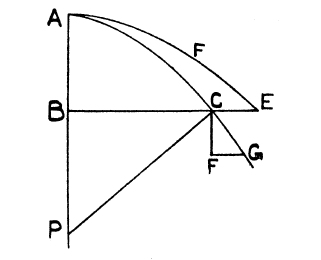
Gottfried Wilhelm Leibniz, Tr. J. M. Child / Wikimedia Commons · Sources ↗ · Image terms ↗
Who came first?
For early private development, Newton has a strong claim. For the first systematic public paper, Leibniz’s 1684 publication matters. For notation still used globally, Leibniz’s influence is plain. None of these facts alone proves theft. Most modern historians accept independent development of related methods. The quarrel affected communication between British and continental mathematicians, though it cannot explain every later difference between them.
A small example
If distance s = t², then over a short interval Δt the change is 2tΔt + (Δt)². Divide by Δt and let the interval approach zero: the instantaneous rate approaches 2t. Integration sums rates of change to recover a total change. Seventeenth-century mathematicians lacked a fully modern theory of limits; Cauchy and others sharpened the foundations later. Useful methods can precede their most rigorous justification.
What the quarrel teaches
Discovery, publication and recognition are separate events. A manuscript records an idea; publication allows scrutiny; practical notation helps others use it. Historical letters must be read critically, even when they are authentic. We can use Newtonian mechanics and Leibnizian integral notation today without choosing a single winner. The story reveals as much about the social life of science as it does about mathematics.
Try it: gravity and orbits
Newton’s account of motion and gravity relies on mathematics of change. Adjust the starting conditions in this simulation and observe how the orbit changes. It shows an application of these ideas in physics, rather than recreating the historical dispute with Leibniz.
Open the simulation on PhET ↗
Simulation by PhET Interactive Simulations, University of Colorado Boulder, licensed under CC BY-NC 4.0.
Key terms
— methods for describing the instantaneous rate at which a quantity changes.