
What are we comparing?
In daily life “day” means 24 hours. In astronomy, a is one rotation relative to the distant stars, while a solar day is the time between two successive noons or sunrises. Venus takes about 243 Earth days to rotate and 225 to orbit the Sun. The first figure is indeed longer than its year, but it is not the cycle of daylight and darkness at one place. Precise definitions prevent a catchy fact from being misleading.
Backward rotation
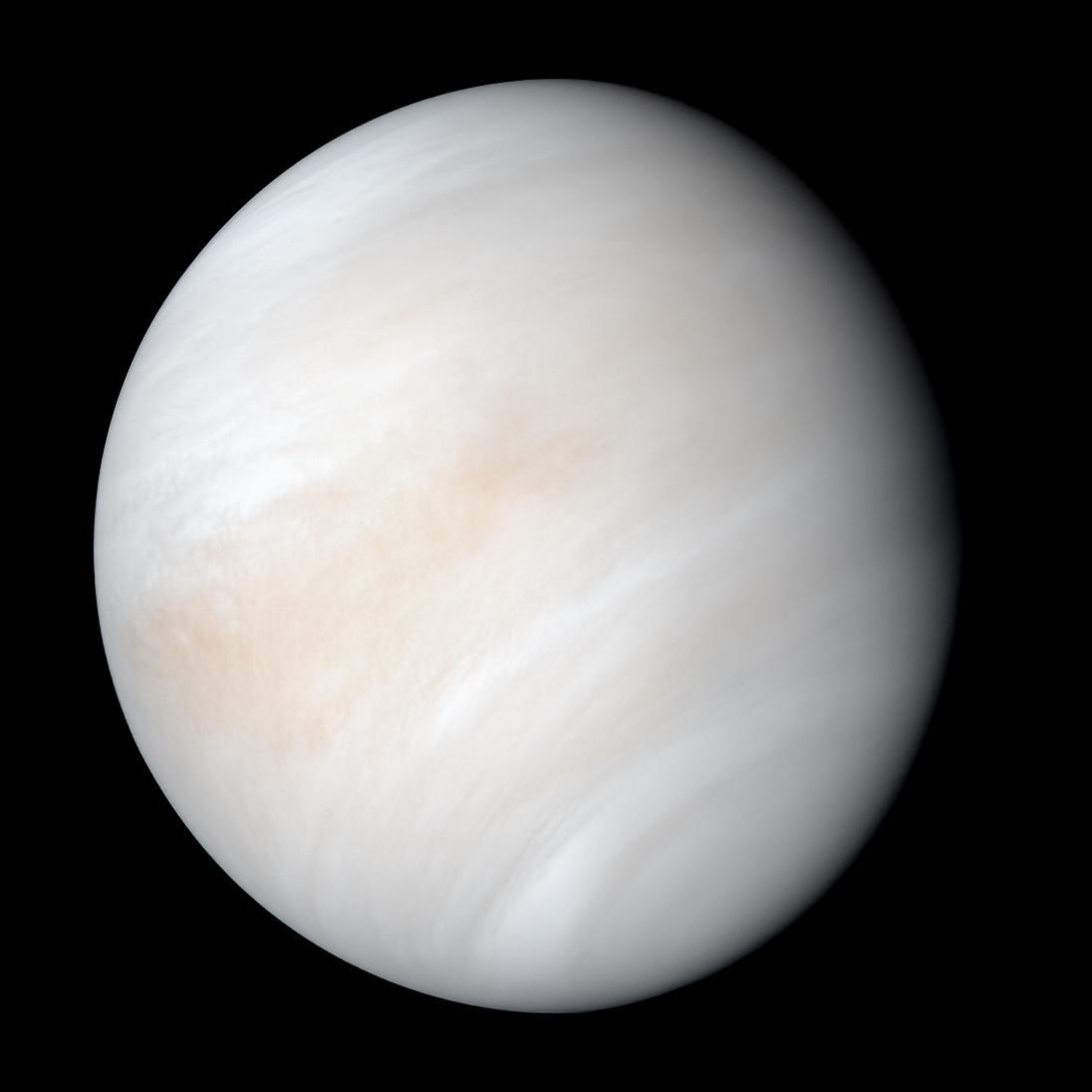
Venus rotates opposite to most planets. From the surface the Sun would appear to rise in the west and set in the east. Rotation and orbital motion together determine when the Sun returns to the same place in the sky. The solar day is about 117 Earth days. There is no contradiction: the sidereal and solar days measure different returns. Earth has the same distinction, although the difference is only a few minutes.
NASA/JPL-Caltech / Wikimedia Commons · Sources ↗ · Image terms ↗
Measuring through clouds
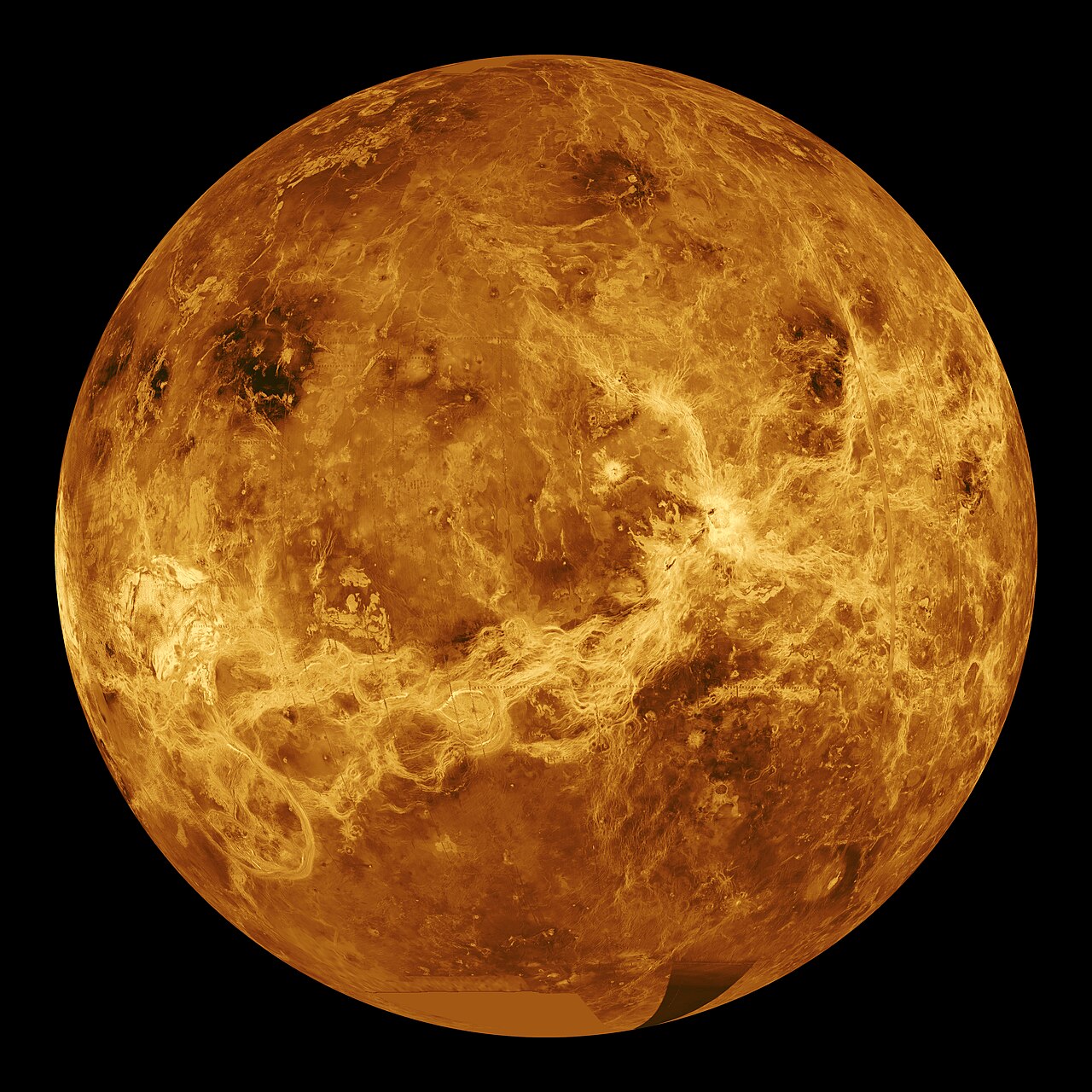
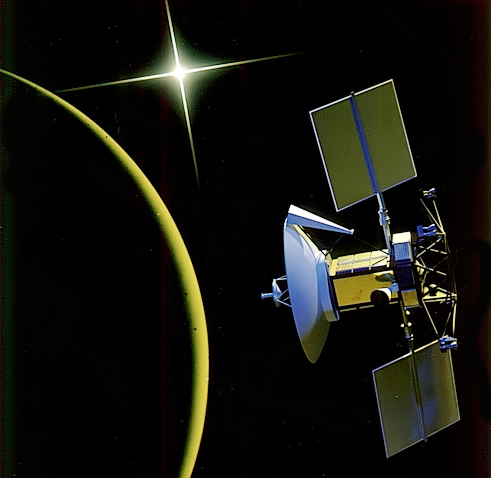
Thick clouds hide the surface, so watching the clouds does not tell us how fast the solid planet turns. Radar can reach surface features through the atmosphere. ’s Magellan mission mapped much of Venus in the 1990s, showing plains, craters and rugged features. Its atmosphere circulates much faster than the ground rotates. Confusing cloud motion with the planet’s rotation would give the wrong answer.
NASA / Wikimedia Commons · Sources ↗ · Image terms ↗
A world unlike Earth
Venus is roughly Earth-sized but its dense carbon dioxide atmosphere produces an extreme greenhouse effect. The surface is very hot and the pressure is about ninety times Earth’s surface pressure. Clouds contain sulphuric acid droplets. A person waiting outside for sunrise is only a thought experiment. Probes and radar, not tourists, reveal this world.
A lesson about definitions
Sidereal and solar days also matter on Mercury, the Moon and exoplanets. Spin and orbital motion together determine patterns of light, while an atmosphere can redistribute heat. The accurate headline is: Venus’s rotation relative to the stars takes longer than its orbit of the Sun. That careful wording opens a better scientific question than a slogan does.
Key terms
— one rotation relative to distant stars; a solar day measures the Sun’s return to the same place in the sky.