
Why is ordinary noise cancellation insufficient?
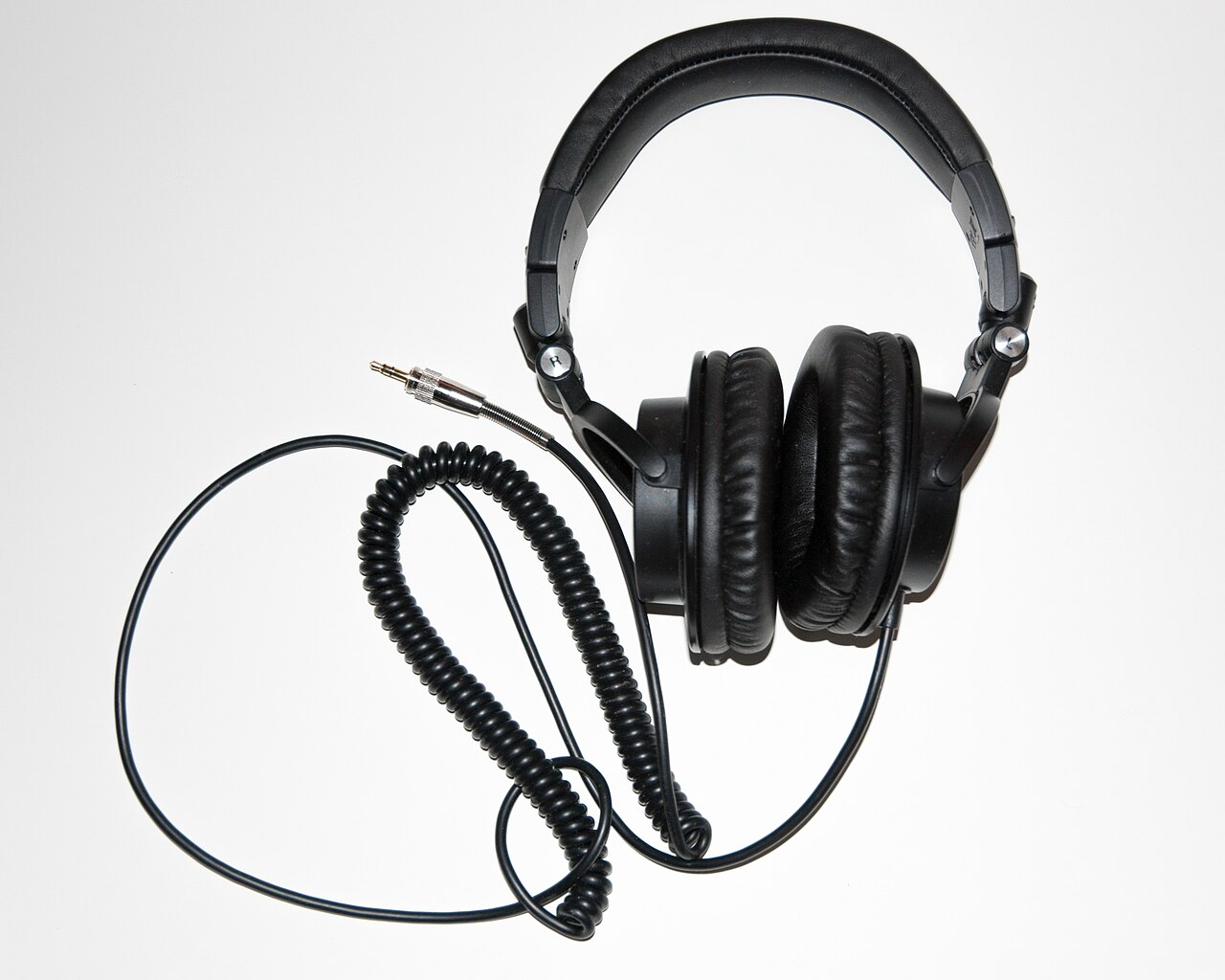
Active noise-cancelling headphones use microphones to estimate outside sound and produce another signal that reduces part of it at the ear. This works especially well for fairly steady sounds such as engines or ventilation. Several people speaking at once present a different problem. Turning everything down will also silence the person you want to hear. The system must preserve one moving voice while suppressing other voices with similar frequencies.
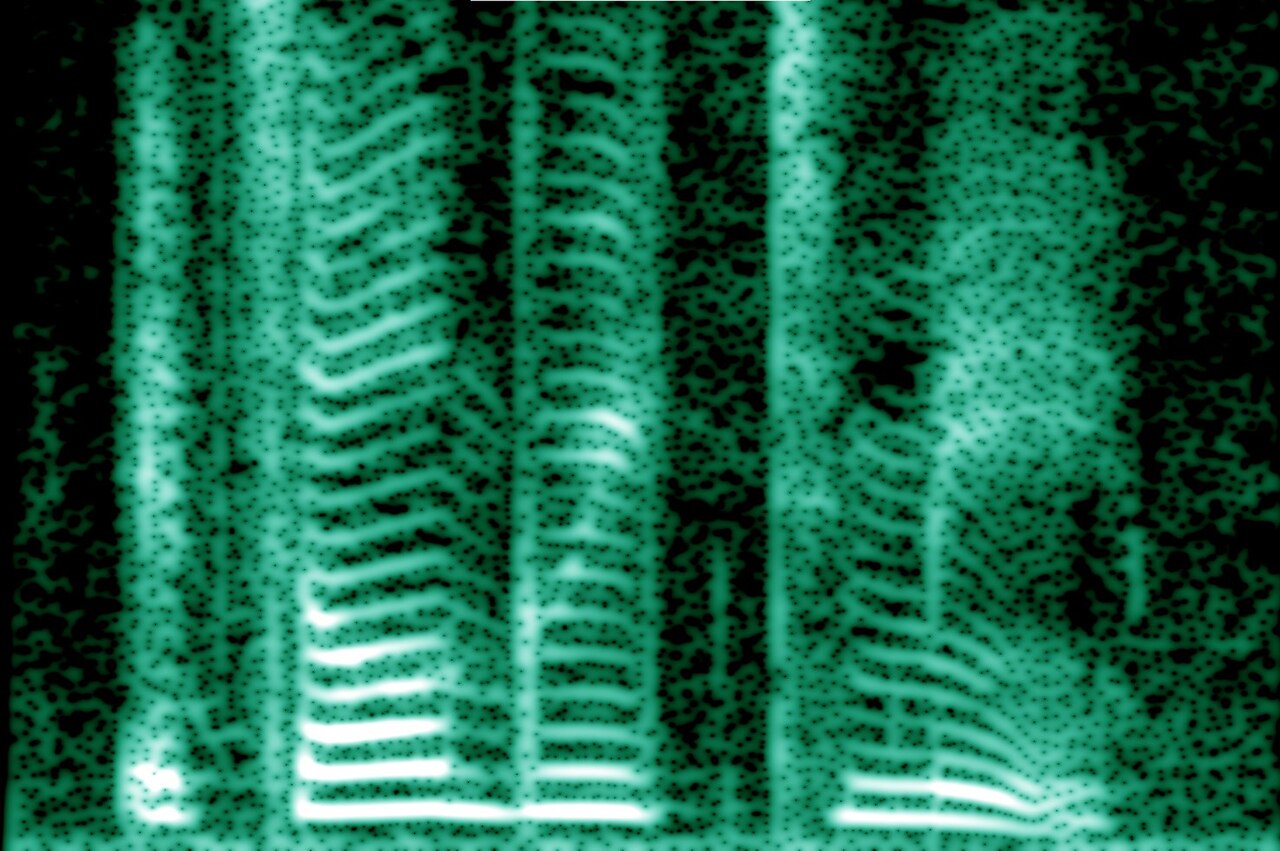
Imagine microphones recording three speakers at once. Their recording does not contain three neatly labelled tracks that can simply be muted. Speech overlaps in time and frequency, and room echoes mix the voices further. In signal processing this is called . Direction helps, but it is not enough: one person may move behind you while someone else takes their former position. A useful device needs to remember which voice to follow, not merely the direction it first came from.

UNE Photos / Wikimedia Commons · Sources ↗ · Image terms ↗
How does the user select a speaker?
The system is called Target Speech Hearing. The user turns their head towards a speaker and presses a button. For a few seconds microphones on both sides of the headphones record that person's voice along with the background. If the speaker is roughly in front, sound from the voice reaches the two microphones at almost the same time. That spatial clue helps the system obtain a short voice sample from the mixture. The university's account specifies an approximate direction tolerance of 16 degrees.
The research title says “look once”, but the device does not track a person's eyes or read minds. Head orientation and the button press matter. Nor does it require a perfectly clean recording made beforehand. It tries to learn useful features of the selected voice from a few seconds of noisy audio, then find it in later sound even if the listener or speaker moves.
Computation happens on a small computer connected to the headphones. The model receives fresh pieces of sound, estimates which parts belong to the selected speaker and returns processed audio to the earphones. The research paper describes audio blocks of eight milliseconds and a total delay on the order of tens of milliseconds. Delay matters: if the amplified voice arrived too late, an ordinary conversation would feel unnatural and become hard to follow.
What did the experiment actually show?
The researchers tried the system in different indoor and outdoor settings, with moving people and multiple sounds. In a study with 21 participants, listeners rated the clarity of the chosen voice almost twice as highly, on average, as the unprocessed recording. The paper also reported an improvement of about seven decibels in one objective signal-quality measure. These are promising results for a , not proof that every conversation in every place will sound perfect.
“Almost twice as high” refers to participants' ratings in a particular test, not a universal doubling of how many words people understand. Broader studies should include more listeners and different languages, voices, noises and hardware. It is particularly important to test how well the method works for people with different kinds of hearing loss. The 2024 research was not a consumer product that one could buy at the time.
Dvortygirl & Mysid / Wikimedia Commons · Sources ↗ · Image terms ↗
Where are the system's present limits?
According to its authors, the current system selects only one speaker at a time. If a second loud person is speaking from almost the same direction during selection, it may enrol the wrong voice. The user can then repeat the selection. Muting the rest of the sound also raises a practical safety issue: on streets or near traffic people still need to hear warnings. The study did not measure traffic safety; this is a design concern for any device that changes what reaches our ears.
Privacy matters too. Microphones need to receive surrounding sound for the system to operate, so a future product would have to explain how that audio is processed and stored. The described performs computation on a computer attached to the headphones; this shows that the method does not inherently require sending every conversation to a distant server. But one cannot infer the privacy policy of a future commercial device from the research .
Why might this be useful?
Making a selected speaker clearer could help in a classroom, restaurant or public space. Understanding speech in noise remains a longstanding challenge for people using hearing aids. The US National Institute on Deafness and Other Communication Disorders identifies this as an important problem in hearing technology. The researchers hope eventually to adapt their approach to smaller earphones and hearing aids. For now there is no basis to call this particular a medically validated hearing aid.
Perhaps the most interesting part is how the device combines acoustics and machine learning. Microphone position and sound-arrival times provide an initial sample; a model recognises features of the voice and follows it as the scene changes. This is not magical artificial intelligence that understands every sentence. It makes many rapid estimates about which pieces of a complex sound wave probably belong to the selected person. Its real value will depend on how much easier people find conversation, measured against clear limits of what has been tested.
Key terms
— extracting one signal from a mixture; — information about the direction of a source; — time between incoming and processed sound; — a research device that is not yet a finished product.