
What does a physicist mean by symmetry?
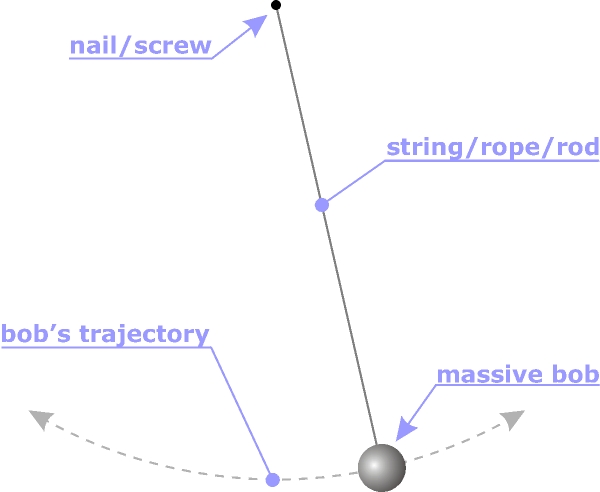
A circle in a drawing is if we rotate it a little and it still looks the same. In physics, often means something subtler: we may change how we set up the description of an experiment while the rule that predicts its outcome stays the same. Suppose we release a pendulum on Monday and repeat the experiment on Tuesday with the same string length, starting position and conditions. If the laws do not change merely because a day has passed, we have a under a shift in time. The pendulum itself is not frozen: its position changes continually. What remains unchanged is the rule governing its motion.
Similarly, move the whole experiment a metre sideways in a sufficiently uniform region of space and the fundamental rule stays the same. Rotate the apparatus where there is no preferred direction and the rule is unchanged again. These are spatial translations and rotations. In a real experiment, a nearby wall, magnet, moving air or Earth's gravitational field may spoil the ideal conditions. We must therefore specify which transformation preserves the rules of the chosen system, rather than merely noticing that two pictures look alike.
A pendulum experiment: where does the energy go?
Move the pendulum bob to one side and let it go without pushing it further. At the endpoint it is high and momentarily still: it has more gravitational potential energy and almost no kinetic energy. As it falls, potential energy turns into kinetic energy. Its speed is greatest at the lowest point. The process reverses as it rises on the other side. A pendulum drawing shows the bob's path, but the amounts of the different forms of energy change along that path.
In an ideal model with no friction or air resistance, the sum of potential and kinetic energy remains constant. A real pendulum slowly comes to rest: mechanical energy passes into warming the air, string and support, and into sound. If we look only at the bob, its energy is not constant. If we include the surroundings with which it exchanges energy, we can track where that energy goes. The distinction between a system and its surroundings is essential before we say that “energy is conserved.”
Unc.hbar / Wikimedia Commons · Sources ↗ · Image terms ↗
Noether's theorem: a bridge between two rules
Noether's theorem does not say that every object with an attractive visual pattern automatically conserves some energy. Its precise statement concerns continuous of a mathematical description of dynamics, especially the quantity called the . The is built from a system's whole path through time; the principle of stationary yields the equations of motion. If the is unchanged by a suitable continuous transformation, a conserved quantity can be derived from those equations. The proof is more demanding than a school exercise, but the meaning of the result is remarkably concrete.
When the description of an isolated system does not depend on when we begin the experiment, the conserved quantity is energy. When it does not depend on where in uniform space we put the experiment, is conserved. When it does not depend on how we rotate it in a space with no preferred direction, is conserved. These are not three unrelated textbook formulas: all three follow from the same method. The changes must be continuous, such as an arbitrarily small shift in time or angle, rather than only a handful of special positions.
How is this different from an ordinary conservation calculation?
In mechanics we often establish energy conservation by calculating: we write down forces, speeds and work, then show that the sum of the relevant energy forms does not change. This is useful for a particular system. Noether's result goes one step deeper and asks why a whole family of different models has a conservation law. The answer is that their dynamical descriptions share the same kind of . That is why the theorem applies far beyond pendulums, from classical mechanics to field theory.
Two claims must not be confused, however. If we switch on an apparatus at a particular time and then alter its conditions from outside, the apparatus's own energy can change. Think of a motor that keeps adding energy to a pendulum through its support. This does not mean that Noether's theorem has stopped working. We chose an open system or a rule with explicit time dependence; a more complete description must include the motor and its energy source. The theorem therefore also teaches us to check the limits of a claim.
Who was Emmy Noether?
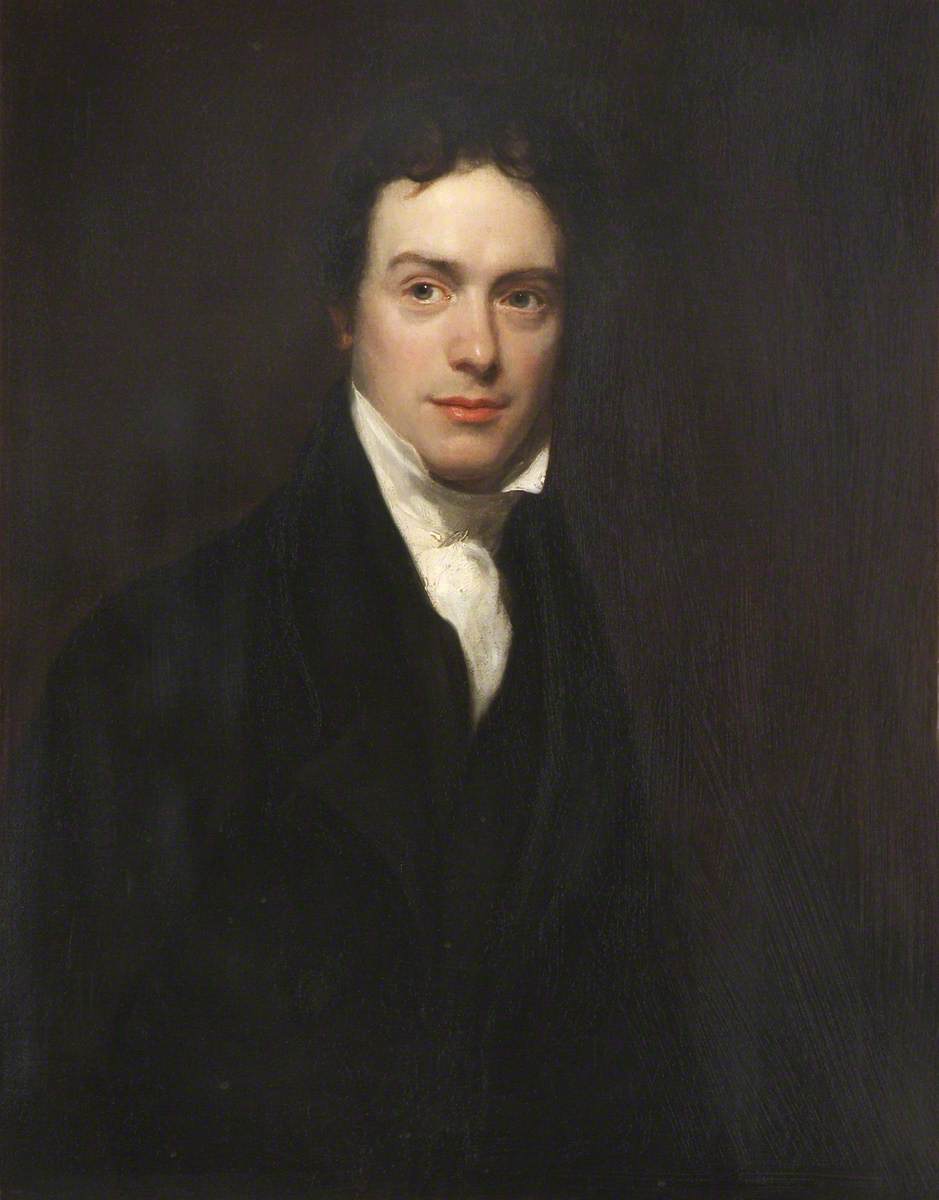
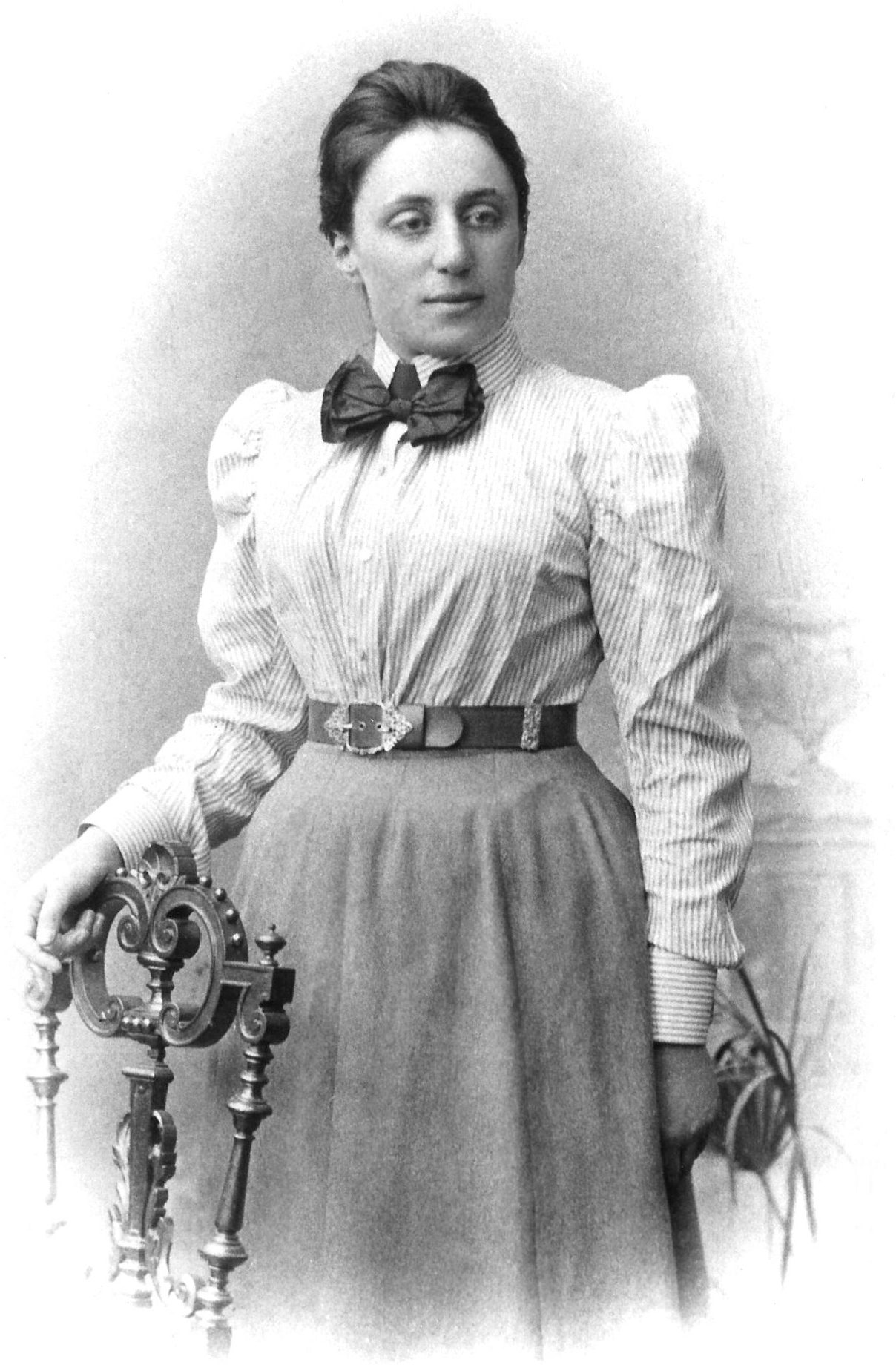
Emmy Noether was born in Erlangen, Germany, in 1882. When she began studying, women did not have the same route through university as men: initially she attended individual lectures only with special permission. She earned her doctorate in 1907 and then researched for years without a regular academic position. Mathematicians David Hilbert and Felix Klein invited her to Göttingen in 1915 to work on questions raised by general relativity. Her first attempt to qualify to teach independently was rejected; she succeeded only in 1919.
Her 1918 paper came from this period, but it was far from her only great contribution. Noether later reshaped abstract algebra, a field that studies structures and the relationships among them. She received an official, though small, regular income at the University of Göttingen only in 1923. The Nazi authorities removed her from the university in 1933; she continued her work at Bryn Mawr College in the United States, where she died in 1935. Her life shows how much science loses when institutions put obstacles in the way of talented people who want to research and teach.
Why does an expanding universe complicate energy conservation?
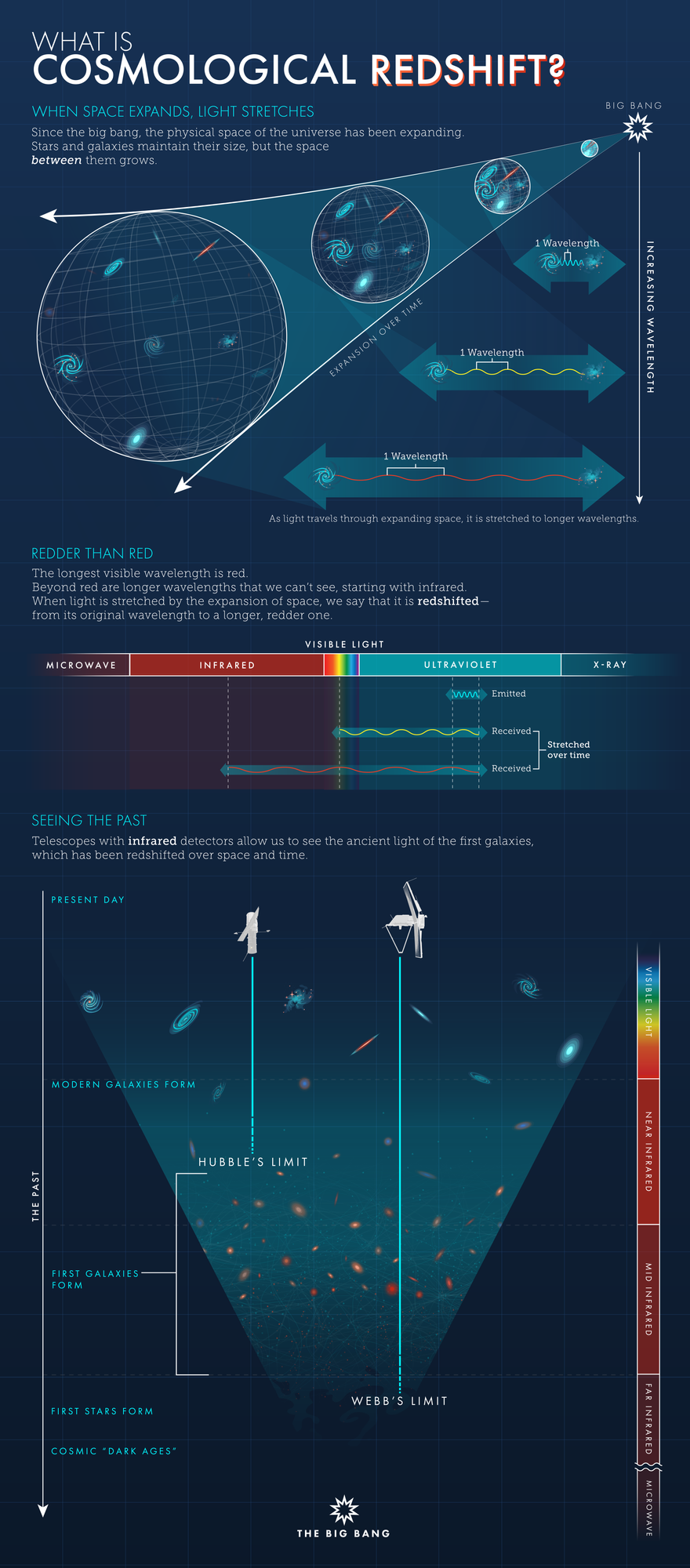
Imagine a photon travelling for a very long time from a distant galaxy. As the space between galaxies expands, the wavelength of its light grows: the light reaches us more “redshifted.” A photon's energy is Planck's constant multiplied by its frequency, E = hν. A longer wavelength means a lower frequency, so the photon has less energy when received than when emitted. The illustration shows this stretching of a light wave during its cosmic journey.
Was the “missing” energy stored somewhere? On the scale of the entire universe, this is not the same question as it is for a pendulum. In the usual model of an expanding universe, the geometry of space and time changes over cosmic time. There is no general global time-translation that would give us one simple, unchanging ledger for the “total energy of the universe.” General relativity still has a local conservation law for energy and : within a small region we can follow exchanges and make precise calculations. We should therefore conclude neither that everyday energy conservation is false nor that the photon's energy must have entered an easily identifiable store. We first need to be precise about what is measured and on which scale.
What can we check for ourselves?
Make a simple pendulum and mark the highest point the bob reaches on its return. Repeat the experiment at different times of day with the same string length and nearly the same initial displacement. A similar pattern of motion illustrates the idea that the starting time is not special; a progressively lower return shows that real conditions are not ideal. Next, switch on a fan beside the pendulum: the forces on the system have changed, so a comparison needs a fuller description. The experiment alone does not prove the whole theorem, but it helps us distinguish a of laws from one particular trajectory, and conservation of energy from its transfer between parts of a system.
The deepest lesson of Noether's work is a method. Whenever we find a conserved quantity in physics, we ask which invariance in the system's description it reveals; whenever we find a , we look for the corresponding conserved quantity. This lets us understand very different phenomena, from swinging pendulums to moving particles, in a shared language. And when the conditions for a are absent, as in a discussion of the expanding universe as a whole, the theorem itself tells us why caution is needed.
NASA, ESA, Leah Hustak (STScI) · Sources ↗ · Image terms ↗
Key terms
— a change of description that leaves a dynamical rule unchanged; — a mathematical quantity from which equations of motion can be derived; — mass times velocity in classical mechanics; — a measure of rotational motion; — the stretching of light's wavelength as it travels through an expanding universe.